
The Rails Asia Still Runs On
Asia is one of the world’s densest regions for cross-border money movement. In 2024, remittance flows to low- and middle-income countries were estimated at USD 685 billion, exceeding foreign direct investment and official aid combined. Four of the five largest recipient countries were in Asia: India, China, the Philippines, and Pakistan. That remittance base sits alongside intra-Asian trade settlement, e-commerce payouts, payroll, and corporate treasury flows.
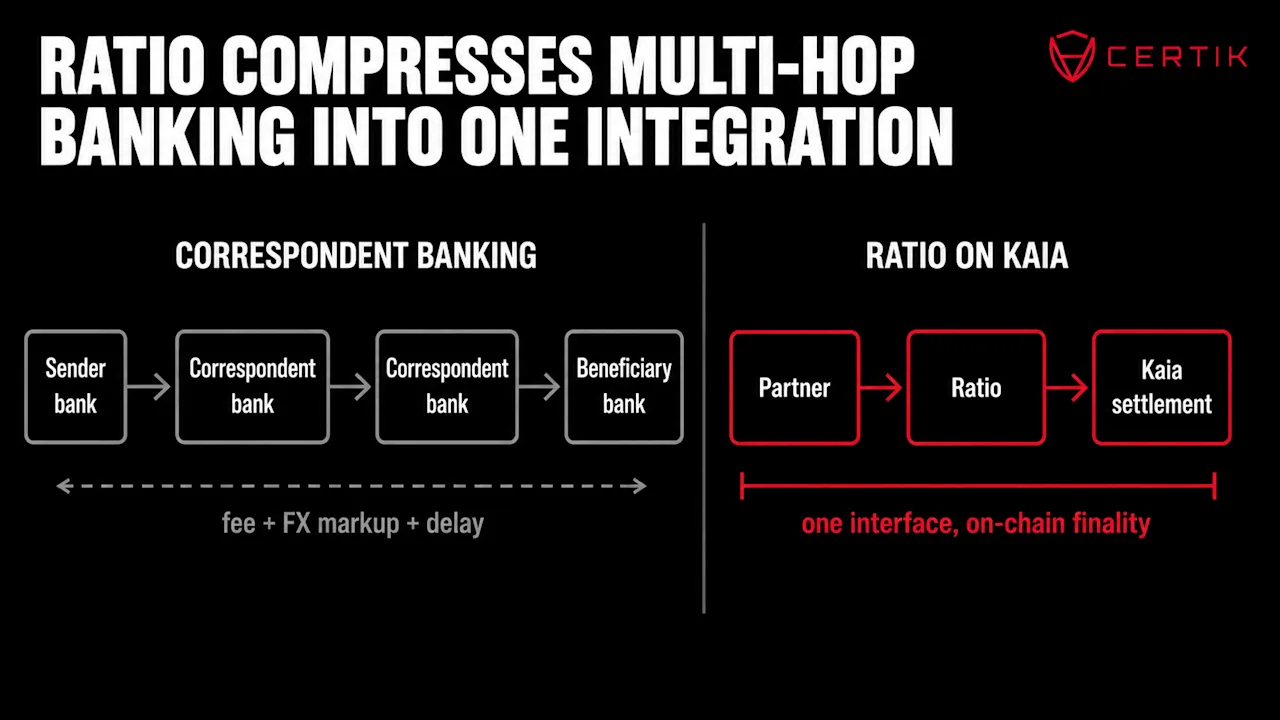
Much of this activity still runs through correspondent banking. A payment from Seoul to Manila, Jakarta, or Ho Chi Minh City is usually not a direct transfer between two banks; it can pass through multiple intermediaries, each adding fees, foreign exchange (FX) markups, compliance checks, cut-off times, and operational uncertainty.
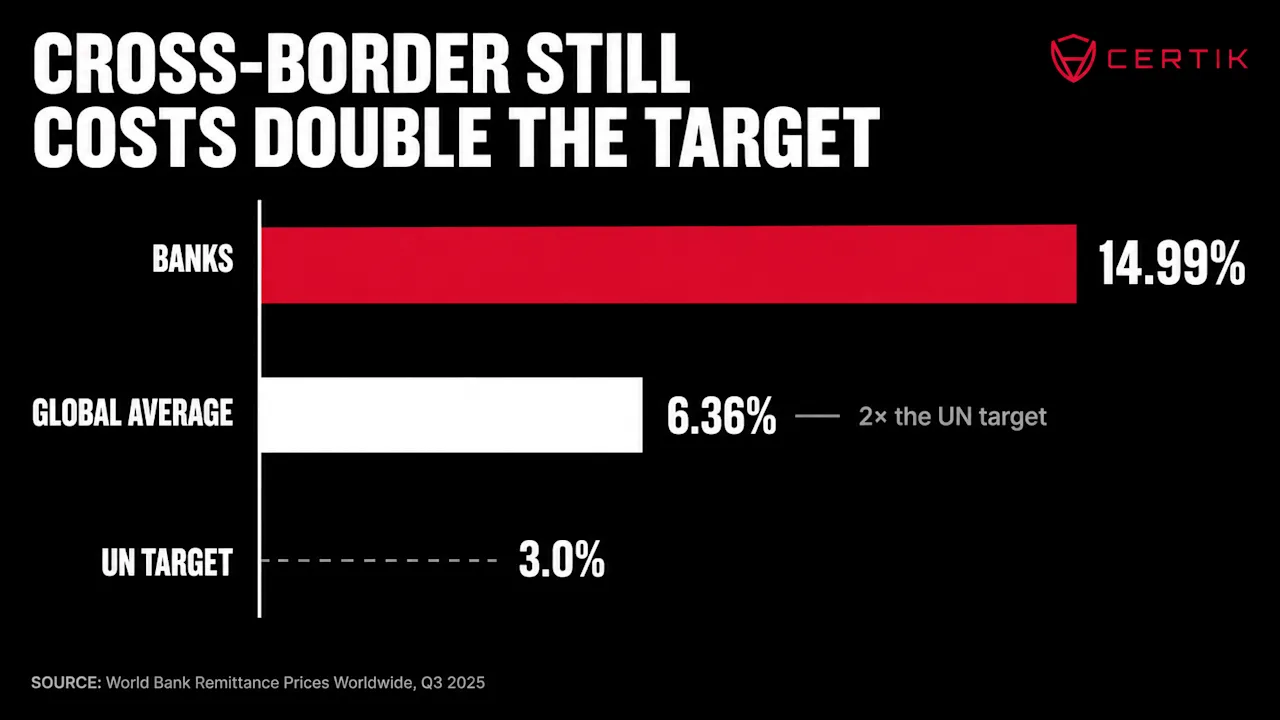
The cost is measurable. Sending USD 200 across borders still averaged 6.36% in Q3 2025, more than double the United Nations’ 3% target. Banks remained the most expensive provider type in the World Bank’s dataset, with an average cost of 14.99%. The rails are also thinner than they once were: data from the Committee on Payments and Market Infrastructures (CPMI) showed that active correspondent banking relationships contracted by approximately 25% between 2011 and 2020.
The deeper issue is structural. Correspondent banking buys reach with idle capital held in nostro and vostro accounts, credit risk distributed across intermediaries, and fees embedded throughout the chain. The G20 roadmap for cross-border payments measures the system across cost, speed, access, and transparency, but its 2025 progress review found that improvement remained limited and that the 2027 targets looked unlikely to be met on time. That is the opening for onchain settlement—not because blockchains remove trust, but because they change where trust sits.
What Ratio Is
Ratio is not a retail decentralized finance (DeFi) application. It is business-to-business middleware for stablecoin FX and settlement. The project was announced in February 2026 and introduced publicly around Consensus Hong Kong, targeting banks, payment service providers, remittance firms, wallets, exchanges, stablecoin issuers, and other regulated partners.
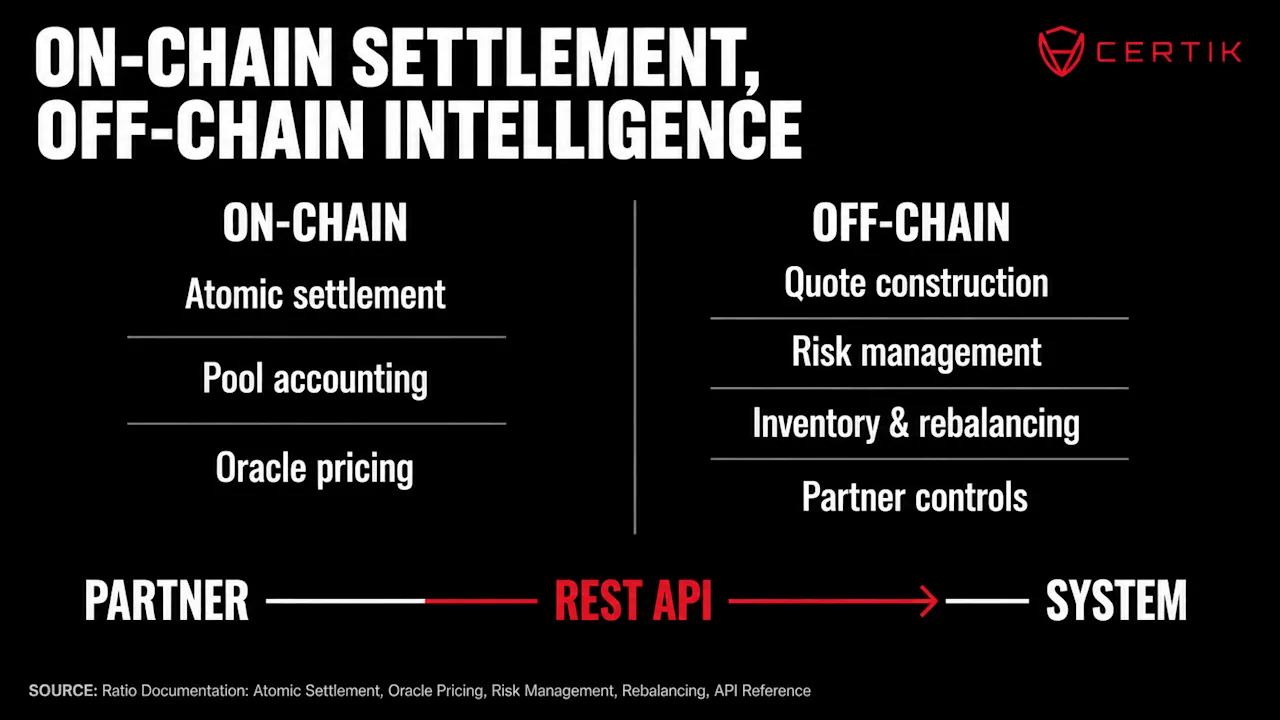
Ratio’s architecture is closer to an institutional FX desk than an automated market maker (AMM). Atomic settlement, pool accounting, and oracle inputs sit onchain, while quote construction, risk monitoring, inventory management, and partner controls remain offchain. Partners integrate through REST application programming interface (API) endpoints rather than interacting directly with the underlying chain.
The initial corridors are focused on Asia: USD to IDR and USD to JPY. Planned expansion includes MYR, HKD, KRW, PHP, and THB corridors. That selection matters because Ratio is not trying to prove that stablecoins are faster in the abstract. It is targeting markets where fragmented liquidity, multicurrency settlement, and local banking relationships create real operational costs.
How Ratio Compresses the Structure
Stablecoins change the settlement leg. In the legacy model, banks exchange messages and settle their obligations later. In the onchain model, the transfer itself updates the settlement record, with finality defined by the underlying chain and the stablecoin’s redemption framework. Ratio is built around that shift and compresses the correspondent banking structure through three mechanisms.
First, stablecoins change where liquidity sits. They do not remove the need for liquidity, but they move it out of bilateral account networks and into pools and routed inventory. Second, API-based FX execution replaces a chain of bilateral banking relationships for the integrating partner. A partner integrates once, requests quotes, executes transactions, and receives settlement confirmation through a single interface.
Third, Kaia provides the settlement environment beneath the orchestration layer. Ratio uses Kaia for onchain execution while keeping institutional quote logic and risk controls offchain, where they can respond to volatility, oracle state, liquidity conditions, and inventory imbalances. This is why Ratio should not be read as a decentralized exchange (DEX): its purpose is not to expose every user to a trading interface, but to make stablecoin FX usable as back-end infrastructure.
What the Kaia Proof of Concept Demonstrates
Kaia has already validated a related part of the thesis. In a Q1 2026 Phase 0 proof of concept (PoC) led by a Tier-1 Korean bank and the K-STAR Alliance, Kaia served as the settlement layer for KRW stablecoin issuance, payments, and cross-border remittances. The PoC reported settlement in under three seconds and nearly 87% lower cross-border transaction costs compared with Ethereum.
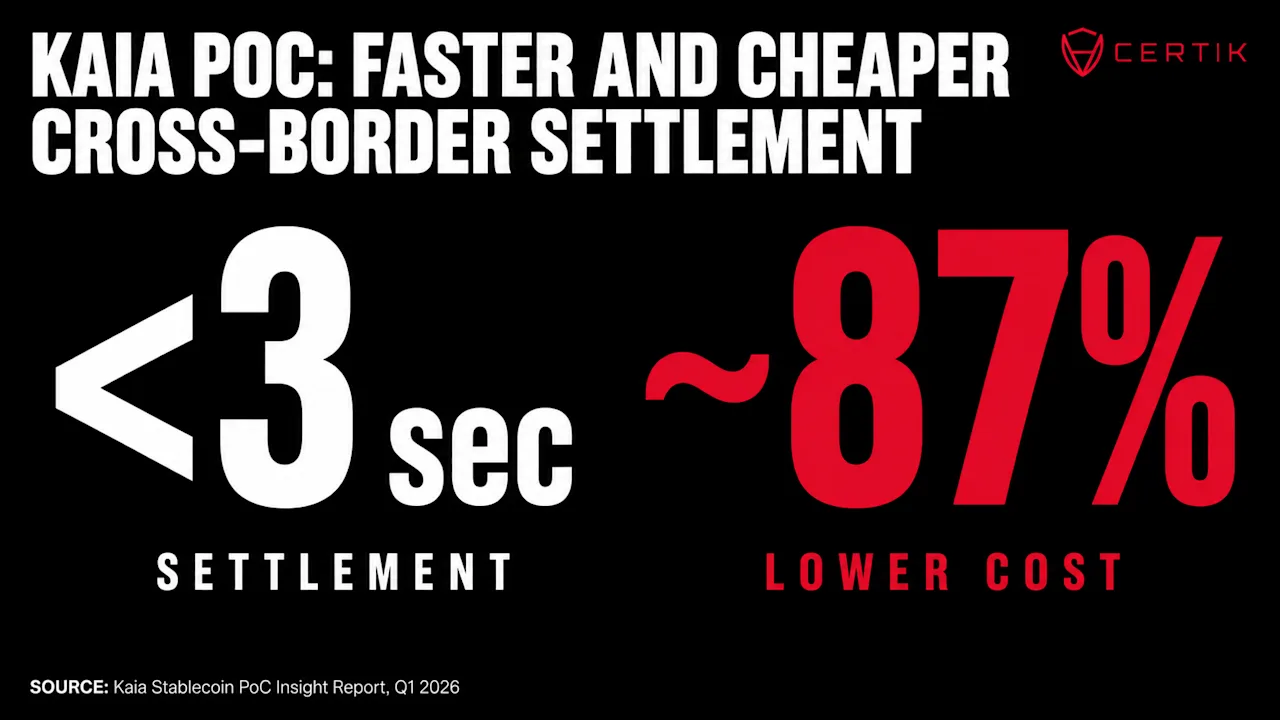
Those results map onto two of the cross-border payment system’s official pain points—speed and cost—and support the case that onchain settlement can compress part of the legacy payment chain. The Kaia PoC and Ratio answer different parts of the same question: the Kaia test validated the settlement leg on which Ratio is built, while the harder layer above it—orchestrating settlement across multiple corridors, counterparties, and compliance regimes at institutional scale—is the problem Ratio is now working to solve.
Ratio’s architecture reflects that purpose. Pricing through oracles rather than an AMM curve avoids AMM-style price impact while allowing firm quotes to reflect transaction size, volatility, liquidity, and inventory conditions. Its single-sided pools follow the same logic: a provider deposits the asset it already holds and receives a receipt token, removing AMM-style impermanent loss and keeping the structure legible to issuers, market makers, over-the-counter desks, and treasury teams.
The PoC demonstrates what the settlement rail can do. Ratio is the layer carrying that result toward institutional-scale, multicurrency orchestration.
Why the Model Could Scale Across Asia
Ratio does not sit alone; it is part of Kaia’s broader push into Asian stablecoin infrastructure. Beyond providing a settlement environment built around Asian onchain finance, Kaia brings a distribution thesis anchored in its proximity to Kakao and LINE and their messenger-native reach. LINE users do not automatically become Ratio volume, but Kaia has a credible path to payment and wallet distribution that a standalone settlement chain would have to earn from scratch.
Regulation is moving in the same direction. Hong Kong’s Stablecoins Ordinance took effect on August 1, 2025. Japan’s revised Payment Services Act established a framework for the category, and JPYC launched the country’s first regulated yen-pegged stablecoin that October. Korea continues to debate won-denominated stablecoins and broader digital asset rules.
This matters because FX orchestration requires local stablecoins to exist. A yen stablecoin, a Hong Kong-licensed issuer, a future KRW unit, and Southeast Asian tokens are not separate stories; they are the inventory a system such as Ratio is designed to route between.
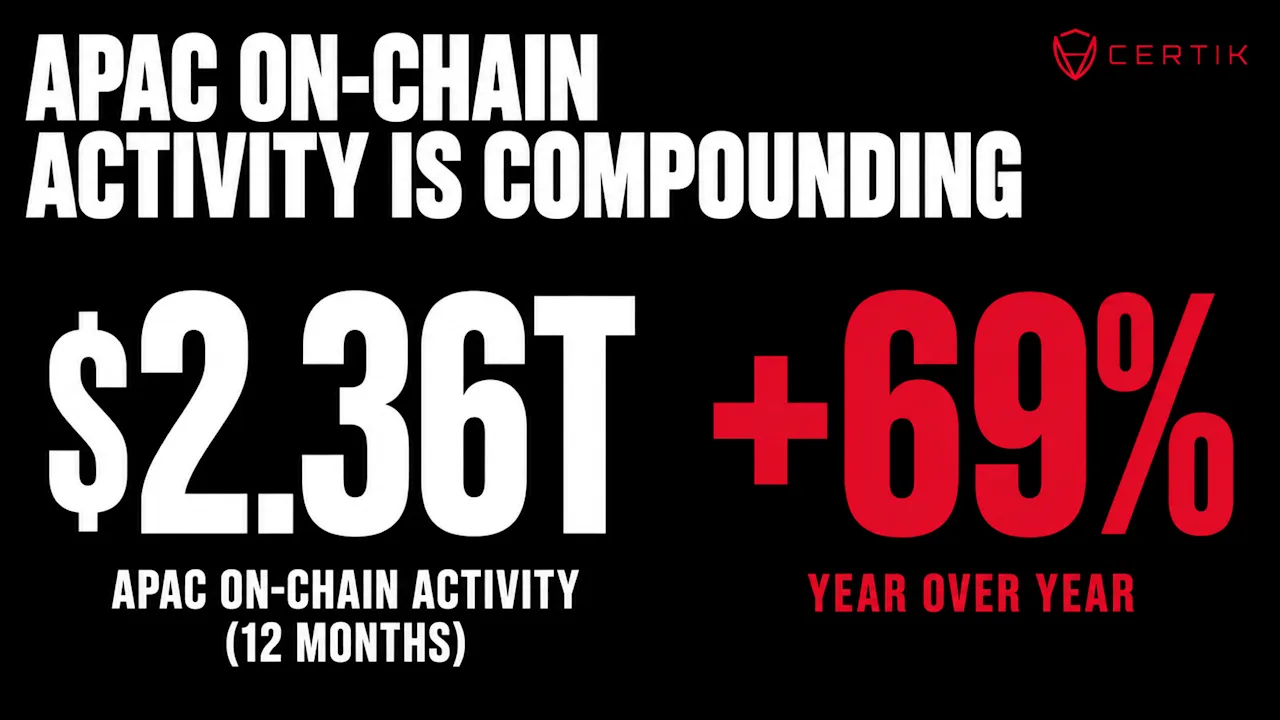
The macro flow is already visible, even if not all of it represents payment volume. Chainalysis estimated Asia-Pacific onchain activity at USD 2.36 trillion in the 12 months ending June 2025, up 69% year over year. Ratio’s bet is that as stablecoins move from exchange liquidity into payments, remittances, and treasury operations, the missing layer will be regulated FX orchestration rather than simply more tokens.
The Other Half Is Verification
Speed and cost are one half of institutional-grade infrastructure. The other half is verification. Ratio starts with a visibility advantage over correspondent banking because its settlement leg is onchain. Risk controls can be written against oracle health, volatility, and pool imbalances, while quotes can be accepted or rejected according to explicit rules rather than being buried in manual banking processes. This makes settlement programmable and more observable to counterparties than a legacy chain of intermediaries.
Observability, however, is not assurance. Onchain records tell counterparties what happened; security review assesses whether the contracts, upgrade paths, oracle dependencies, and administrative permissions are designed to behave correctly before large volumes move through them. That distinction is particularly important for hybrid infrastructure such as Ratio, where the settlement leg is visible onchain but key functions—including quoting, risk monitoring, and inventory rebalancing—operate offchain. Trust does not disappear; it moves from correspondent banks into smart contracts, oracle systems, APIs, operational controls, and the underlying chain.
That trust is clearest when considered by layer. Kaia, the settlement rail, currently carries a CertiK Skynet Security Score of 93.68 and an AAA tier, giving the underlying environment a visible security posture. Ratio, the orchestration layer above it, has its own verification surface across settlement contracts, pool logic, oracle dependencies, API exposure, administrative controls, and upgrade paths.
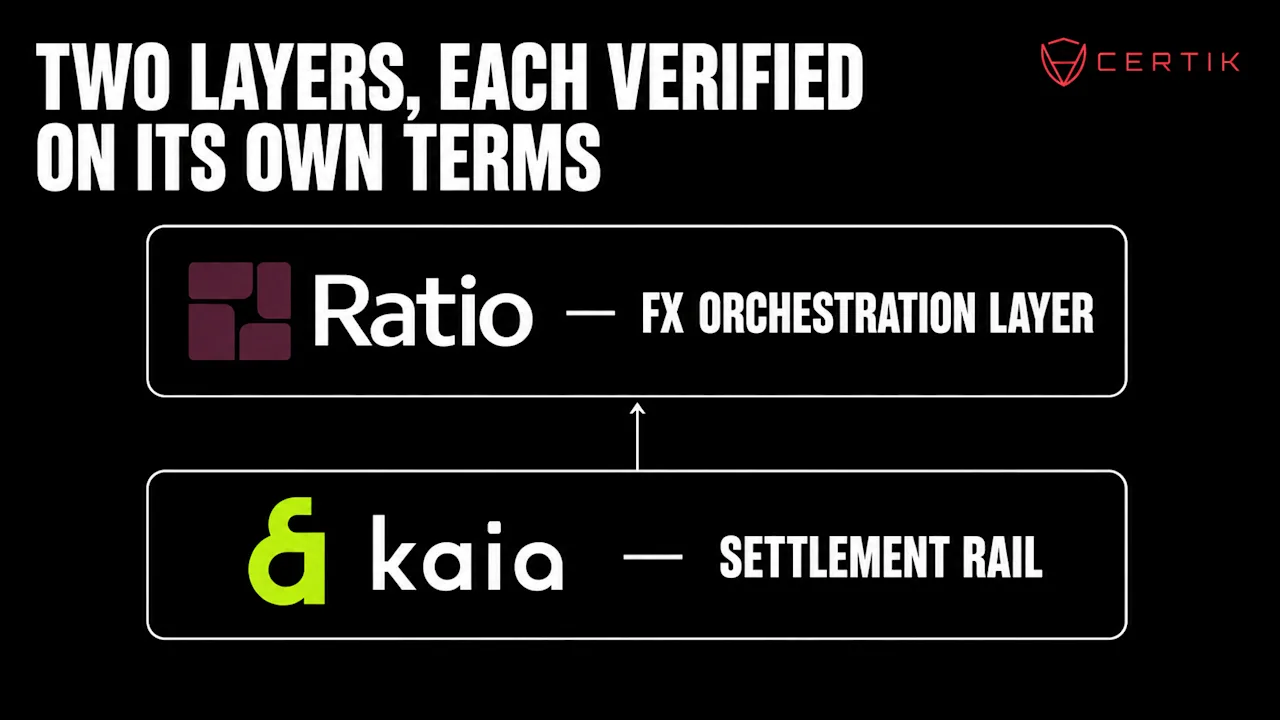
A strong rail does not provide inherited security to everything built above it, which is why the orchestration layer must be assessed on its own terms. Ratio is currently undergoing a CertiK audit, moving that layer into independent review before larger institutional flows are expected to pass through it.
The Next Step
Asia’s cross-border rails are moving onchain, and the projects that matter are doing more than reducing settlement times. They are compressing the structure of correspondent banking itself: idle capital, multihop trust, fragmented liquidity, and opaque execution.
Ratio is one of the clearest attempts to define that category. It packages stablecoin FX as middleware, uses Kaia as its settlement environment, and targets corridors where legacy rails are expensive to maintain.
The next step is not proving that onchain FX can be faster. It can. The next step is demonstrating that the full stack can be verified from end to end, from the observable settlement rail beneath it to the orchestration contracts and operational controls above.