As of September 26, 2026, total decentralized finance (DeFi) total value locked (TVL) had recovered to approximately USD 95.4 billion, but it remained 44.2% below its October 2025 high. Morpho, by contrast, had already moved beyond its previous TVL peak and remained close to a new all-time high at approximately USD 10.4 billion.
Morpho also recorded approximately USD 16.4 billion in deposits and USD 5.4 billion in outstanding loans. Over the preceding 30 days, deposits increased about 10.4%, while outstanding loans increased about 14.2%. The divergence is the story: the broader lending market remains below its previous highs, while Morpho has established a higher range.
DeFi Recovered From the Bottom, Not From the High
The broader DeFi market has recovered from its 2026 trough, but it has not returned to its previous regime. Total DeFi TVL fell from approximately USD 171.1 billion on October 7, 2025, to USD 68.2 billion on July 1, 2026, a peak-to-trough decline of about 60%. By September 26, TVL had recovered to approximately USD 95.4 billion, but the market was still 44.2% below the October high.
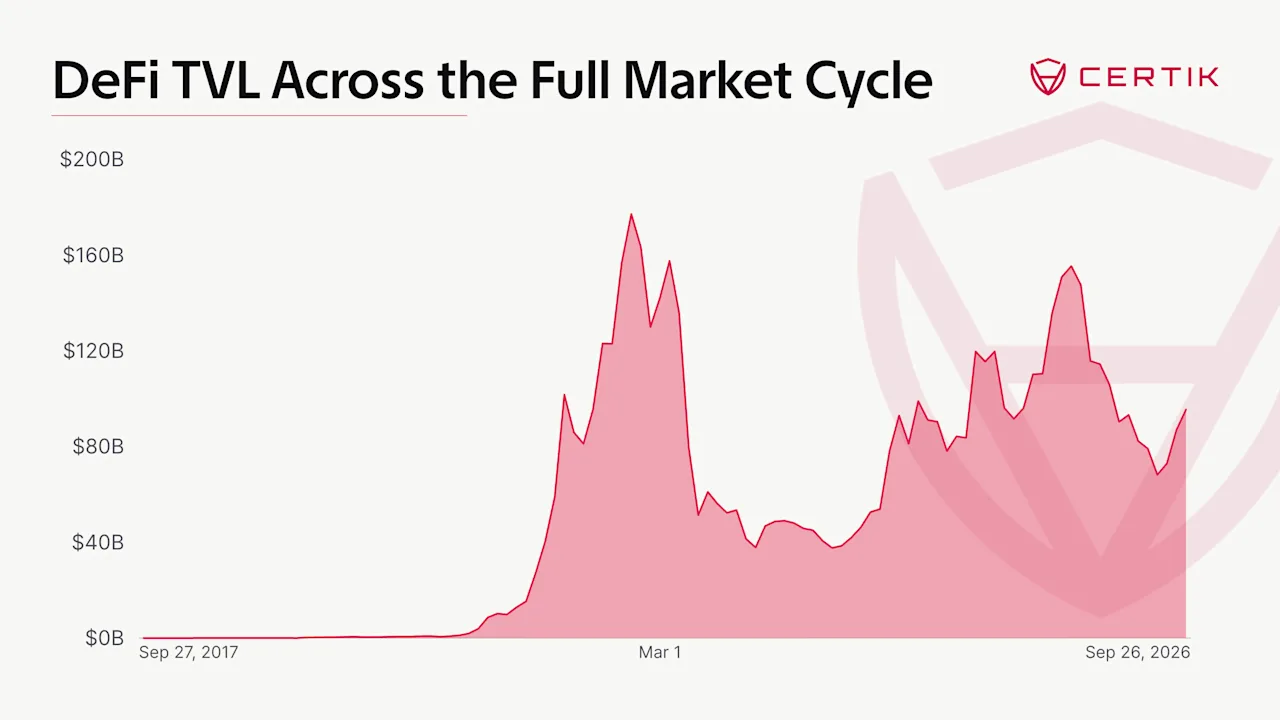
The rebound from the July low was meaningful—approximately 40%—but incomplete. This creates a useful benchmark for evaluating Morpho. A protocol merely moving with the market would normally remain below its previous peak. Morpho’s trajectory does not fit that pattern.
Morpho Broke Away From the Large-Protocol Recovery Curve
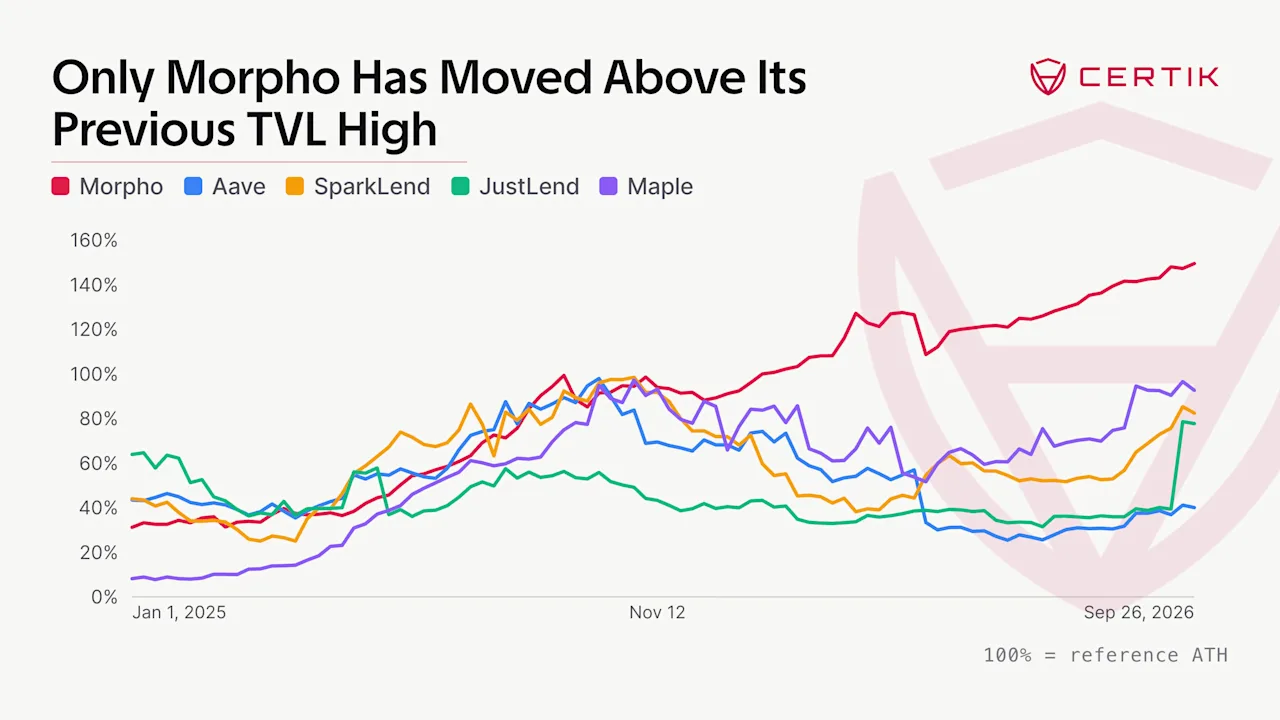
The protocol comparison is more revealing than the market-wide recovery chart alone. On September 26, Aave V3 stood at approximately 40% of its reference high, SparkLend was at 82%, JustLend V1 at 78%, and Maple at 93%. Morpho was the exception at approximately 150% of its previous-cycle high.
This does not mean Morpho had become the largest lending protocol. Aave remained larger by TVL. The more important observation is comparative: Morpho had surpassed its previous peak while the selected large peers remained below theirs.
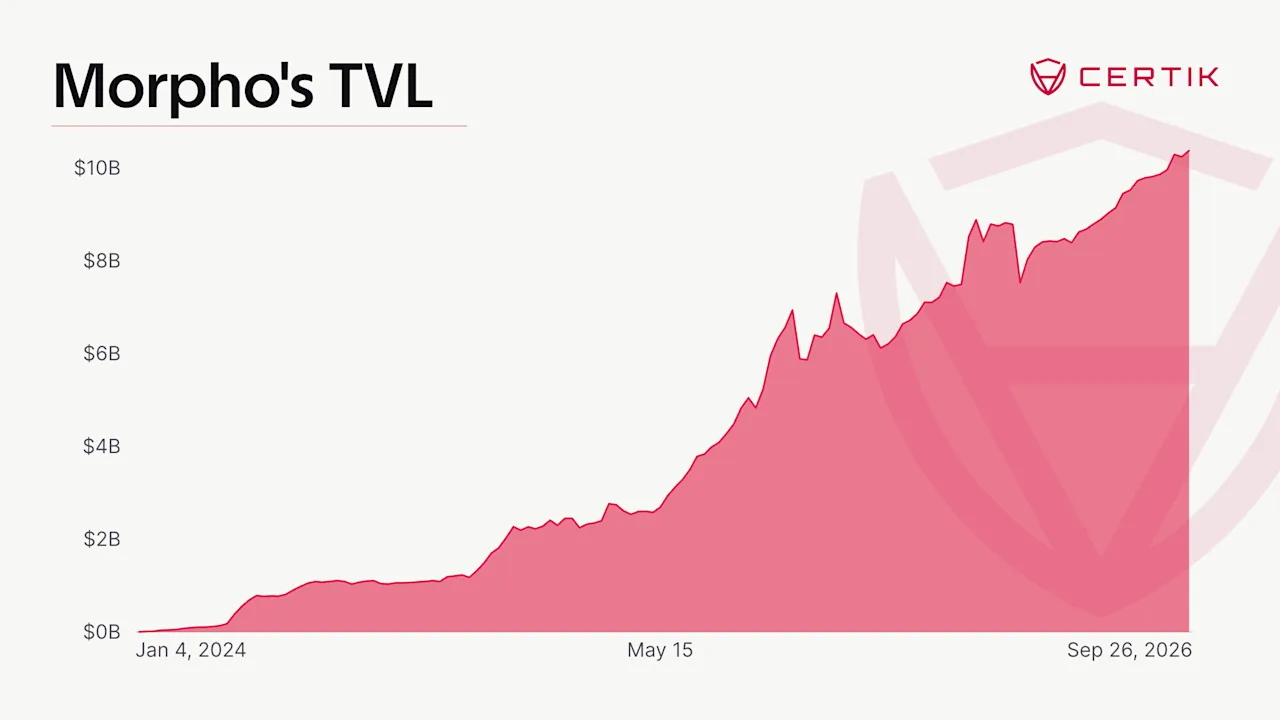
Morpho’s balance growth also extended beyond TVL. Deposits increased about 10.4% over 30 days, while active loans increased about 14.2%. Loans growing faster than deposits does not prove that demand is higher quality or sustainable, but it does indicate that the expansion is not limited to idle capital entering the system.
Robinhood Turned Distribution Into a Measurable Lending Market
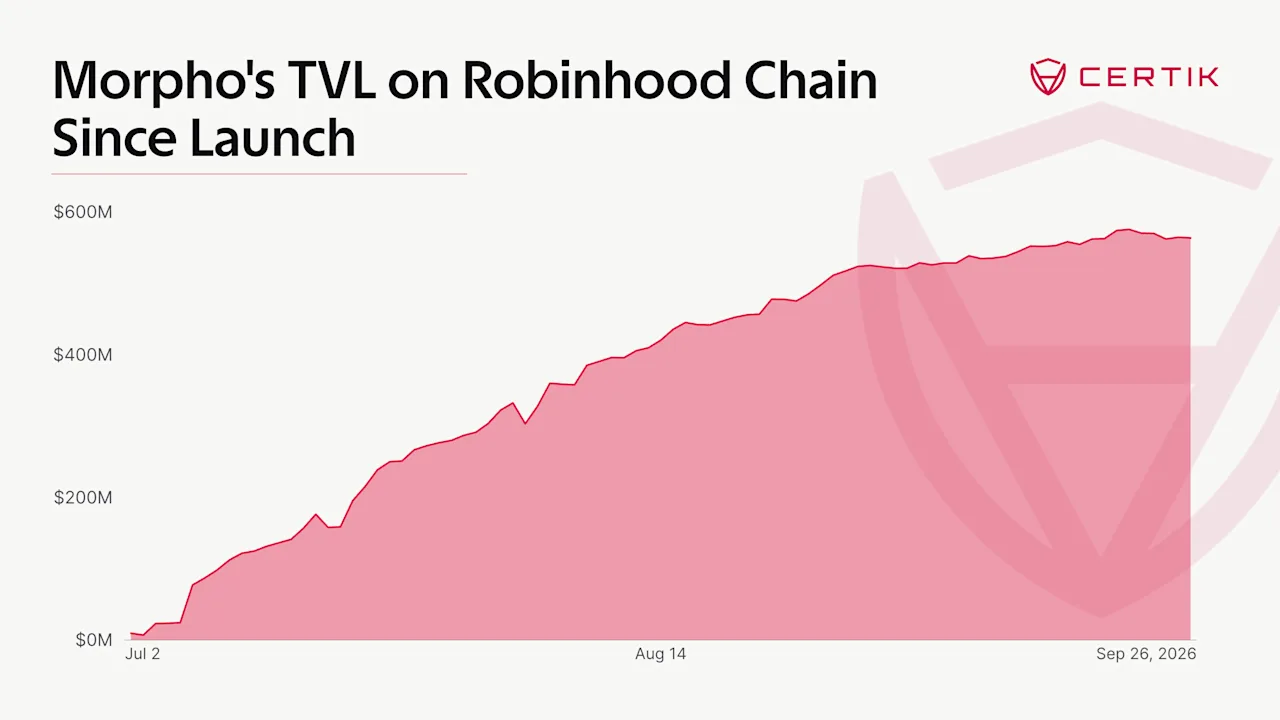
Robinhood Chain provides the clearest example of distribution becoming onchain credit activity. Between July 2 and September 26, Morpho deposits on Robinhood Chain increased from approximately USD 17 million to USD 1.03 billion. Outstanding loans increased from approximately USD 7.4 million to USD 453 million. Both balances expanded by roughly 60-fold.
The parallel movement matters more than either balance alone. Loans represented approximately 44% of deposits at both the beginning and end of the period. Capital entered the chain, but borrowing activity scaled with it instead of being diluted by a much faster inflow of passive deposits.
Robinhood Chain TVL reached approximately USD 572 million by September 26. The balances cannot isolate how much activity originated from a single Robinhood product, but they establish a narrower and more defensible conclusion: Robinhood Chain became a material Morpho lending venue within one quarter.
This is a distribution advantage that most crypto-native lending protocols do not naturally possess. A consumer-facing financial platform can bring an existing user base into an onchain credit market without requiring users to begin from a DeFi-native interface.
Arc Moved From Deployment to Active Borrowing
Arc remains smaller than Robinhood Chain and Morpho’s overall network, but its early conversion into borrowing activity was faster. From September 17 to September 26, Arc deposits increased from approximately USD 227 million to USD 277 million, an increase of about 22%. Active loans rose from approximately USD 1.4 million to USD 154 million, or roughly 111-fold. The loan-to-deposit ratio increased from less than 1% to approximately 56%.
Arc is not yet a major driver of Morpho’s total TVL. Its significance is different: the deployment progressed from liquidity availability to material borrowing within days.
The starting base remains an important limitation. A rapid increase from USD 1.4 million does not carry the same weight as equivalent growth from a mature lending market. The signal is therefore conversion speed, not current scale or proven durability.
RWA Is Becoming a Lending Market, Not Only an Asset Category
Morpho’s real-world asset (RWA) activity suggests that the current expansion extends beyond a conventional crypto-market recovery. From July 1 to September 26, RWA deposits increased from approximately USD 1.07 billion to USD 1.58 billion, an increase of 48.7%. Active RWA loans increased from approximately USD 411 million to USD 641 million, an increase of 55.8%.
The loan-to-deposit ratio increased from approximately 38.6% to 40.5%. The trend was not linear—both deposits and loans softened after interim highs—but the end-of-period balances remained well above their July starting points, and loans grew faster than deposits.
Private Credit was the largest RWA segment in the latest snapshot, representing approximately 58% of RWA deposits and 59% of active RWA loans. This composition changes the interpretation of Morpho’s RWA growth. The activity is not primarily passive token representation; it increasingly reflects real-world credit products operating inside onchain lending markets.
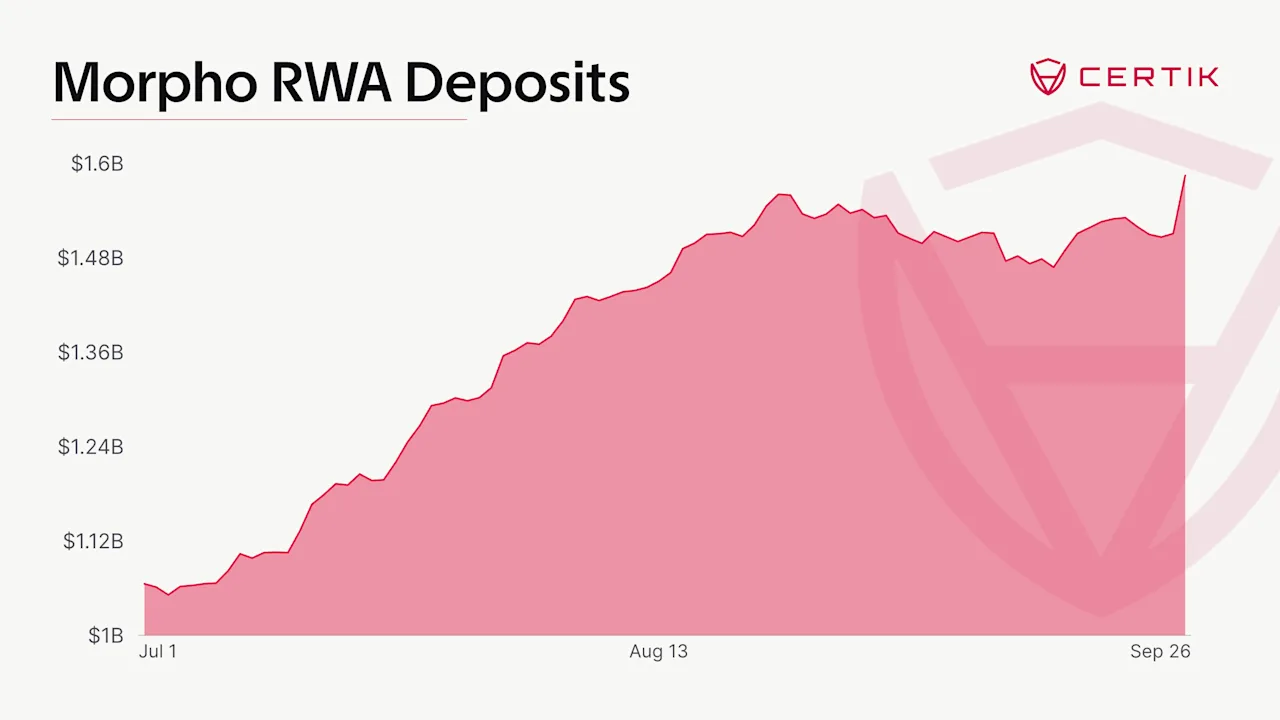
The data does not establish that every dollar represents new external credit demand. It does show that RWA liquidity is being used rather than merely deposited.
The Common Mechanism Is Distribution Around Isolated Markets
Robinhood, Arc, and RWA credit appear to be separate growth stories, but they share a common infrastructure model. Each Morpho Blue market is defined by a specific loan asset, collateral asset, oracle, interest-rate model, and loan-to-value boundary. Curated vaults can then allocate deposits across selected markets according to a defined strategy.
This structure allows different chains, interfaces, curators, and financial products to bring distinct pools of liquidity and borrowers without placing the entire Morpho network into one universal lending pool.
Isolation does not eliminate risk. A market still depends on its collateral, oracle, liquidation conditions, and parameter configuration. A vault allocating across several markets also inherits exposure to the markets selected by its curator. The architecture separates risk at the market level; it does not make every market or vault equally resilient.
The observed data is consistent with a distribution-led expansion model:
- Robinhood provides consumer-facing distribution.
- Arc provides a new deployment environment.
- RWA and Private Credit introduce different borrower and collateral profiles.
- Isolated markets provide the structure for keeping those credit environments distinct.
The architecture alone cannot be treated as the cause of Morpho’s growth. Token prices, incentives, broader market recovery, and partner-specific demand may also contribute. The stronger conclusion is narrower: Morpho’s design can accommodate multiple distribution channels, and several of those channels are now producing measurable borrowing activity.
The Next Question Is Durability
Morpho’s new high is not simply a larger version of the broader DeFi rebound. The expansion appears across existing network liquidity, consumer distribution, a new chain deployment, and RWA-backed lending.
Robinhood shows distribution converting into a sizable lending venue. Arc shows how quickly a new deployment can develop active borrowing. RWA data shows loans growing faster than deposits, with Private Credit representing the largest segment.
The thesis becomes stronger if:
- Active loans continue growing without deposits becoming increasingly concentrated.
- Robinhood borrowing remains stable after the initial expansion.
- Arc sustains its loan balances beyond the early ramp.
- RWA loan growth persists without excessive exposure to a small number of markets or counterparties.
- Morpho remains above its previous high as other large lending protocols recover.
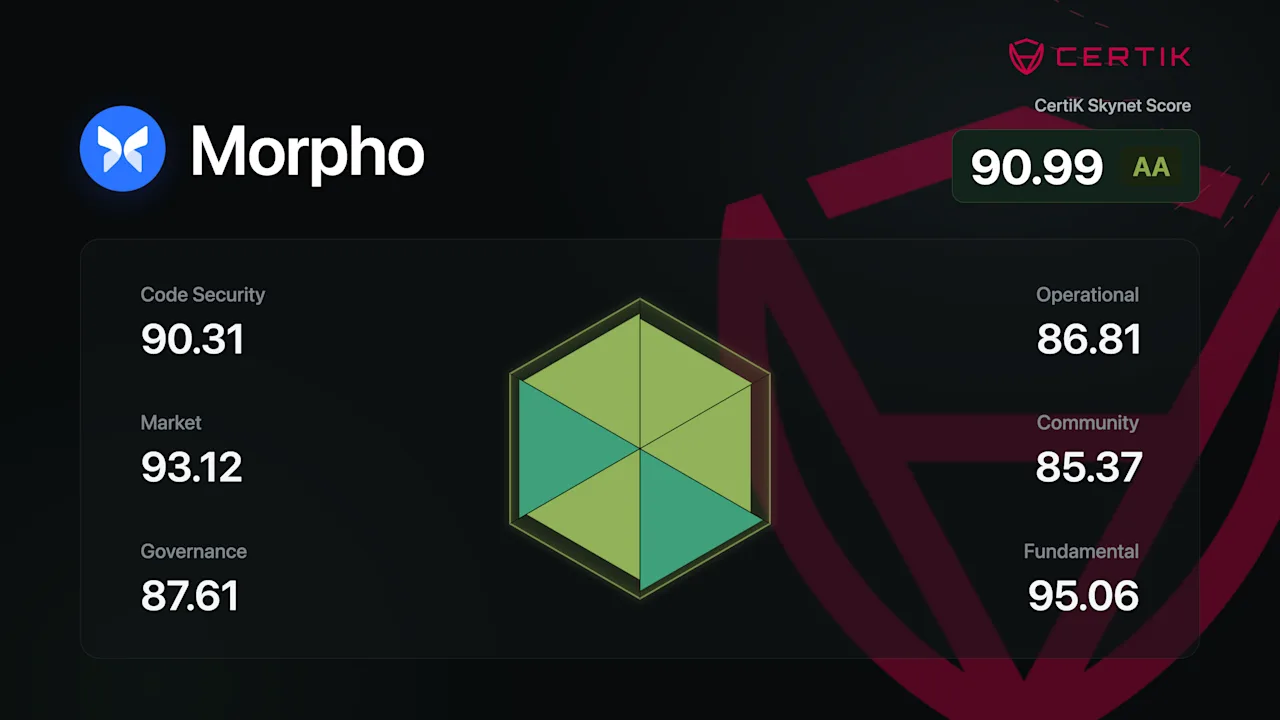
As of September 28, 2026, Morpho’s CertiK Skynet Score was 90.99, with an AA rating. This is a dated, project-level risk snapshot rather than a substitute for analyzing the collateral, oracle, curator, and counterparty risks of individual markets.