

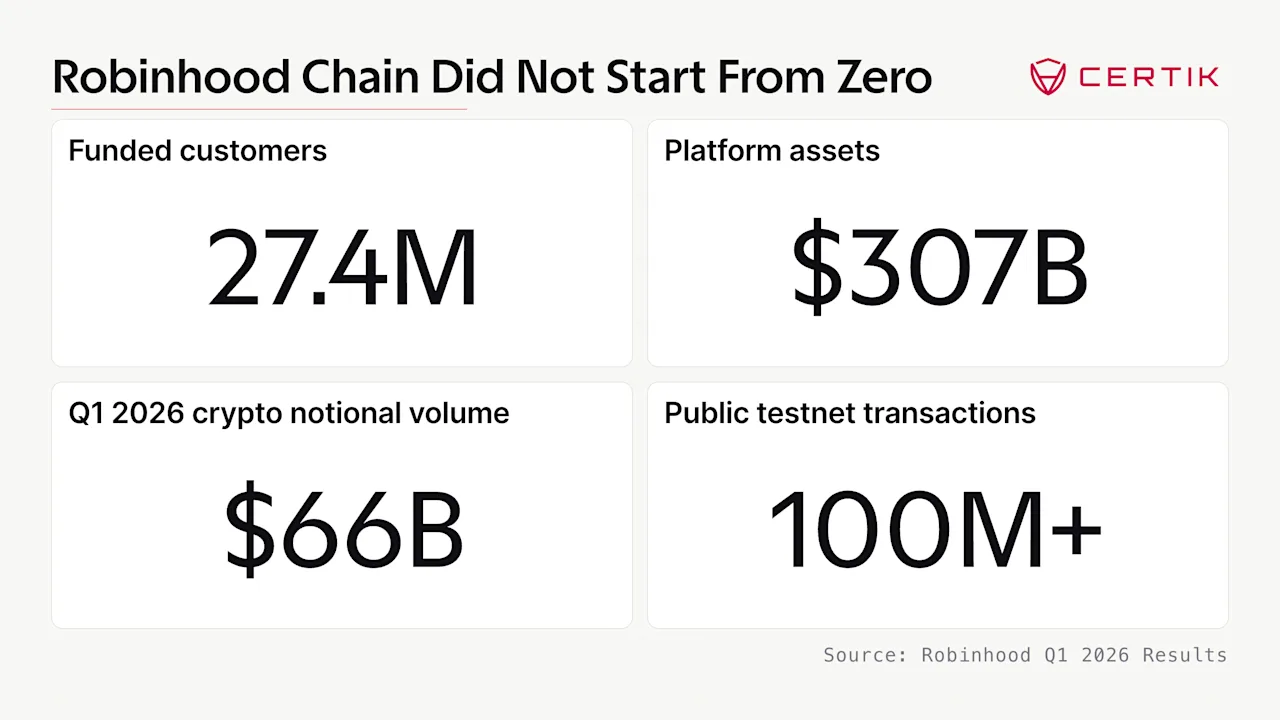
Robinhood is moving its customers, assets, and trading infrastructure onchain through Robinhood Chain. The company ended the first quarter of 2026 with 27.4 million funded customers and USD 307 billion in platform assets, giving the new network a distribution base that most Layer 2 networks have to build from scratch.
Vlad Tenev and Baiju Bhatt founded Robinhood in 2013 after developing trading software for hedge funds. Johann Kerbrat now leads its Crypto and International businesses, while the 2025 acquisition of Bitstamp added institutional execution and global crypto infrastructure through an exchange founded in 2011 with more than 50 active licenses and registrations.
The company began this transition in June 2025, when it introduced U.S. stock and exchange-traded fund (ETF) tokens in Europe and announced an Arbitrum-based Layer 2. Robinhood Chain launched its public mainnet on July 1, 2026, turning the strategy into a live market test: can Robinhood connect its brokerage distribution, Stock Tokens, Robinhood Wallet, and decentralized finance (DeFi) liquidity within the same onchain financial system?
Stock Tokens Are Moving Beyond the Brokerage App
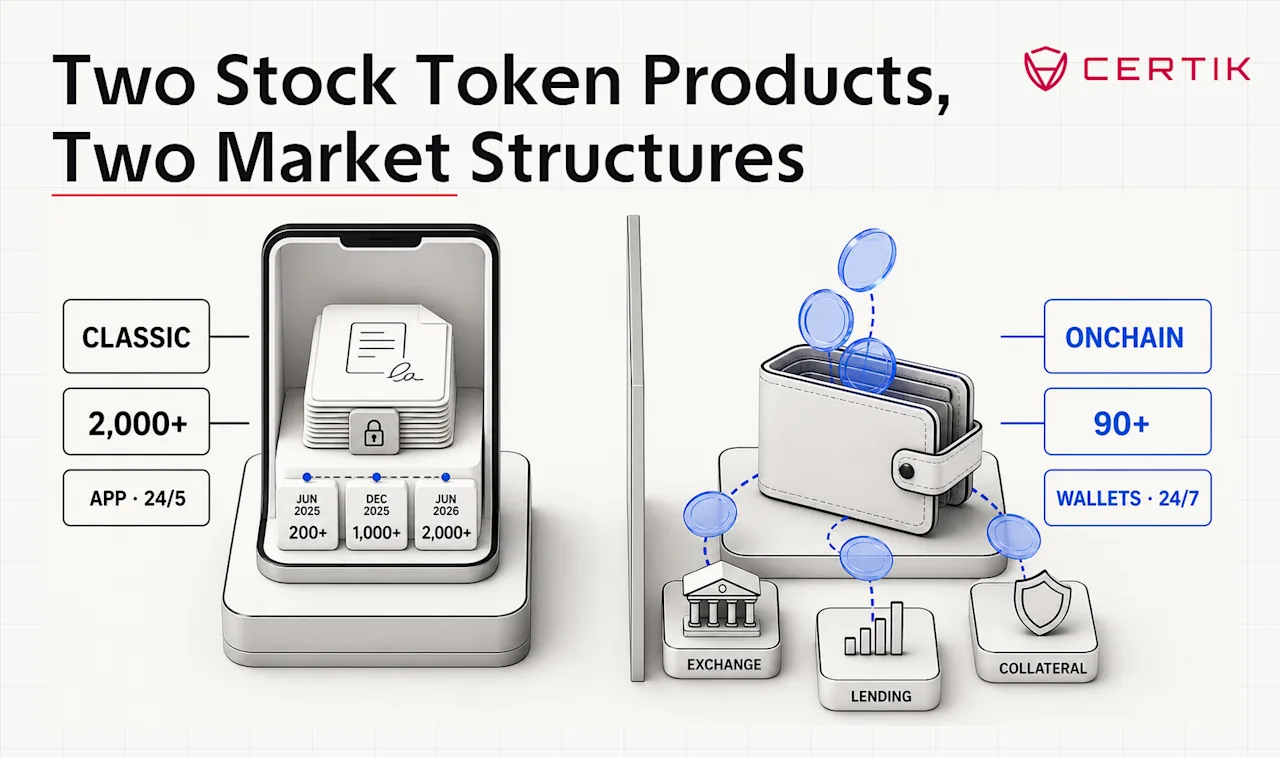
Robinhood expanded its European product from more than 200 U.S. stock and ETF tokens at launch in June 2025 to more than 1,000 tokens by the end of that year. By June 2026, eligible customers in the European Union and European Economic Area could access more than 2,000 Classic Stock Tokens linked to U.S.-listed stocks and exchange-traded products. A separate onchain range launched in July 2026 with more than 90 Stock Tokens available through Robinhood Wallet and other compatible wallets, reaching more than 120 countries subject to jurisdictional restrictions.
These figures cover two products with different legal and technical structures. Classic Stock Tokens are derivative contracts between customers and Robinhood Europe, UAB that are priced against an underlying stock or exchange-traded product. They support 24/5 trading, with dividend payments delivered through the app, although holders do not own the underlying shares or receive rights in them. The contract also exposes customers to Robinhood Europe counterparty risk, including the possibility of loss if the entity becomes insolvent.
The new onchain Stock Tokens are tokenized debt securities issued by Robinhood Assets (Jersey) Limited. They provide economic exposure without granting legal or beneficial ownership of the underlying securities, even though Robinhood states that each token is backed 1:1 by underlying shares held with a licensed custodian and monitored daily. Eligible holders can swap the tokens through compatible wallets and exchanges, deploy them into onchain applications, use them as collateral, and request direct redemption from the issuer in certain circumstances after completing its identity checks.
The new structure gives U.S. equity exposure a broader market surface than the Classic product. It can move through wallets, decentralized exchanges, lending markets, and collateral systems, while its value and recoverability continue to depend on the issuer, custody of the backing shares, secondary-market liquidity, and redemption terms.
Robinhood Chain Gives Onchain Stock Tokens a DeFi Market
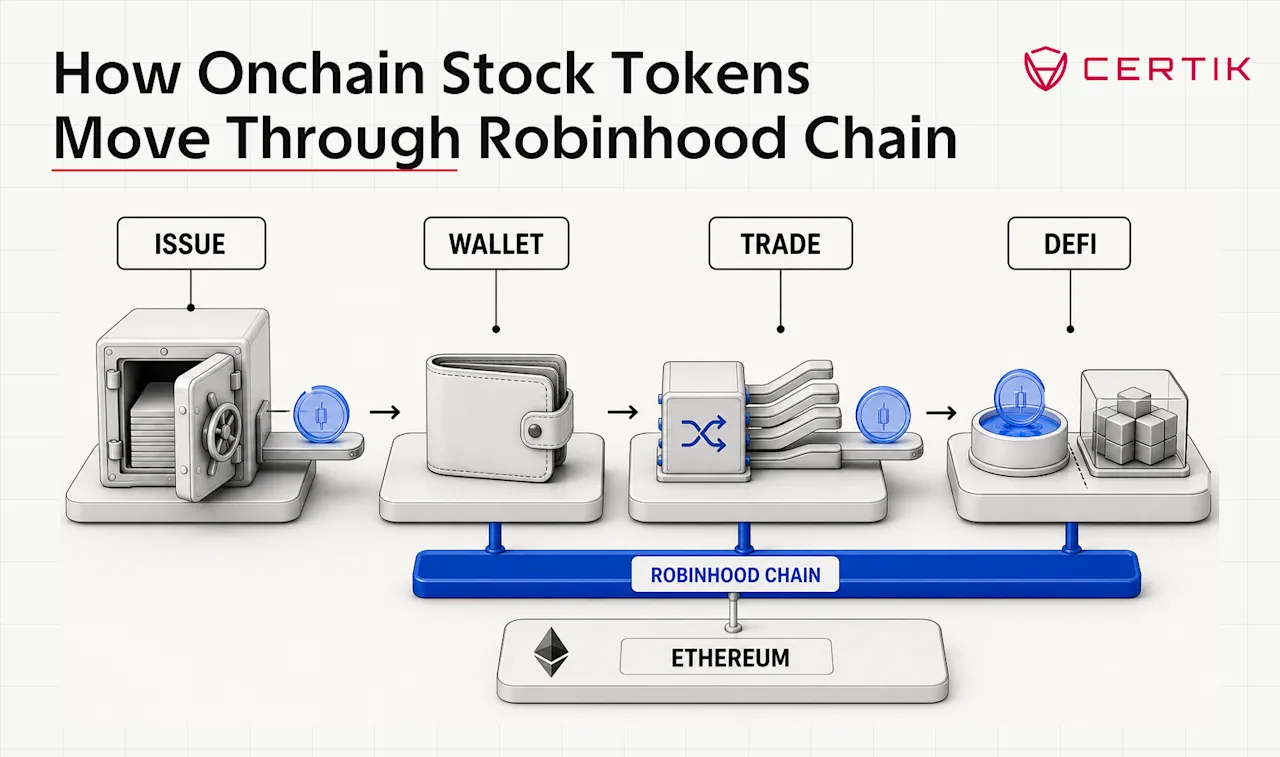
Robinhood could already distribute tokenized exposure through its European brokerage app, but a dedicated chain gives the new onchain Stock Tokens somewhere to move after issuance. They can enter self-custody wallets, decentralized exchanges, lending markets, and collateral workflows rather than remaining confined to a single interface.
Arbitrum provides the Ethereum Virtual Machine (EVM)-compatible execution environment, while Ethereum supplies data availability and final settlement. This architecture lets Robinhood connect to established wallets, development tools, and DeFi protocols without having to create an isolated application environment.
Account abstraction is intended to make those systems usable by brokerage customers. Gas sponsorship, transaction batching, session keys, and spending controls can hide much of the wallet complexity, producing a relatively direct path from acquiring a Stock Token to holding it in Robinhood Wallet, trading through an integrated decentralized exchange (DEX), or using it in an eligible lending or collateral market.
Each step adds dependencies. Robinhood Chain provides sub-second soft confirmations through its sequencer, while full Ethereum finality typically arrives about 13 minutes after a batch is submitted. Withdrawals through the canonical bridge remain subject to a seven-day challenge period, and every DeFi integration introduces its own smart contract and liquidity risks.
Robinhood Chain therefore gives the onchain Stock Tokens a programmable market beyond the brokerage app. Adoption now depends on whether users and protocols have a reason to use that market.
The Ecosystem Is Designed for Tokenized Capital Markets
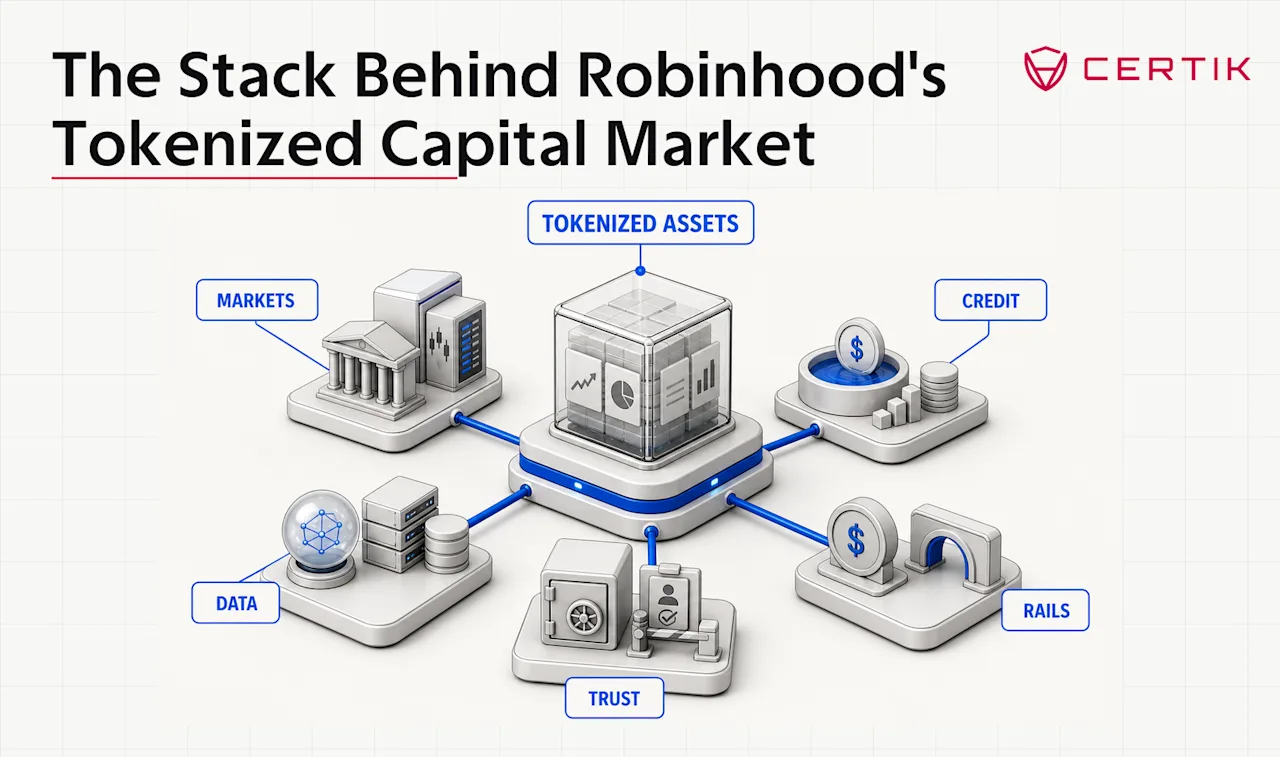
Robinhood Chain's initial ecosystem covers the main functions required to operate tokenized financial assets. Uniswap, Rialto, Lighter, Arcus, and Bitstamp form the trading layer, while Morpho supplies lending. Chainlink, Alchemy, Arbitrum, and Offchain Labs support data and infrastructure. Paxos and LayerZero/Stargate provide stablecoin and cross-chain rails, BitGo and Fireblocks cover institutional custody, and TRM Labs supplies compliance tooling.
The composition follows the lifecycle of an onchain asset. Issuance has to connect with liquidity, price data, credit, custody, and compliance before a tokenized security can function as part of a capital market. Robinhood is assembling those components around a distribution channel that already reaches tens of millions of funded customers.
Memes Ignited Trading, While Capital Moved Into DeFi
Memecoins and token launchpads generated the first clear burst of activity on the public mainnet. On July 8, Vlad Tenev wrote that Robinhood was building the network to be the best chain for real-world assets and added that it also worked well for memes.
That post coincided with two product changes. Robinhood integrated Robinhood Chain into Robinhood Wallet on the same day, allowing users to bridge from Solana, Ethereum, Arbitrum, and other networks before swapping within the app. It also began subsidizing gas fees for Robinhood Chain swaps above USD 5 executed through Robinhood Wallet until September 29.
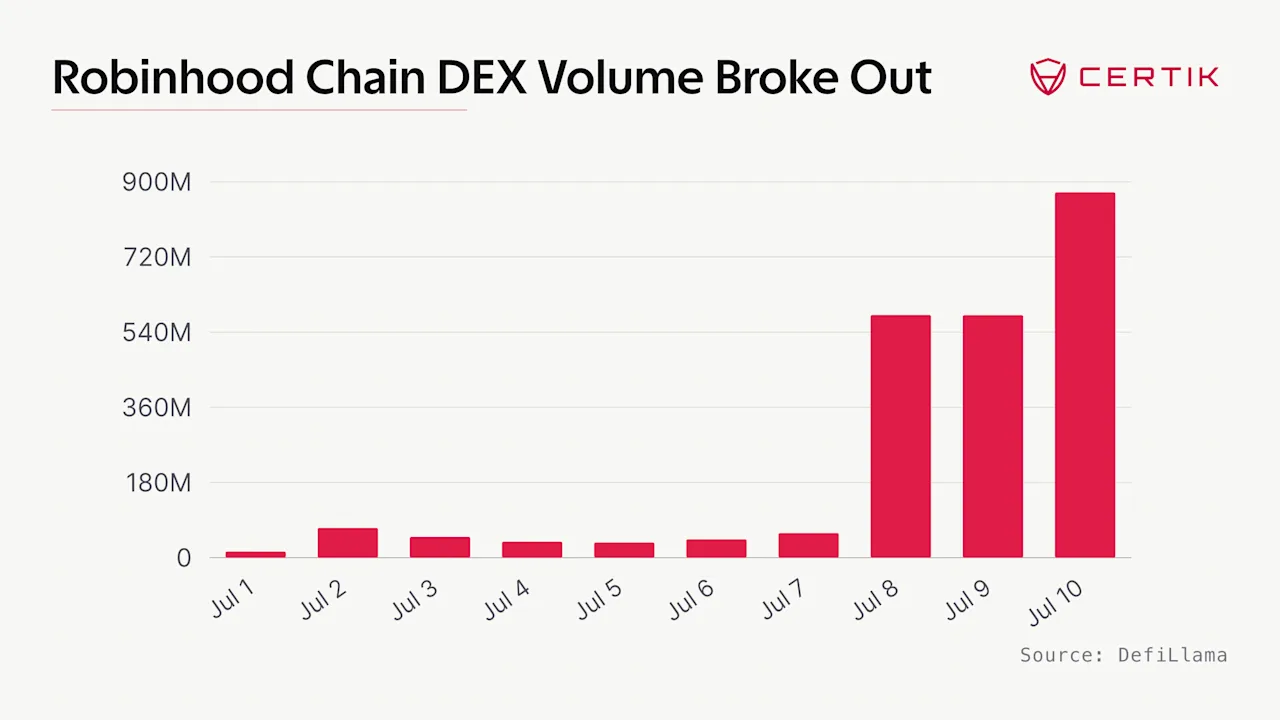
The change remains visible after smoothing the data across two periods:
- Average daily DEX volume increased from USD 44.8 million between July 1 and July 7 to USD 678.9 million between July 8 and July 10, a 15.2x increase.
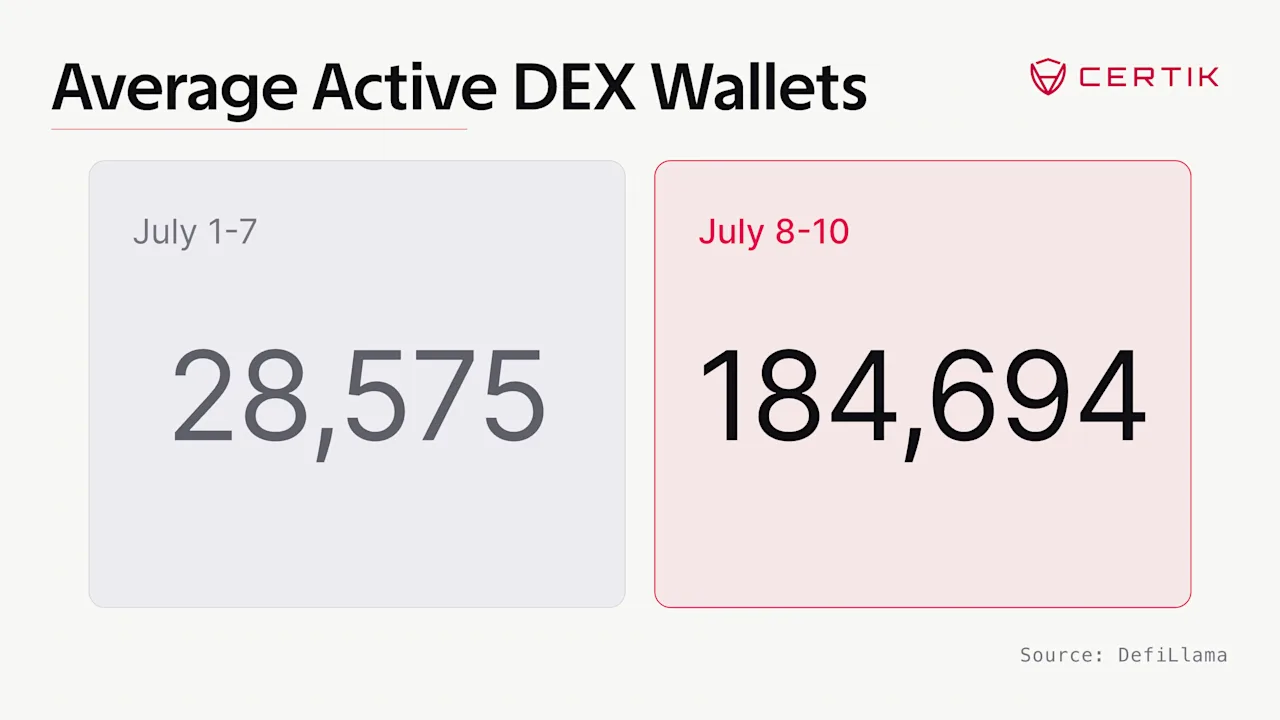
- Average active DEX wallets increased from approximately 28,600 to 184,700, a 6.5x increase.
- NOXA's share of new token issuance rose from 42.7% to 76.8%.
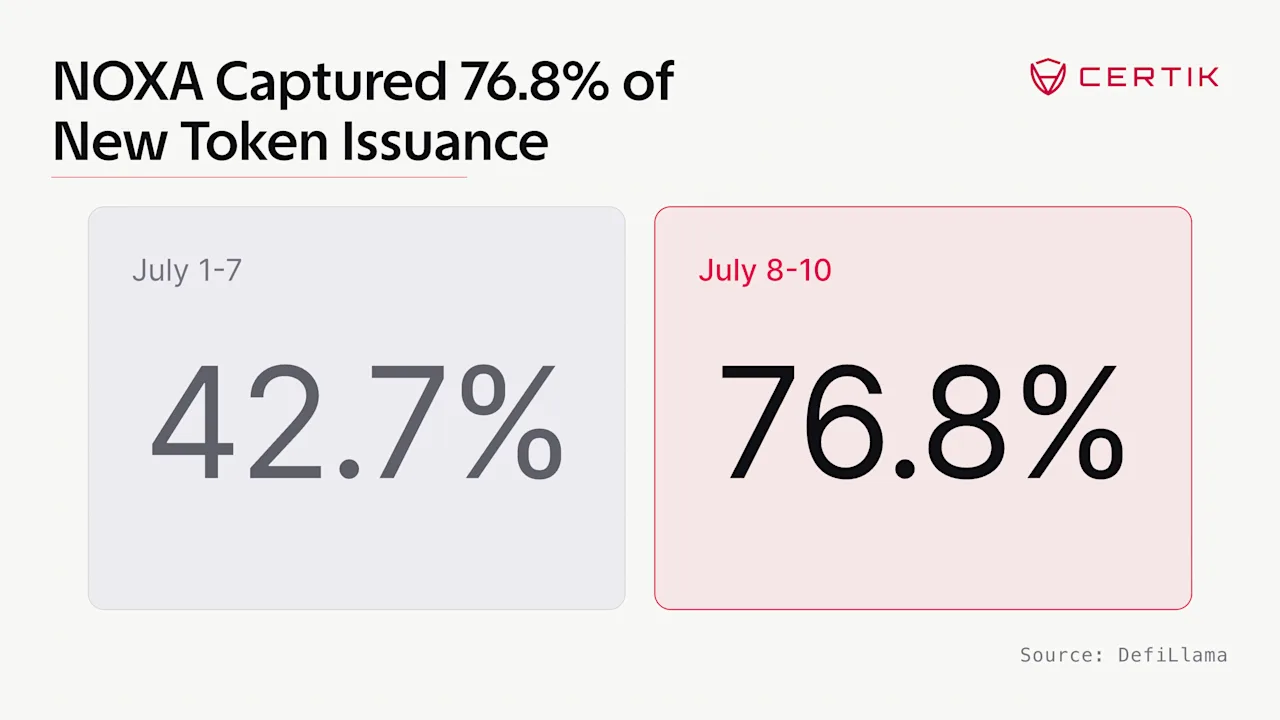
Activity expanded sharply after July 8, while token issuance became increasingly concentrated in a single launchpad. The available data cannot isolate the contribution of meme attention from Robinhood Wallet distribution or gas subsidies, since all three arrived at roughly the same time.
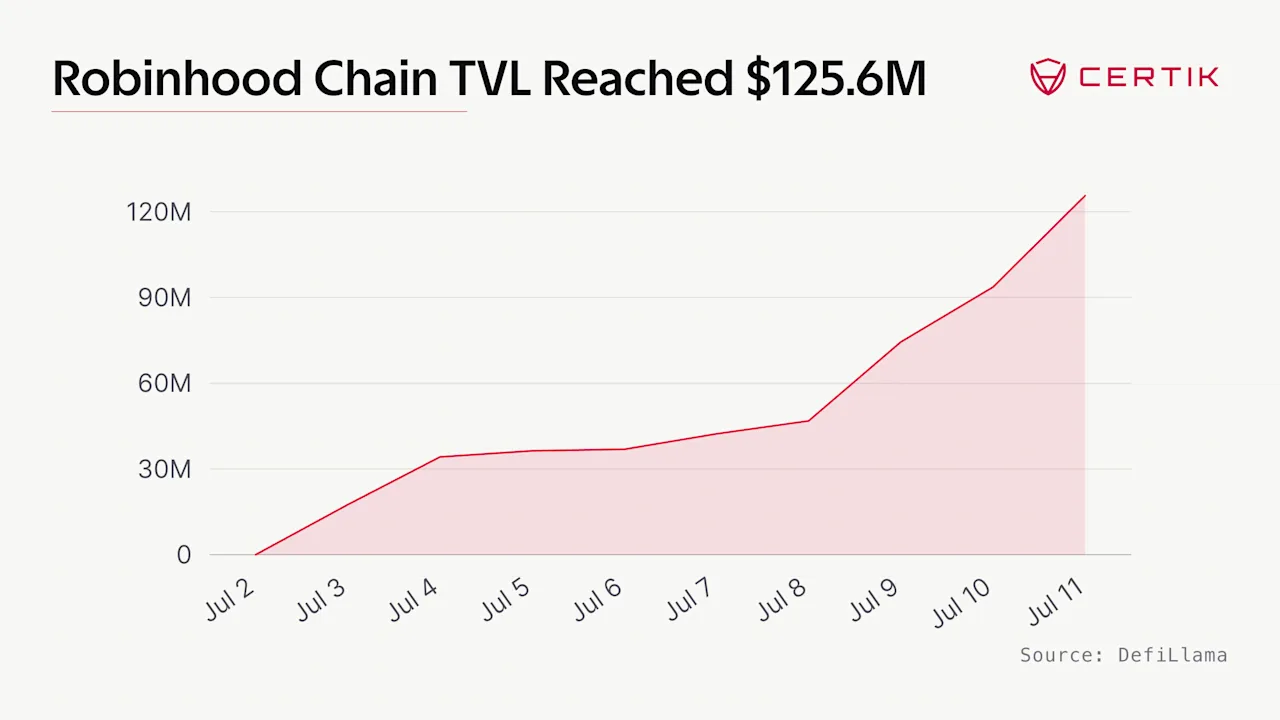
The capital data adds another layer. Robinhood Chain had USD 125.6 million in DeFi total value locked (TVL) on July 11, including approximately USD 79.8 million in Morpho Blue, or 63.5% of the total. Uniswap V2, V3, and V4 accounted for a combined USD 40.1 million, or 31.9%, while Arcus Perps held another USD 5.5 million, or 4.4%.
Robinhood Chain also held approximately USD 299.4 million in circulating stablecoins on July 11, consisting mainly of about USD 209.3 million in USDG and USD 90.25 million in USDe. Circulating stablecoin supply measures assets present on the chain regardless of whether they have been deposited into a DeFi protocol, so it should not be added to TVL.
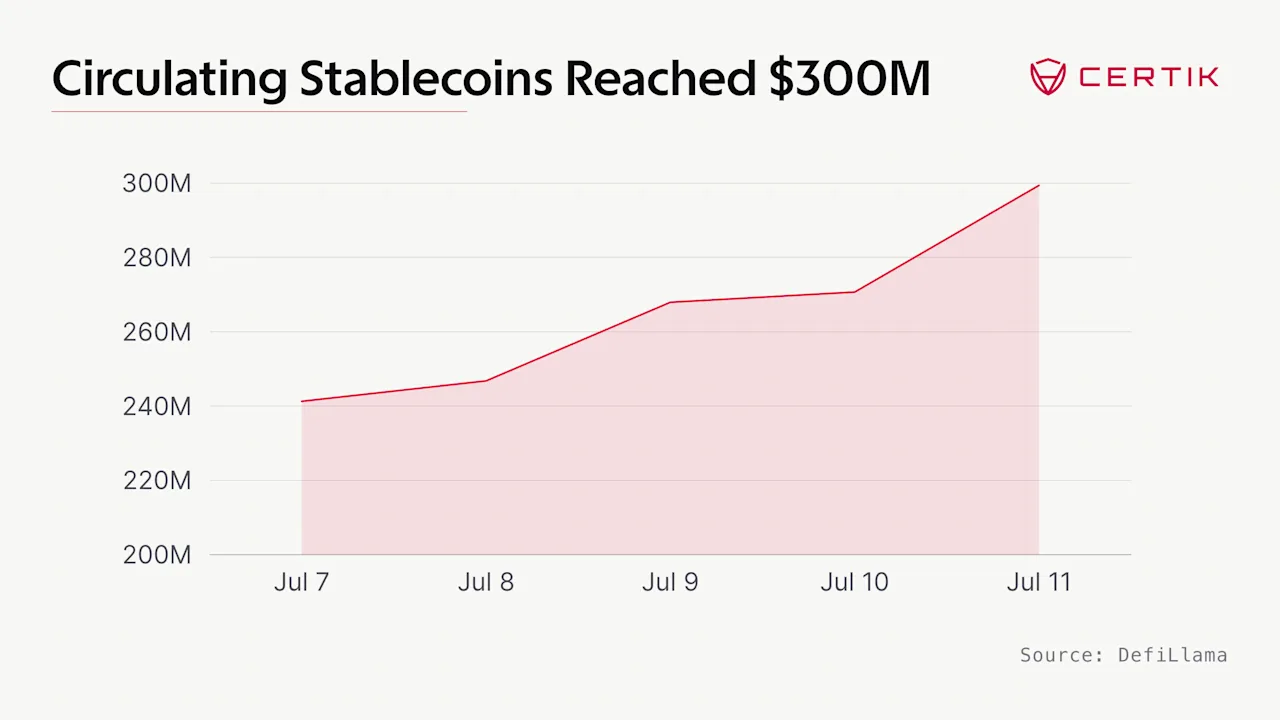
Memecoin issuance and trading remain the clearest early source of demand, but the TVL composition shows that some of the capital has moved into lending and DEX liquidity. That distinction matters because it begins to connect early market activity with the financial infrastructure Robinhood ultimately wants the chain to support.
The Remaining Test Is Whether the Two Markets Converge
Early trading activity can help a permissionless chain establish liquidity, applications, and user behavior. Robinhood's longer-term strategy requires that activity to broaden into a market for tokenized financial assets, connecting Robinhood Wallet and DeFi liquidity with a brokerage customer base approaching 28 million funded accounts.
Public onchain data does not yet demonstrate sustained demand for the new Stock Tokens. The size of Morpho and Uniswap shows that DeFi liquidity is forming, but it does not reveal how much, if any, comes from tokenized equities. The more useful indicators will be Stock Token trading volume, unique holders, lending collateral, redemption activity, and the share of network activity generated outside token launchpads.
The legal and operational structure will matter alongside adoption. The onchain Stock Tokens can become easier to trade and compose once they enter wallets and DeFi, although they remain claims issued by a Robinhood entity rather than direct ownership of the underlying shares. Backing, redemption, issuer risk, sequencer reliability, bridge security, and protocol risk continue to shape the product after issuance.
Robinhood Chain now has two visible trajectories: permissionless activity led by memes and launchpads, and the 24/7 tokenized capital market Robinhood is building around Stock Tokens. The network's strategic value will depend on whether those trajectories eventually converge.