
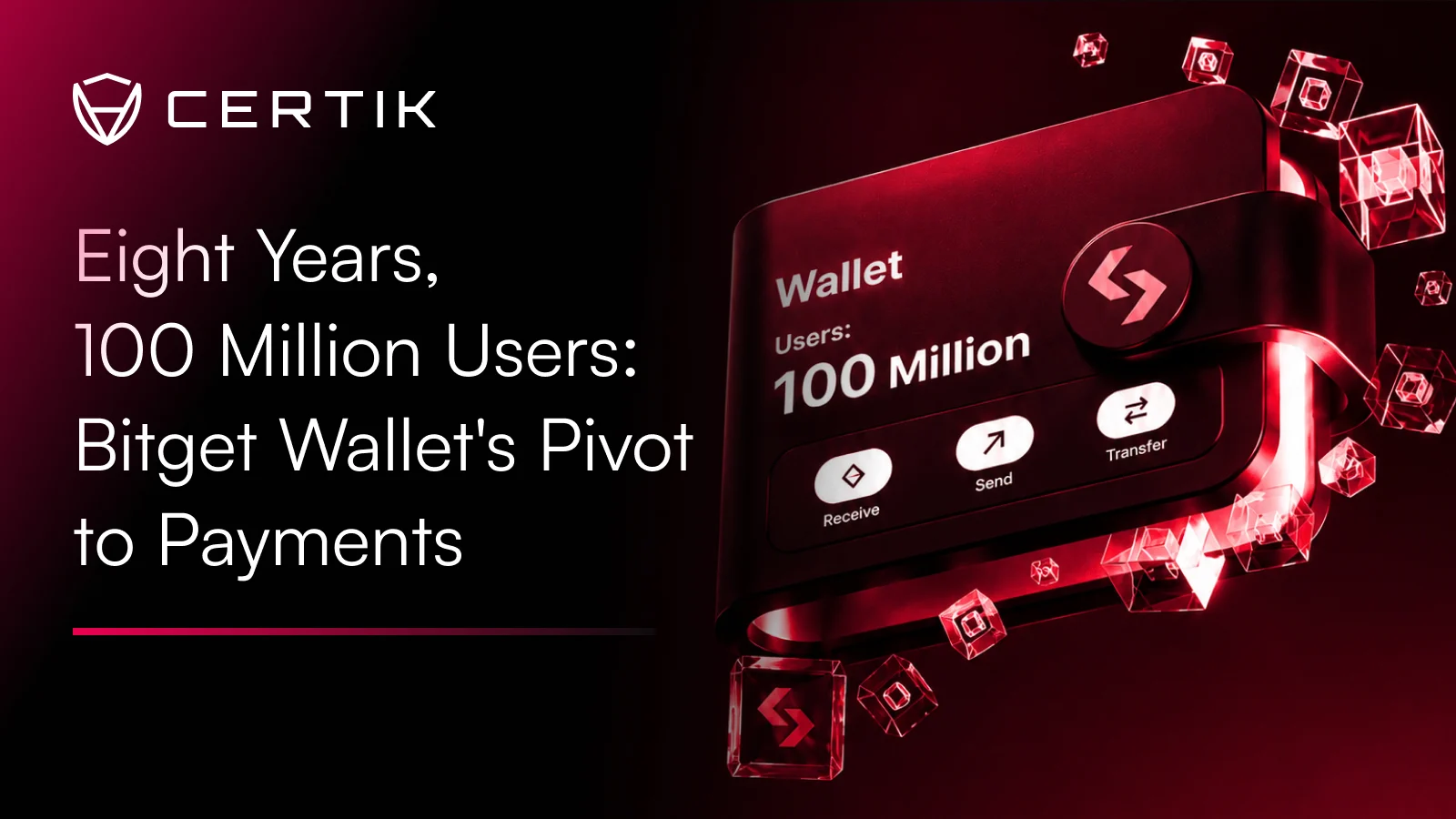
Bitget Wallet's predecessor, BitKeep, launched in 2018 as the first multi-chain non-custodial wallet, with a USD 2M seed round and one thesis: when most wallets still revolved around a single ecosystem, build one that didn't.
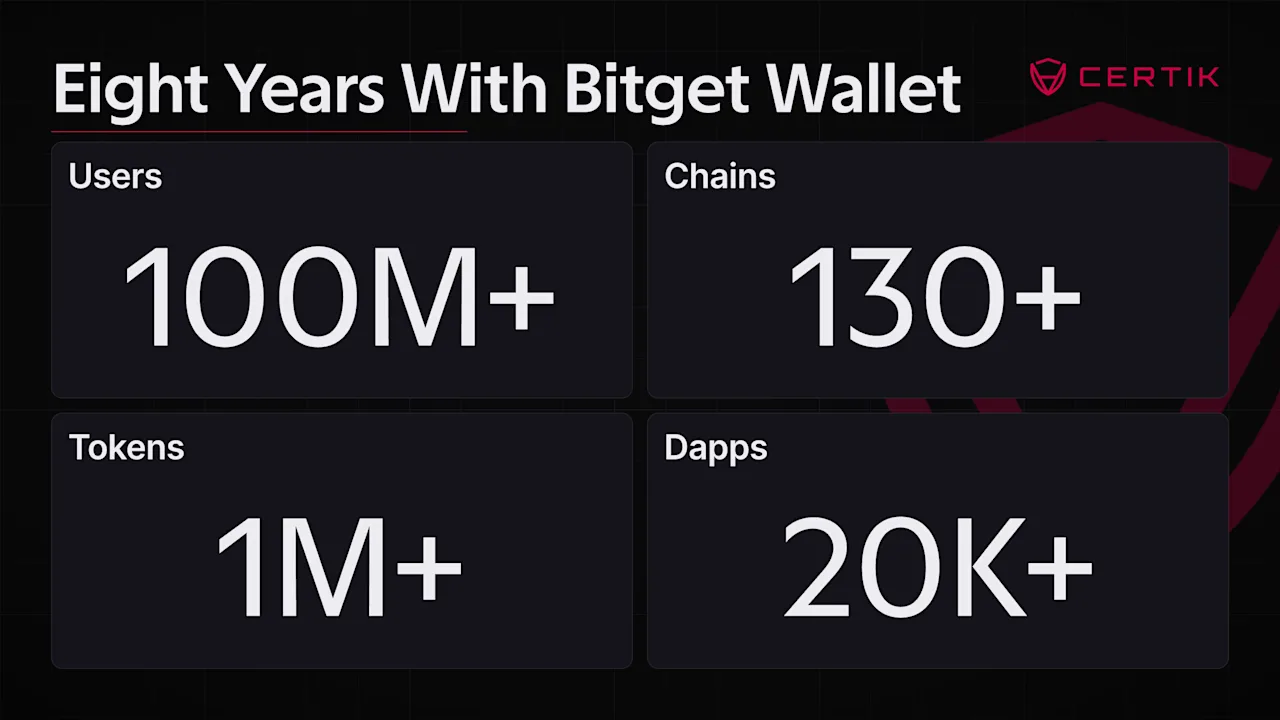
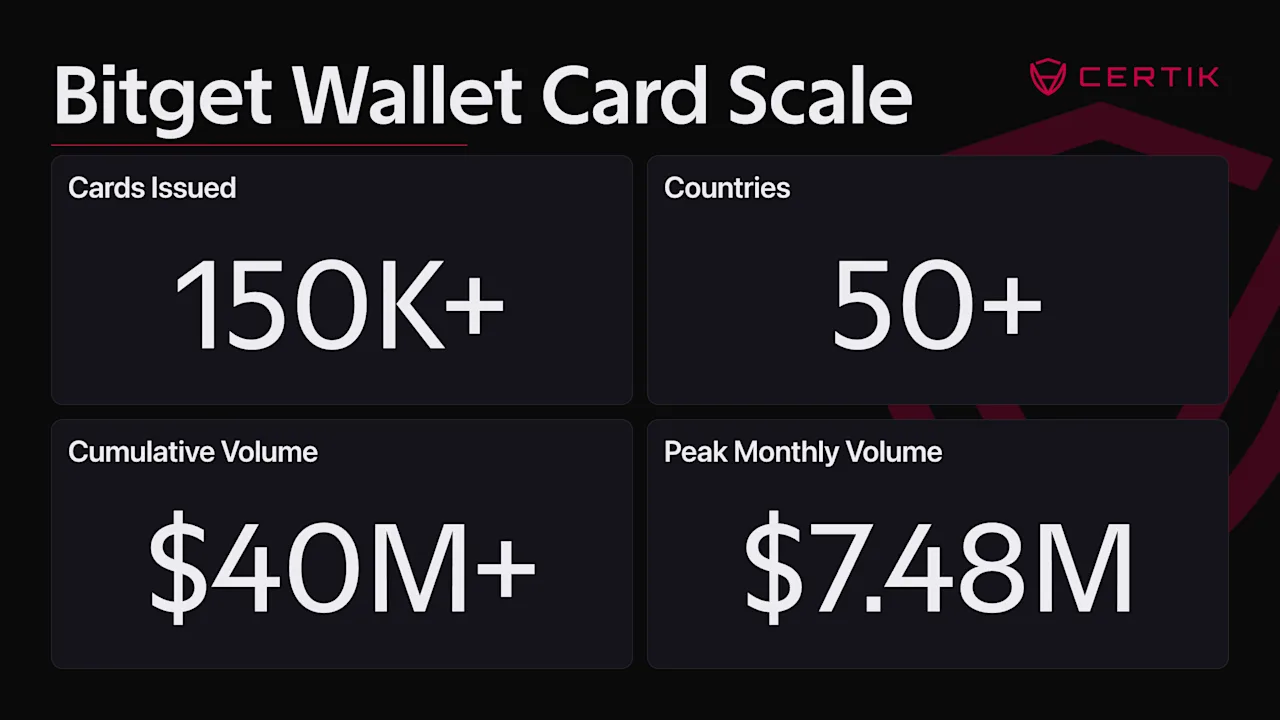
Eight years on, that thesis no longer describes the product. Bitget Wallet now spans 130+ chains, 1 million+ tokens, 20,000+ decentralized applications (DApps), and 100M+ users. Its daily payment users have outnumbered traders. What it has become is an on-chain account for everyday finance—one account to save, pay, and invest, accessible to anyone with a phone. The Bitget Wallet Card alone has cleared USD 40M in cumulative on-chain volume across 13 months.
Security is the foundation, backed by a USD 300M user protection fund, one of the largest of its kind in the industry. GetShield, Bitget Wallet's proprietary risk engine, screens every transaction in real time, flagging phishing, malicious DApps, and risky approvals before funds move. CertiK has also audited Bitget Wallet, which holds an AA rating on Skynet. It is still a wallet, but already much more than the product it set out to be.
2018 to 2022: Multi-Chain Was the Early Bet
The early differentiator came down to a single word: more. While MetaMask anchored the Ethereum Virtual Machine (EVM) ecosystem and Phantom led Solana, Bitget Wallet bet on a single wallet covering every chain.
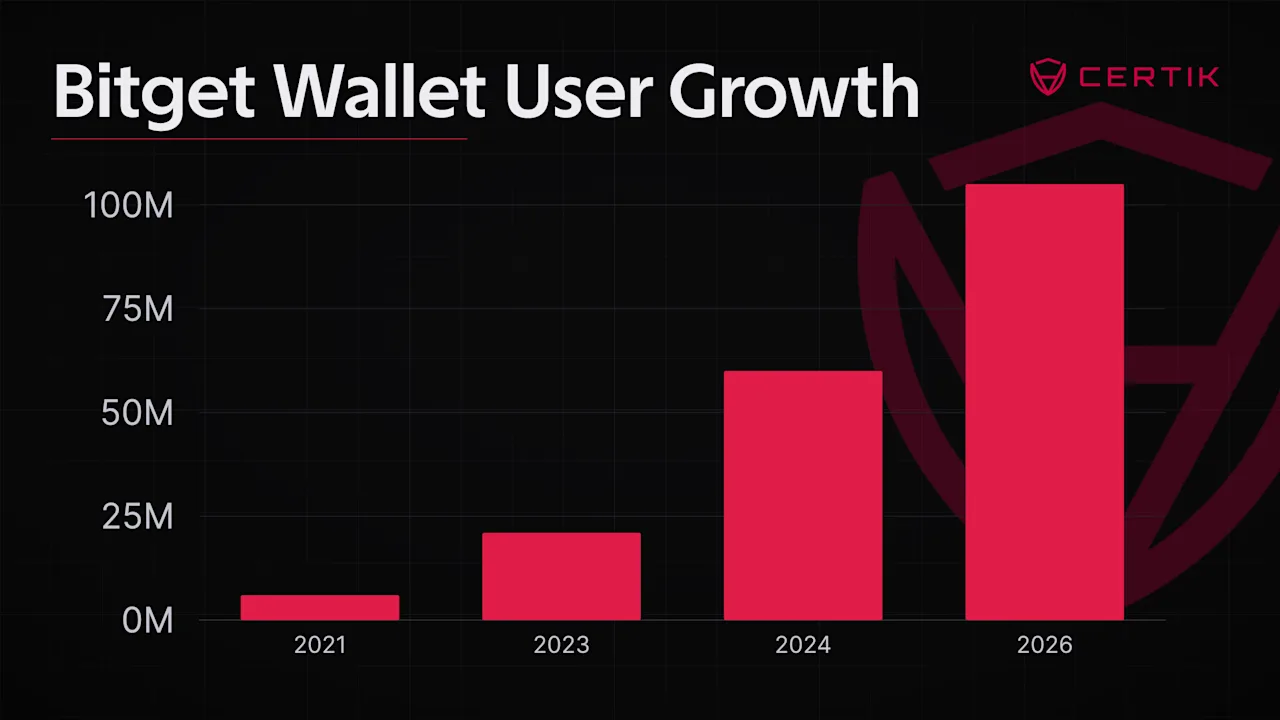
The bet paid off in 2021:
- 6 million users
- 40+ chains
- 10,000+ DApps
- 45,000+ tokens
Daily active users (DAU) grew 11.7x year over year. At this stage, Bitget Wallet remained a utility wallet built around multi-chain asset management. The product had clear advantages, although security and operations were still developing alongside its rapidly growing user base. That same year, CertiK provided Bitget Wallet with security audits, advanced monitoring, and risk detection, reinforcing the wallet's security layer as it scaled toward millions of users across multiple chains.
2023 to 2024: Acquisition, Relaunch, and Growth From 20M to 60M Users
The year 2023 was the inflection point. Bitget completed its acquisition of BitKeep, and the security stack expanded alongside the deal through multi-party computation (MPC) development, a stricter Android Package Kit (APK) review process, and integration with Bitget's USD 300M user protection fund. For a self-custodial wallet, that foundation helped determine whether the next wave of users could be absorbed at scale.
Scale came quickly. The user base reached 20 million by the end of 2023 and then 60 million during 2024, representing 300% year-over-year growth. Supported chains increased from more than 40 to more than 100, while the product line expanded beyond asset management into decentralized exchange (DEX) routing and Earn yield products.
In August 2024, monthly active users (MAU) crossed 12 million, and Bitget Wallet ranked first in global Web3 wallet downloads that month. The product was building capabilities that had not existed during its earlier multi-chain utility phase.
2025: The Product Matrix Comes Together
If 2024 was the user-side breakout, 2025 was the product-side breakout. Cards, payments, yield, real-world assets (RWAs), and cross-chain trading all advanced together.
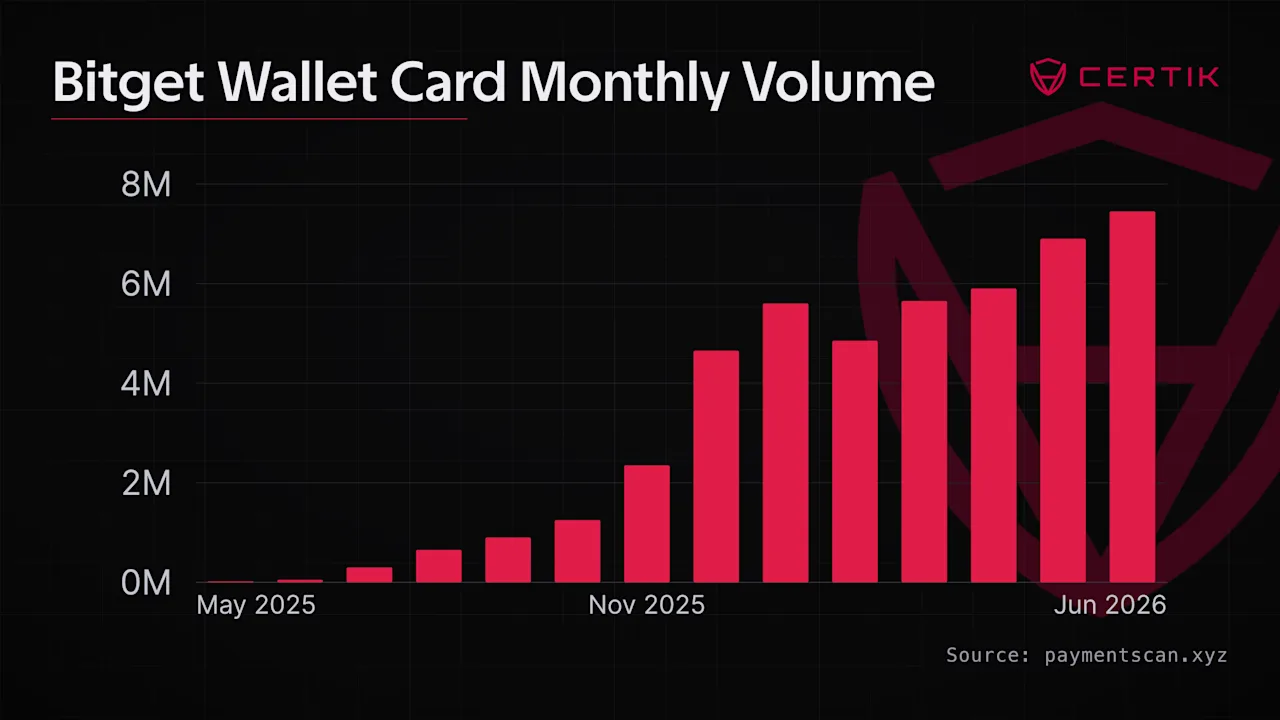
The Bitget Wallet Card offers the clearest indication of this shift. From its first on-chain record in April 2025, monthly volume climbed to USD 6.6M by the end of the year, with annual spending increasing more than 28x year over year. The card operates across more than 50 countries through Mastercard and Visa, while fees on stablecoin spending have been reduced to zero.
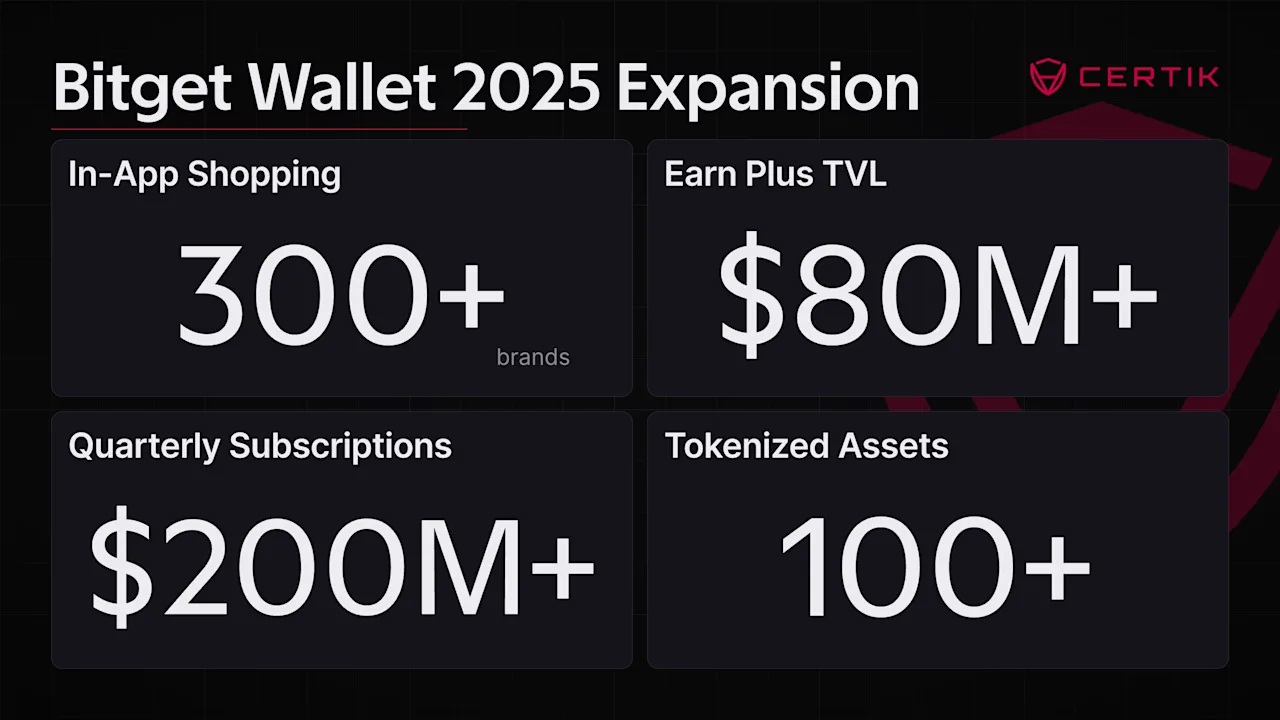
Beyond the card, payments expanded through localized infrastructure. Bitget Wallet integrated Brazil's Pix payment system, national QR payment systems across Southeast Asia, and Solana Pay. USDT and USDC bank transfers became available in Nigeria and Mexico, while in-app shopping expanded to more than 300 global brands.
The Earn product line grew alongside payments. Stablecoin Earn Plus, powered by Aave, crossed USD 80M in total value locked (TVL) within one month of launching. Quarterly subscriptions approached USD 200M, representing growth of roughly 10x. Ondo Global Markets also brought more than 100 tokenized assets, including stocks and exchange-traded funds (ETFs), into the wallet.
Bitget Wallet's DEX aggregator extended cross-chain routing across 25 networks, and the wallet became the first self-custodial wallet to support limit orders on both Base and Solana. By the end of the year, it had assembled a complete payment stack covering cards, QR payments, bank transfers, and an in-app shop within a single self-custodial account.
2026: A Payment Network Takes Shape
Entering 2026, the Bitget Wallet Card's growth continued, with more than 150,000 cards issued worldwide.
The Pay hub became Bitget Wallet's primary navigation surface, bringing crypto cards, QR payments, and bank transfers together within a single layer. Behind it, the Onchain Payments Matrix connects 90 million users with 150 million merchants across more than 50 markets.
In May 2026, Bitget Wallet expanded its card service to Africa through Immersve. The integration enabled USDC payments to settle through automatic foreign-exchange conversion, addressing a key gap in the wallet's emerging-market coverage.
Eight Years
Bitget Wallet grew from six million users to 100 million and from more than 40 supported chains to more than 130. During the same period, the Bitget Wallet Card went from having no on-chain payment history to processing months with approximately USD 7M in volume, while Earn subscriptions approached USD 200M per quarter.
Each number is unremarkable in isolation. Together, they tell the same story: eight years spent turning a wallet from a tool into a financial surface capable of supporting everyday behavior. The next round of competition will not be determined by feature count alone, but by how effectively wallets can carry on-chain assets into the off-chain world.