Tool 1. TradingView
TradingView tracks tens of thousands of crypto pairs, as well as stocks, indices, commodities, bonds, futures, and forex. It’s a great first stop to get a handle on any token’s price history.
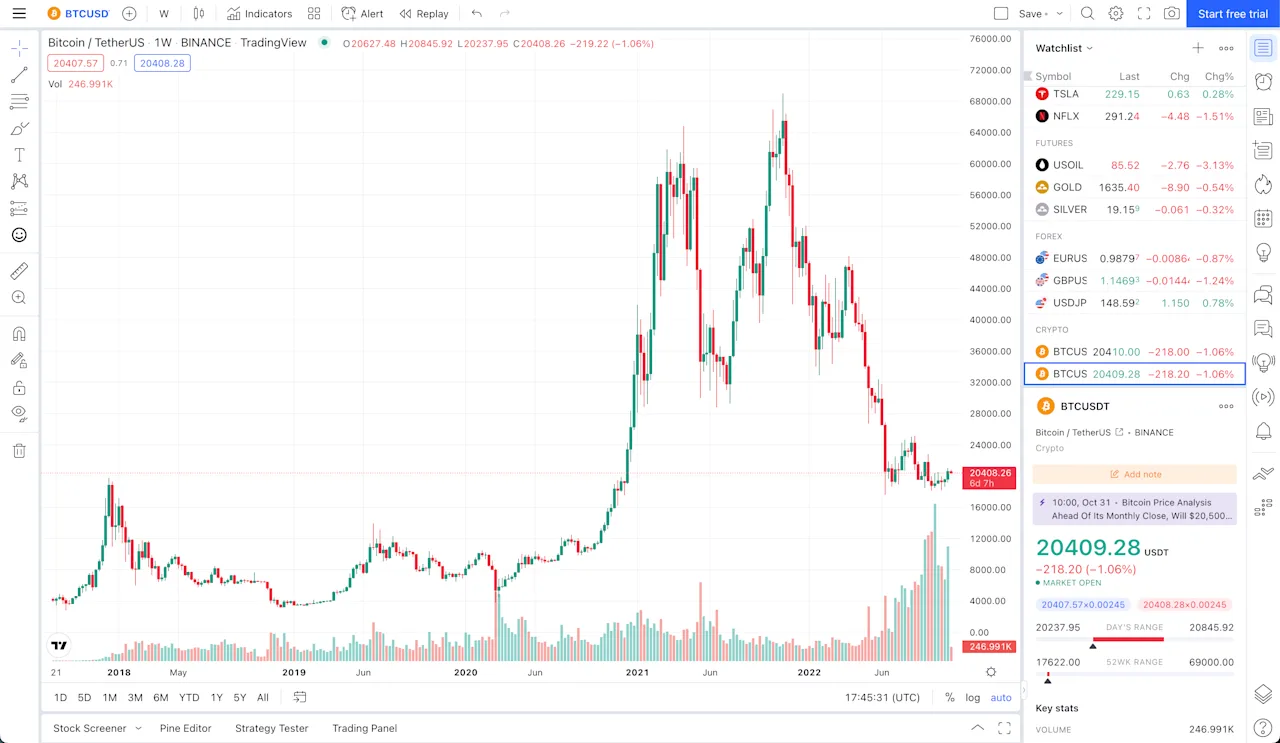
Following the classic buy low, sell high advice is often easier said than done, but by zooming out and taking a look at the long-term price history of a token (in this case Bitcoin), it’s possible to get an intuitive idea of relative risk. Buying at 20,000 today represents a lower relative risk.
That’s not to say the price cannot decline further from here, or that it will ever again necessarily reach the heights it did in 2021, but it is fair to say that the chart above indicates that there is historical upside to buying at 60,000.
TradingView’s free tier offers a lot of functionality, but for more customized insights, alerts, and indicators you’ll need to upgrade to a premium subscription.
Tool 2. DexTools
While TradingView is more focused on the larger institutional markets and centralized exchanges, DexTools has its speciality right there in its name: decentralized exchanges (DEXs).
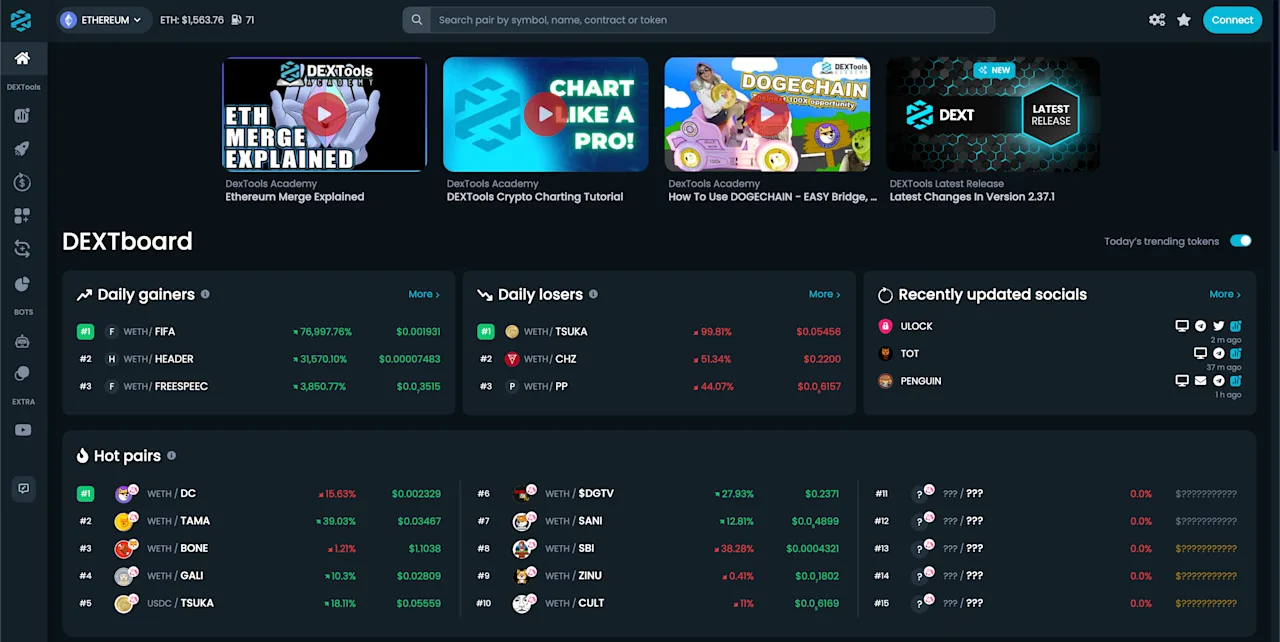
The DexTools homepage gives an overview of trending tokens, as well as the day’s biggest gainers, losers, and project’s with recently updated social media pages. It’s easy to sort by blockchain ecosystem using the drop-down menu at the top left, with more than 50 chains (ranging from some of the most important ecosystems to some you definitely want to research thoroughly before bridging over to).
The fact that all DEX trades are visible on-chain provides insights that aren't available using CEX data. DexTool’s Big Swap Explorer is one of these metrics.
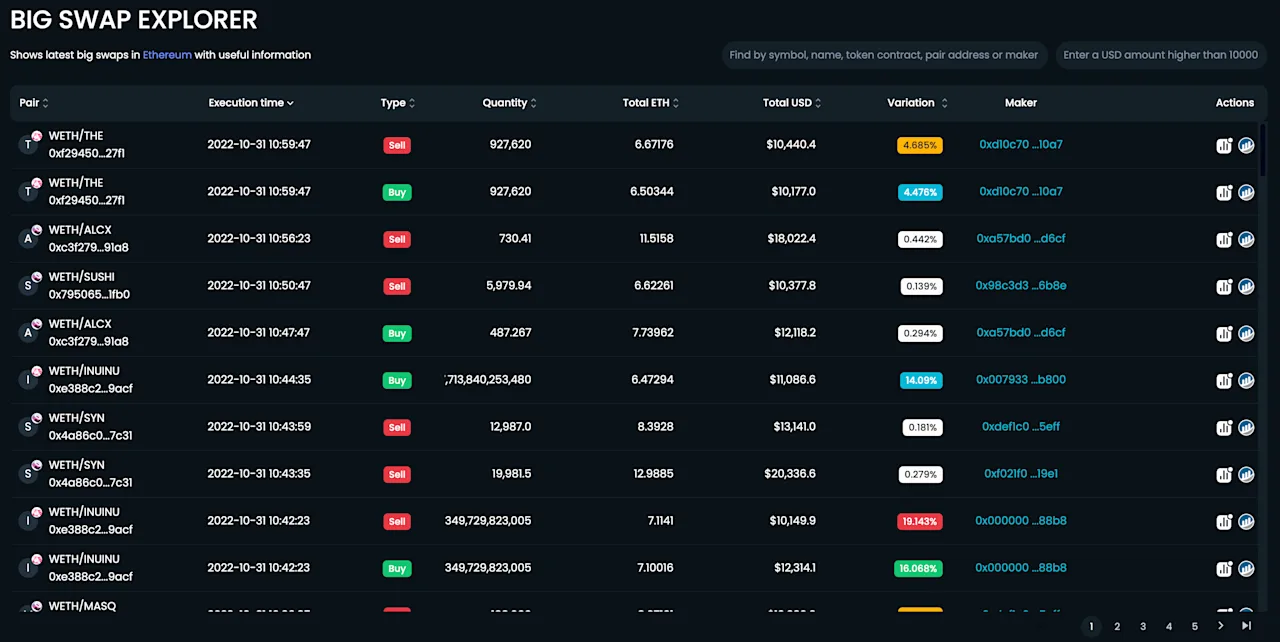
It’s easy to filter by minimum trade size and token symbol to target a specific trade over a certain dollar value, or to leave these blank and explore whale activity across all token pairs.
Understanding the activity of a token’s largest holders is an important part of calculating risk. While every action can be interpreted differently in a market with as much noise as crypto, generally it’s a good sign to see whales buying the token in bulk and holding it for a long period.
Tool 3. Security Leaderboard 360
TradingView and DexTools provide useful insights into price action and recent tokenholder movements. But what if you want all of these insights and more in one place, without having to switch back and forth between half a dozen tabs?
Enter the Security Leaderboard 360. Here, you can analyze price and liquidity data along with on-chain and social sentiment metrics all on the one dashboard.
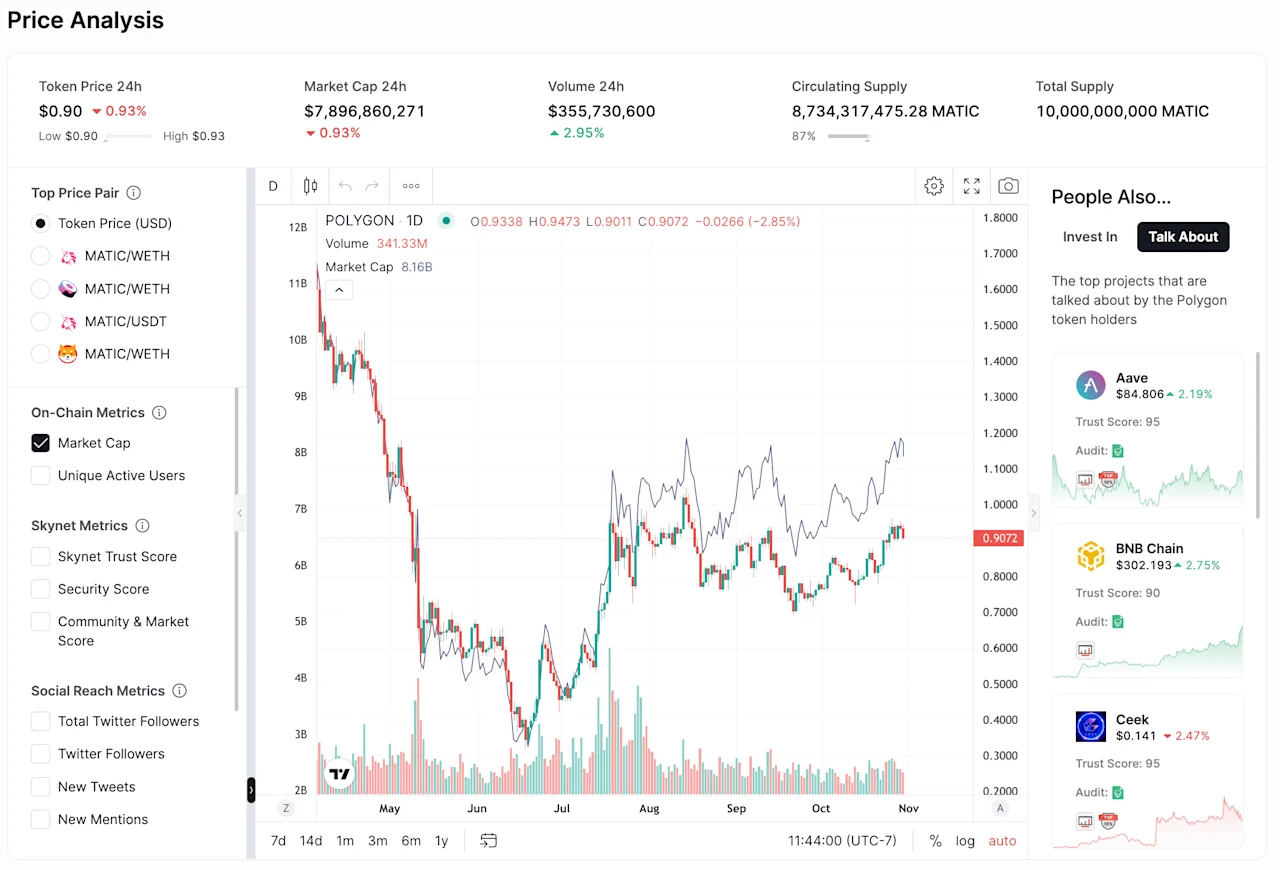
The first module that helps with evaluating market opportunities is the Price Analysis module. Here you can find a wealth of information, from token price to circulating supply and related projects. The above screenshot highlights an important insight: the MATIC token’s market capitalization has increased faster than the token price. This indicates that the circulating supply has increased.
Circulating supply as a percentage of total supply is one important metric to keep an eye on. A low ratio indicates that there is a lot of room for current token holders to be diluted by future emissions.
The chart above shows that MATIC’s market capitalization (which you can enable with the click of a button on the left hand side of the dashboard) diverged from the close relationship it had with the token price, beginning in late July. As the Price Analysis module clearly shows, 87% of MATIC’s total supply is currently in circulation, which is relatively high – a good sign. However, the token emission schedule is one metric a prospective investor should investigate before committing funds to a project.
Another useful dashboard is the Market Volatility & Liquidity module. The metrics presented here will help you decide whether now is the right time to buy, and if so which market has the best liquidity.
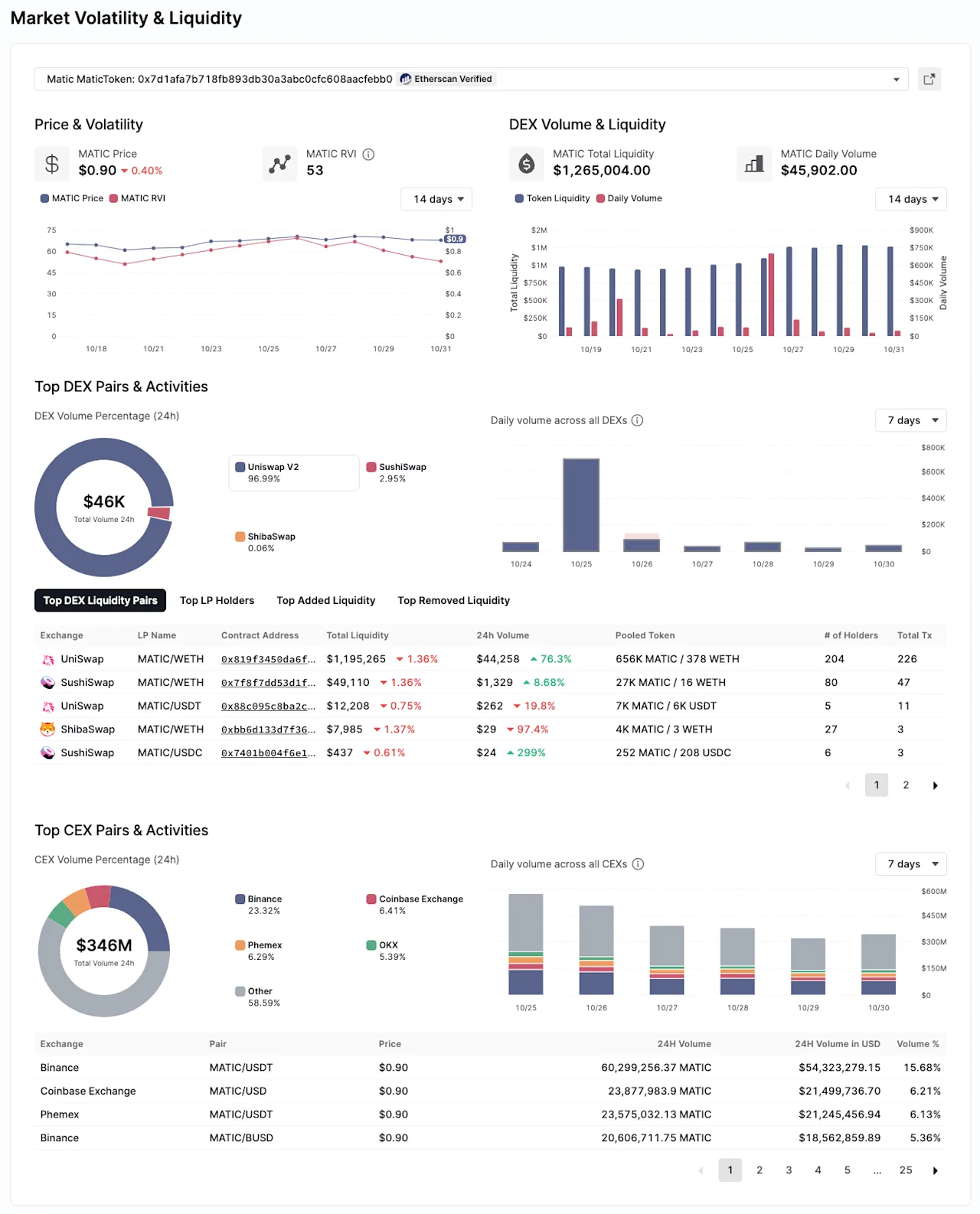
Based on the information on the dashboard, it would be a better choice to trade MATIC on a centralized rather than decentralized exchange. DEXs only account for 346M. Due to the higher liquidity on CEXs, traders will avoid slippage and other inefficiencies by avoiding DEXs in this case.
Binance’s MATIC/USDT pair makes up over 15% of total liquidity, with $54M in 24 hour liquidity.
The Relative Volatility Index is another helpful metric. MATIC’s RVI of 53 is just above the middle of the index, indicating that recent volatility is slightly to the upside rather than the downside. Trading when a token’s RVI is at either extreme (close to 0 or 100) heightens potential risk and reward, while accumulating when volatility is low is a solid long-term strategy.
Timing Your Entry to the Market
While it may be true that time in the market beats timing the market, that doesn’t mean there’s no benefit to be gained from making an informed decision about when to enter a particular market. The tools outlined above provide the data needed to make this informed decision. Armed with the knowledge these powerful tools provide, you can go forward with the confidence and conviction that comes from knowing how to separate the signal from the noise.
However, while quantitative metrics and historical price data can help give an indication of potential future movements, none of this is infallible. It’s essential to calculate your personal risk tolerance and choose projects you think can survive the turbulent crypto markets.