Advanced Formal Verification of HyperEnclave's TEE

技术洞察 教育
Advanced Formal Verification of HyperEnclave's TEE

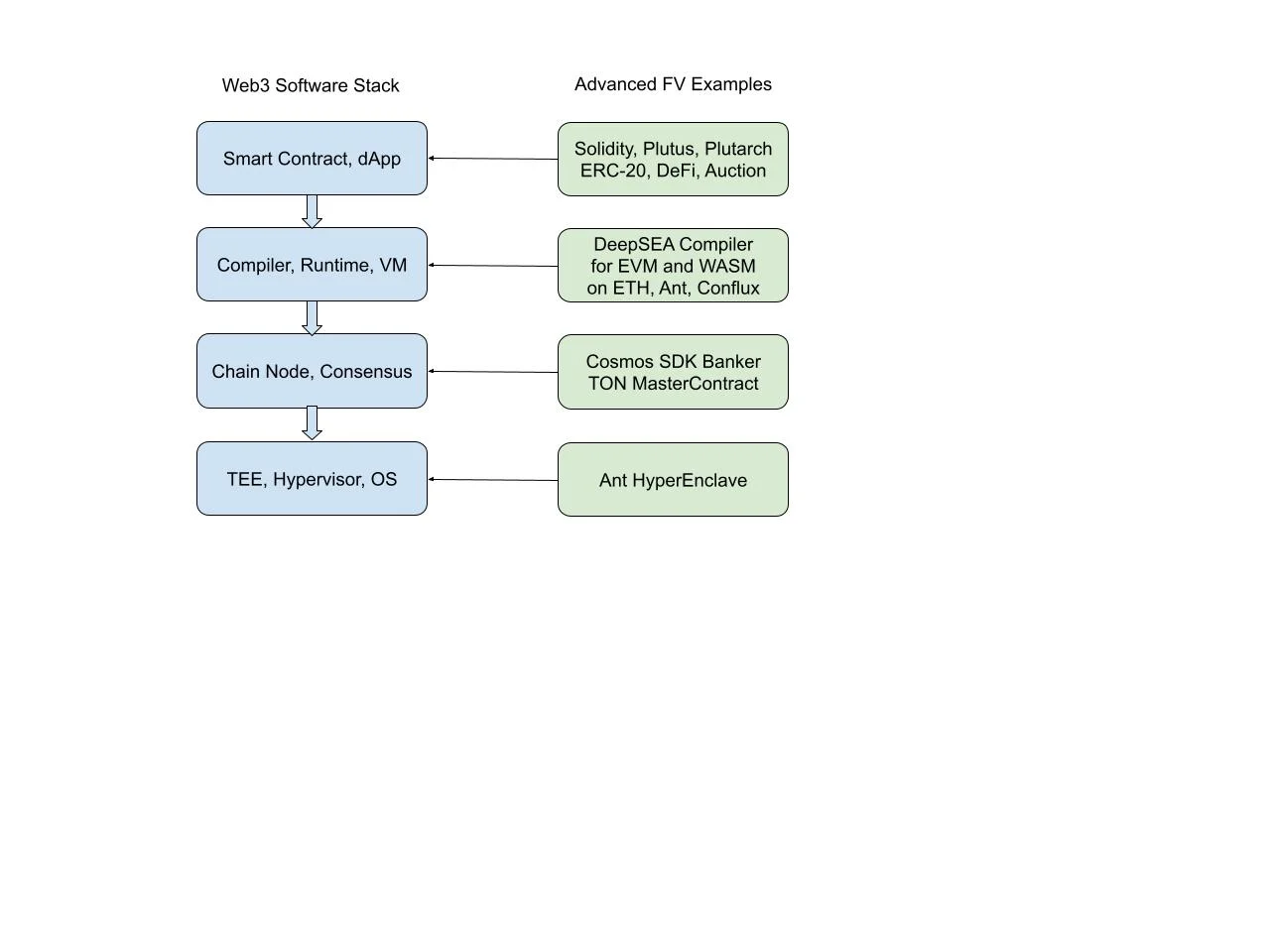
As shown in the figure below, a Web3 application relies on a stack of layers. The business logic of the contract is written in a high-level programming language, which is compiled into bytecode and interpreted by a bytecode interpreter on the blockchain node. The node runs chain-specific code to compute configurations like staking, as well as a consensus algorithm. Finally, the blockchain node runs on physical cloud infrastructure, which involves system software like operating systems, virtual machine hypervisors, trusted execution environments, and more.
HyperEnclave blog post

相关博客

Post-Quantum Signatures, Part 2: From Trees to Forests
新的 · 技术洞察 ·教育

Post-Quantum Signatures, Part 2: From Trees to Forests

XMSS builds on one-time signatures by organizing OTS keys into Merkle trees and hyper-trees, delivering a practical post-quantum signature scheme with compact proofs, fast verification, and a critical trade-off: strict state management.

CertiK Completes Proof of Reserves  Verification for Gate Dubai

CertiK Completes Proof of Reserves Verification for Gate Dubai

CertiK has completed an independent Proof of Reserves (PoR) audit for Gate Technology FZE, the Dubai-based entity of the Gate Group. Gate Dubai exchange is licensed by the Virtual Assets Regulatory Authority (VARA). The audit verified that the platform's on-chain reserves fully back its user liabilities across all in-scope assets as of December 31, 2025.

CertiK’s Path Forward: Advancing Trust, Transparency, and Web3 Infrastructure

CertiK’s Path Forward: Advancing Trust, Transparency, and Web3 Infrastructure

As conversations at the 2026 World Economic Forum at Davos-Klosters, Switzerland continue to influence how global leaders engage with emerging technologies, one message is becoming increasingly clear: Web3 is entering a new phase defined by institutional participation, regulatory engagement, and long-term infrastructure.