立刻保护您的项目
借助最大的web3安全提供商来增强您的项目。
CertiK 安全专家将审核您的请求,并尽快与您联系。
强调

Hack3d: The Web3 Security Quarterly Report - Q1 2024

报告 ·安全报告 ·
Hack3d: The Web3 Security Quarterly Report - Q1 2024
  • A total of $502,522,934 was lost across 223 onchain security incidents in Q1 2024.
  • This represents a 54% increase in value lost compared to Q1 of 2023’s total of $326 million, though a minor 3.8% decrease from Q4’s losses of $522 million.
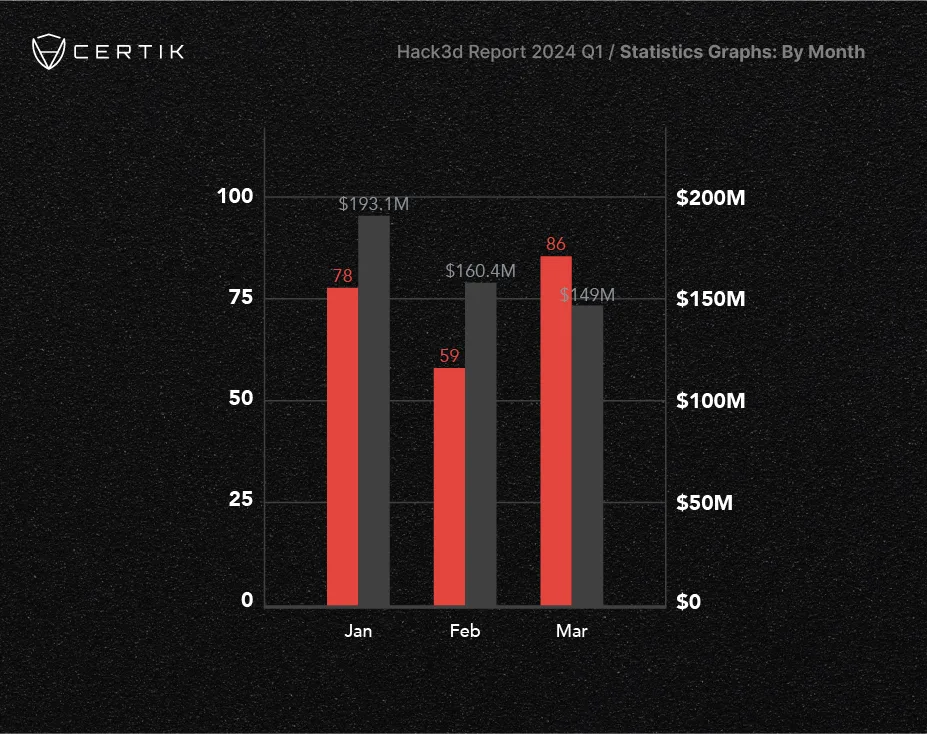
  • January was the most costly month of the quarter, with $193,132,537 lost in 78 onchain security incidents.
  • Private key compromises were once again the most costly attack vector, with $239,037,879 lost in just 26 incidents. This again represents nearly half of all financial losses, though key compromises accounted for just 11.7% of all security incidents.
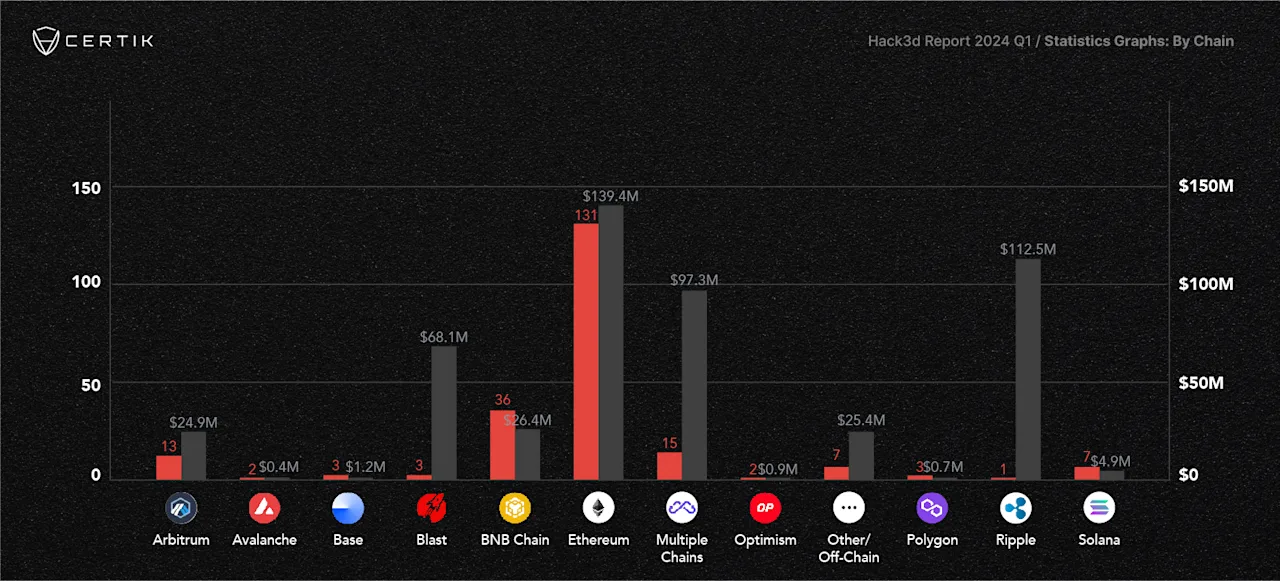
  • Ethereum experienced the highest number of security incidents, with a total of 131 hacks, scams, and exploits leading to $139 million in losses.
  • $77,970,073 of value was ultimately returned, with the majority of this figure coming from the Munchables incident.
  • Hack3d investigates the ongoing prevalence of private key compromises, as well as Solidity rounding error exploits, the unprecedented inflows to the recently-approved Bitcoin ETFs, major financial institutions’ forays into onchain finance, and the effects of Ethereum’s successful Dencun upgrade on scaling L2s.
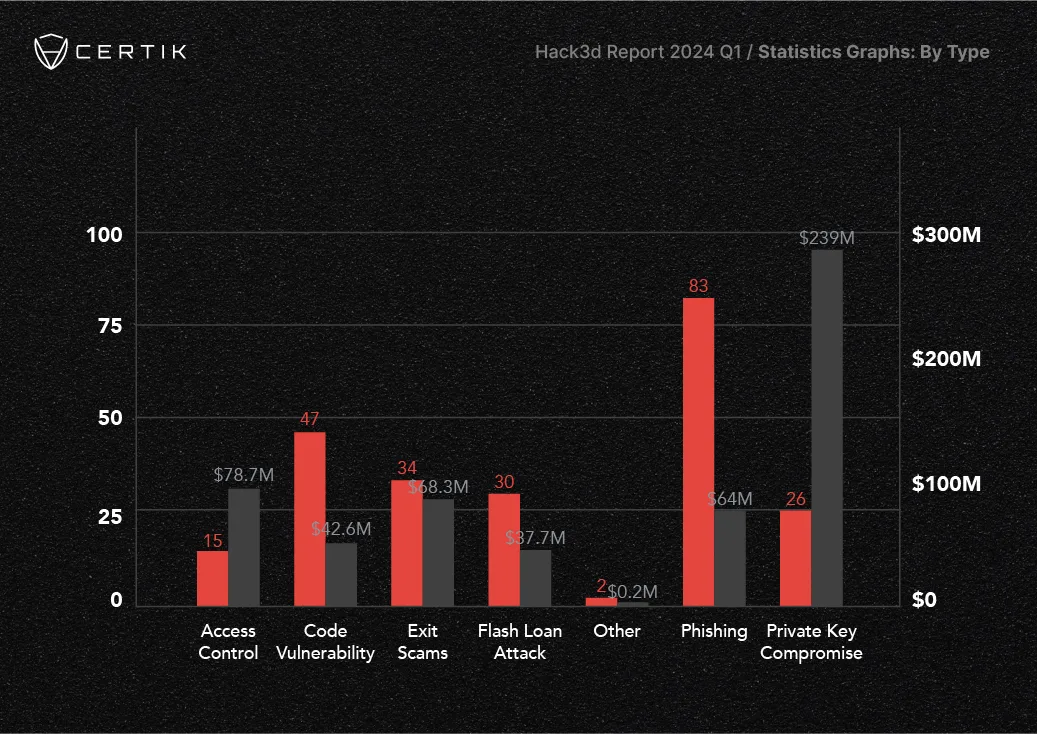
Hack3d Report 2024 Q1 - Incident Types and Financial Impact

Hack3d Report 2024 Q1 - Blockchain Incidents by Chain

Hack3d Report 2024 Q1 - Monthly Financial Impact of Security Breaches

Read the full report for free.

相关博客

Skynet State of Digital Asset Regulations Report
新的 · 报告 ·行业研究

Skynet State of Digital Asset Regulations Report

For companies operating or planning to scale globally, the implications are that multi-jurisdictional licensing is now a baseline requirement; AML compliance budgets must align with the scale of enforcement; and security audits are recurring, jurisdiction-specific costs, rather than one-time exercises.

OpenClaw Security Report

OpenClaw Security Report

The rapid adoption of OpenClaw, a popular open-source autonomous AI agent framework, reflects a broader shift toward AI-driven assistants. However, the widespread integration of this framework introduces critical security risks that may lead to unauthorized actions, data exposure, and system compromise.

Skill Scanning Is Not a Security Boundary

Skill Scanning Is Not a Security Boundary

OpenClaw is an open-source, self-hosted personal AI agent platform designed to run on a user’s local machine or server. It supports long-term memory, autonomous operation, integration with mainstream LLMs, and remote control through messaging platforms like Telegram.