Executive Summary
Q2
- A total of $688,102,941 was lost across 184 onchain security incidents in Q2 2024. This represents a 37% increase in value lost compared to Q1 2024, though there was an 18% decrease in the number of incidents quarter-over-quarter.
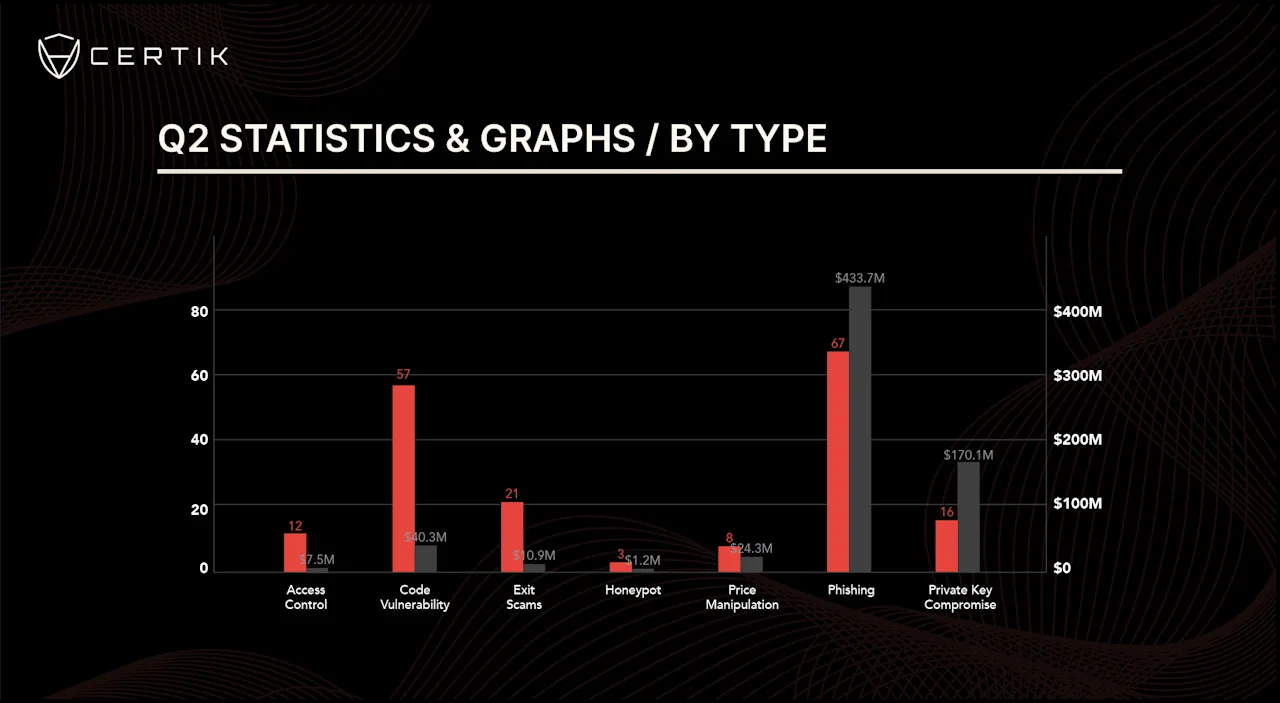
- Phishing was the most costly attack vector in Q2 2024, with $433,688,871 lost across 67 incidents, accounting for a large majority of total financial losses.
- Private key compromises followed, with $170,064,635 lost in 16 major incidents.
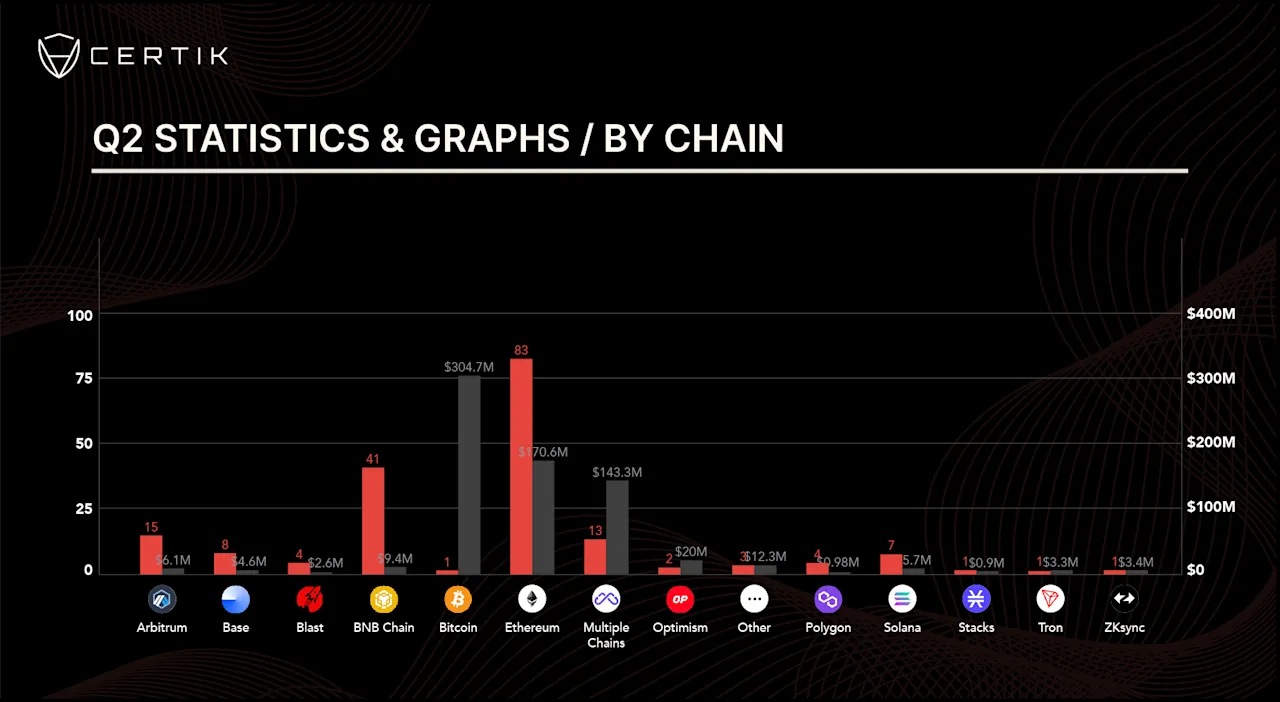
- Ethereum experienced the highest number of security incidents, with a total of 83 hacks, scams, and exploits leading to $170,636,798 in losses.
- The total dollar value of funds returned was $99,328,507 across 7 separate incidents, leading to adjusted total losses of $588,774,434 for the quarter.
- The average loss per incident was $3,739,689 and the median loss per incident was $204,614.
H1
- $1,190,398,361 was lost across 408 onchain security incidents in H1 2024.
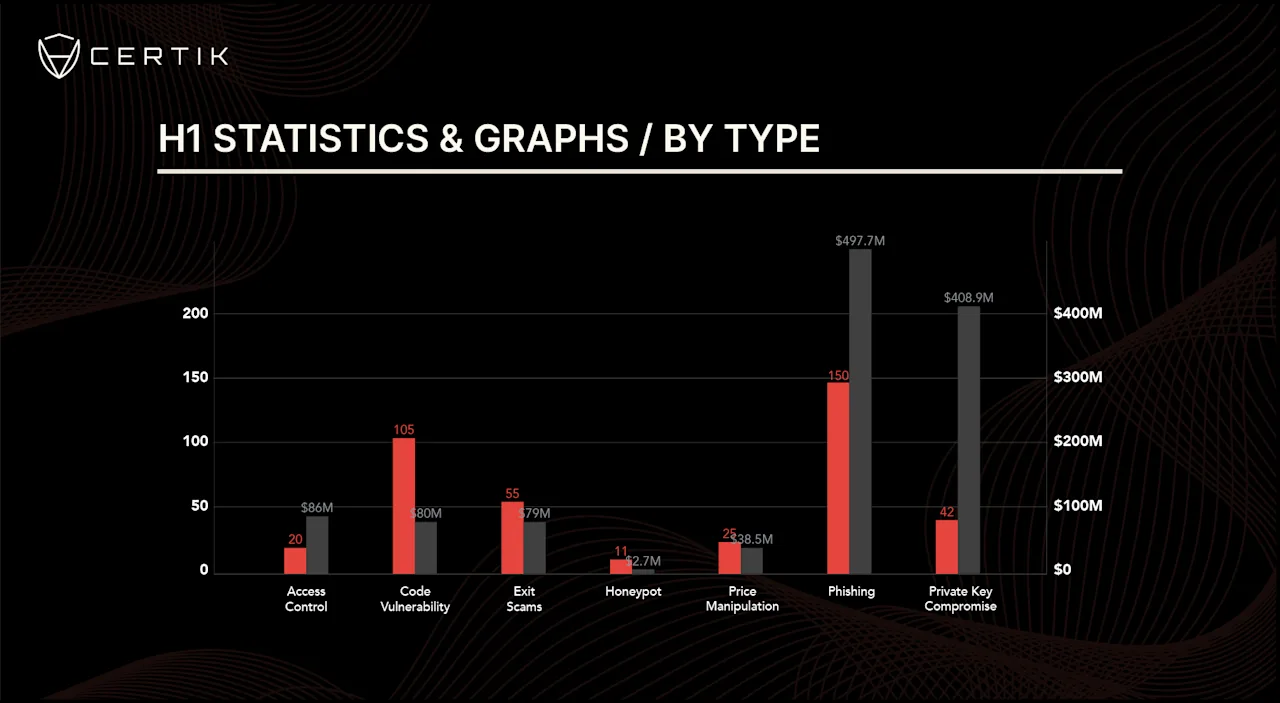
- Phishing accounted for $497,735,904 lost across 150 incidents. Private key compromises followed, with $408,949,115 lost in 42 incidents, highlighting persistent vulnerabilities in key management.
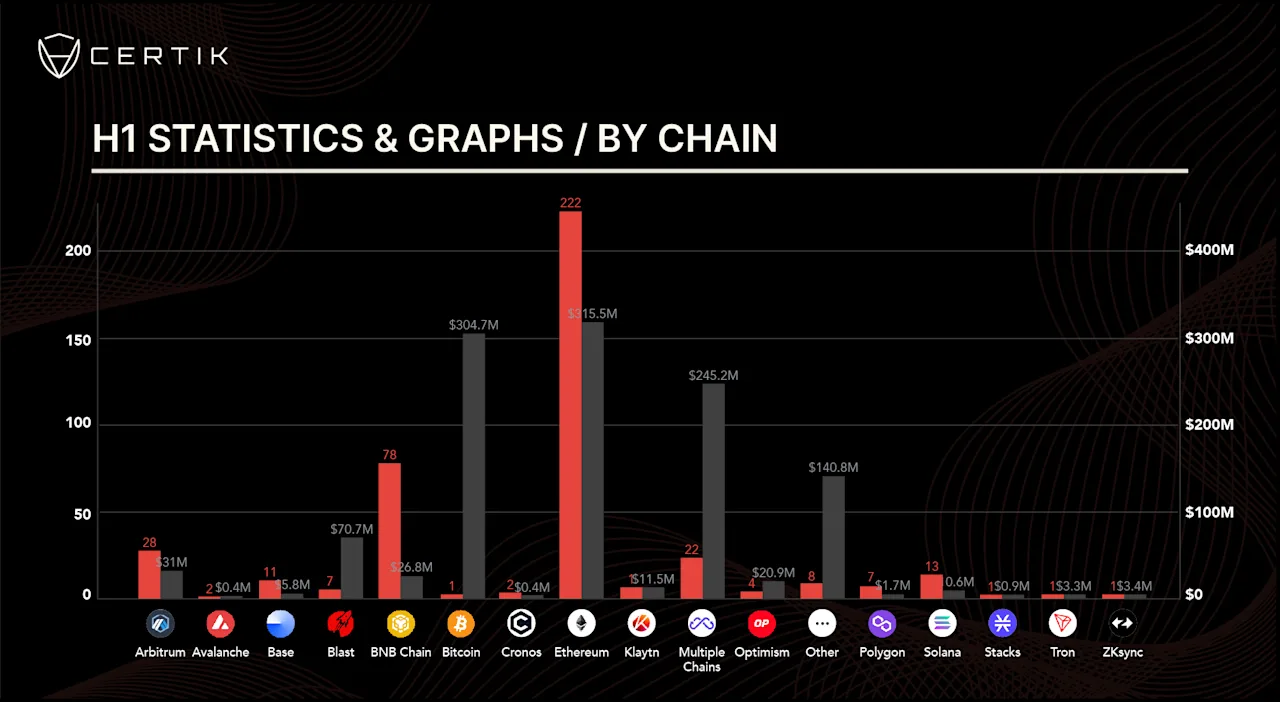
- Ethereum was the most affected chain, experiencing 235 incidents and $397,405,773 in losses.
- The total value of funds returned in H1 2024 was $177,791,389 across 18 incidents, leading to adjusted total losses of $1,012,606,971 for the first half of 2024.
- The average loss per incident was $2,932,729, and the median loss per incident was $230,784.
Statistics and Graphs