Scale of Deployment
Quantifying the exact number of such contracts is challenging due to the sheer volume and time span involved. However, we identified a pattern involving address EOA 0xa676, linked with numerous deployments:
• June: 50 Contracts
• July: 52 Contracts
• August: 41 Contracts
• September: 48 Contracts
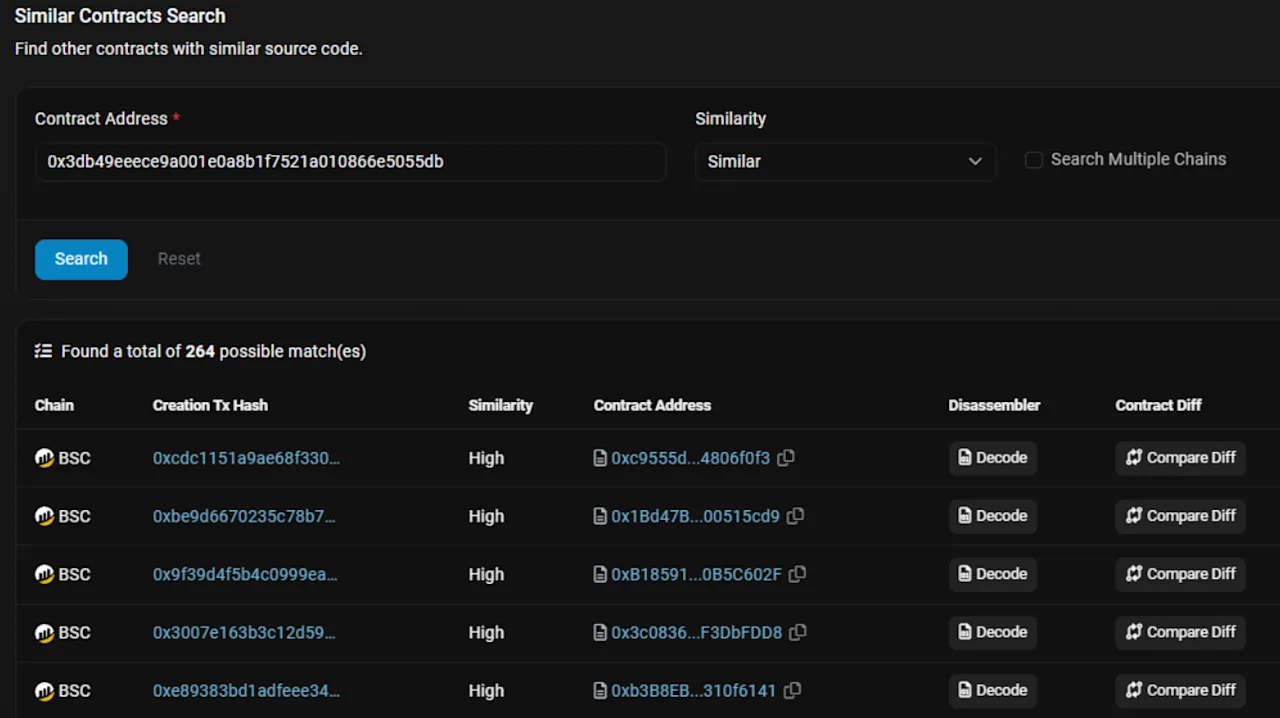
Cross-referencing with BscScan's contract similarity tool, we found 208 contracts resembling one that employs _geryAddressList(), with 95 being exact matches.
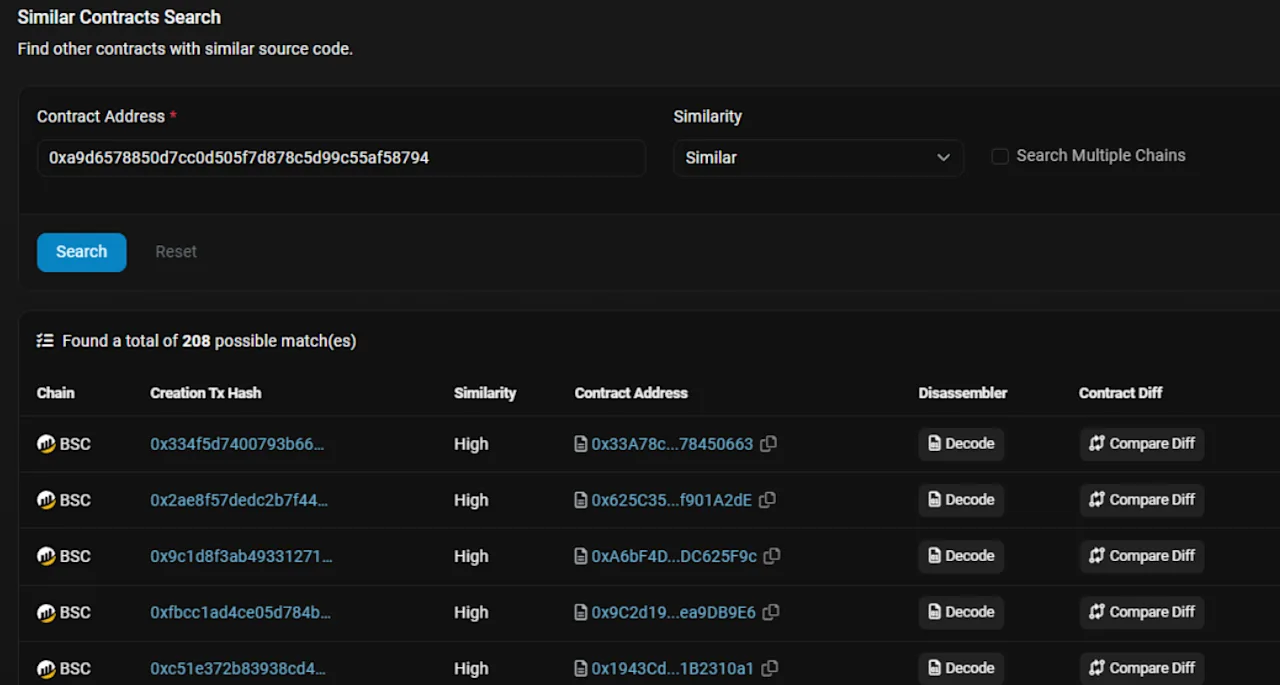
An additional 264 similar contracts were found when examining a second example, with 31 of those being exact matches.
Mechanisms and Functions
Our analysis is based on contract 0xa9d6578850d7cc0d505f7d878c5d99c55af58794. This contract's transfer mechanisms initiate with a beforTransfer() function, followed by several conditional checks:
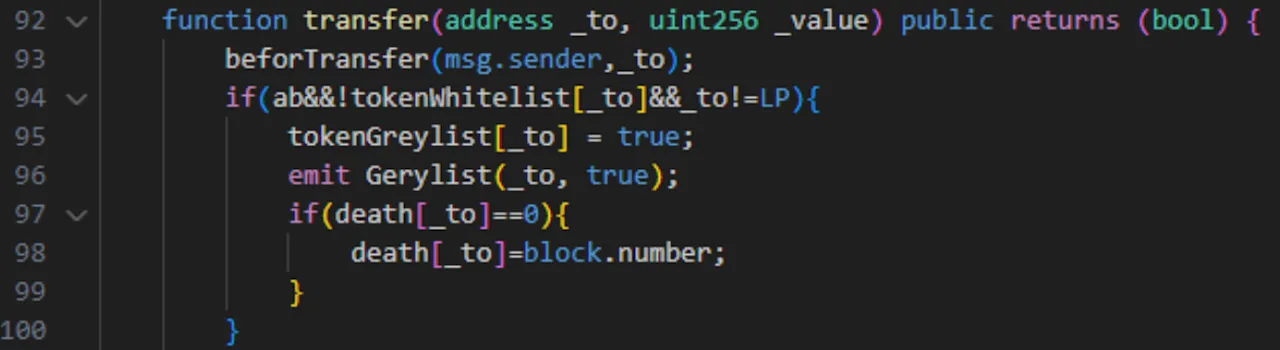
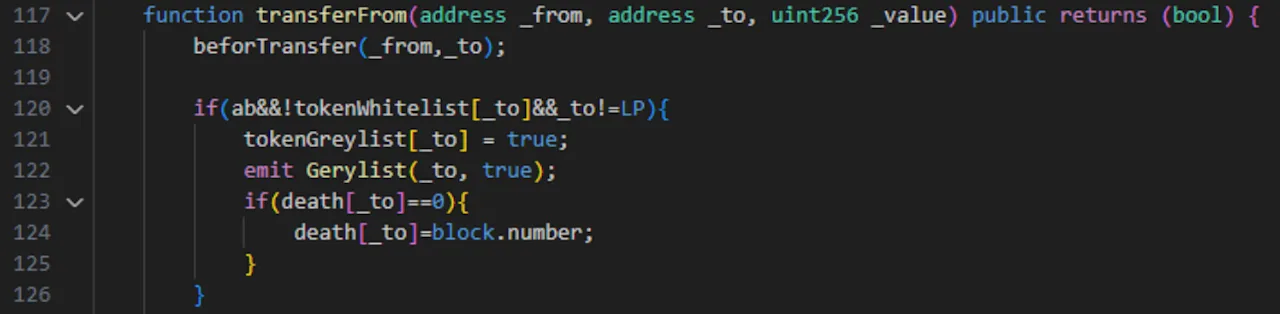
After the beforTransfer() function completes, the transfer functions then check three conditions, shown on line 94 and 120 above:
• ‘ab’ is set to true.
• ‘_to’ address is not on tokenWhitelist, the preceding '!' signifies the opposite of true.
• ‘_to’ is not the LP address, here the '!=' signifies not equal.
Upon meeting these conditions, the _to address is added to a grey list, and the current block number is recorded. Buying tokens triggers the transferFrom() function with the buyer as the _to address, meaning buyers will be added to the tokenGreylist() if they are not whitelisted.
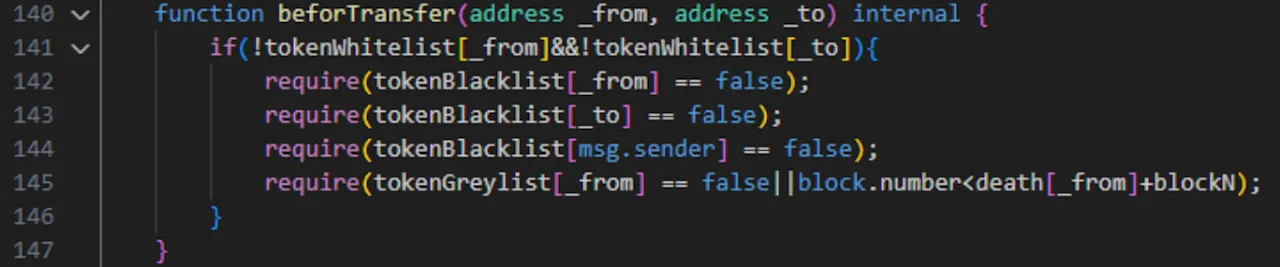
The beforTransfer() function includes further checks:
Line 141: Check if the transfer from and to addresses are on the whitelist, if they aren’t:
Lines 142,143, 144: Neither the _from, _to or msg.sender must be on the tokenBlacklist.
Line 145: The _from address must also not be on the grey list OR the block number must be less than the death variable and the blockN variable. blockN is initially set to 1, meaning anyone on the grey list must sell within the same block of the death variable, which records the block number in which an address is added to the tokenGreylist(), being set or they will be unable to sell.

If any of the above checks fail then the transaction will revert.
To simplify, the first time a user buys tokens they are added to a grey list, unless it is a whitelisted address. Once the address is on the grey list, a user will then be unable to sell their tokens.
Wash Trading
Whitelisted wallets, usually controlled by the contract's creator, are often used for wash trading to inflate trading volumes and create a false sense of liquidity. Automated trading across multiple wallets enhances the illusion of activity, thereby attracting more attention to the token.
The following screenshot is a wallet that is set up to automatically trade tokens.
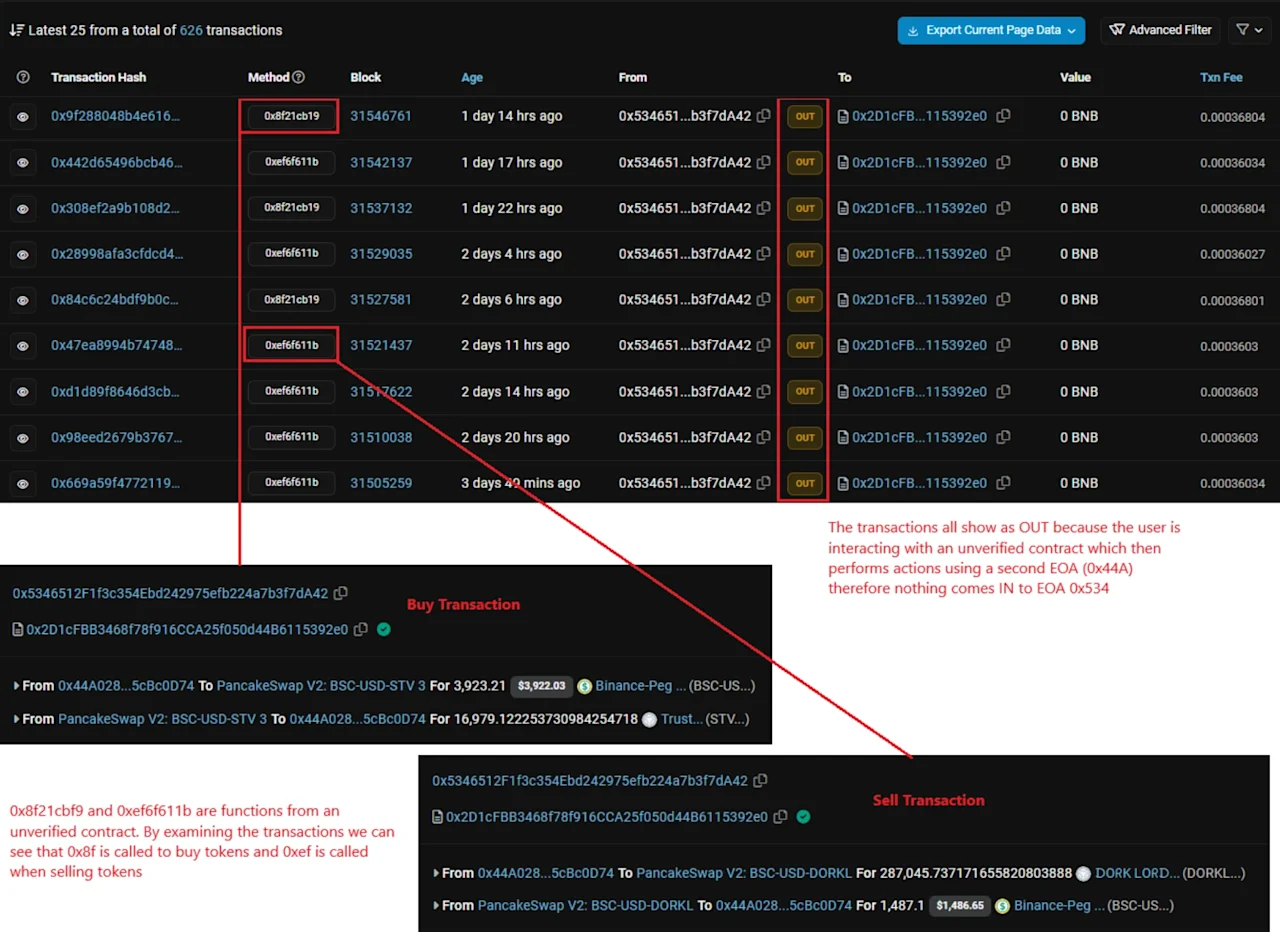
Automated wallets play a crucial role in simulating trading activity. These are orchestrated to perform repeated transactions, creating an illusion of diverse and active trading. Specifically, contract 0x2D1c serves as an unverified facilitator for wash trading. At the initiation of each contract based on our example code, a function from 0x2D1c is invoked, artificially inflating the token's trading volume.
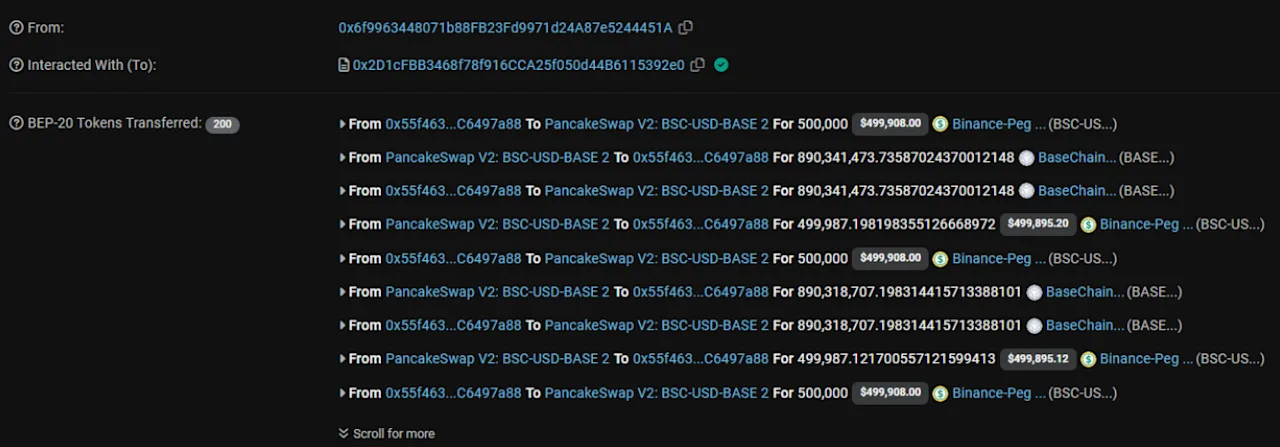
Following this initial surge, the token experiences periodic, smaller-volume transactions, mimicking typical trading behavior. This operational pattern is consistent across multiple automated wallets.
Base Chain Launch
In a span between July 30 and August 1, 2023, a user generated 34 honeypot contracts using code with the geryAddressList() function. We focus here on ZebraSwap, one of these tokens. Relevant addresses involved include:
• Creator of tokens: 0xf01e51504a9f5020f6f46cc0bc76c1d2efb40ec0
• Unverified contract for token creation: 0x2936B8eaEd363015C9E20CfAeb10C84B4deF6BD5
The following example is based on ZebraSwap token, one of 34 tokens created by 0xf01e.
1.0xf01e created token contracts using unverified contract 0x2936B. Although the contract is unverified, we can see the EOA called the function createToken() and passed each token's details.
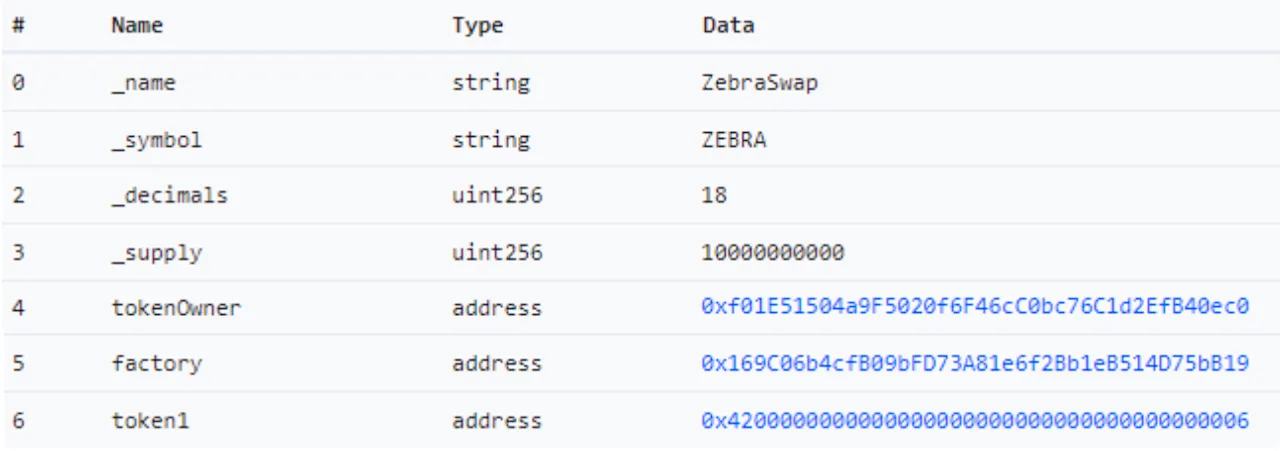
- 0xf01e added 4.4 billion ZEBRA and 15 WETH liquidity to the token via LeetSwap.

- After adding liquidity, 0xf01e conducted trades of the token, likely to generate trading activity.
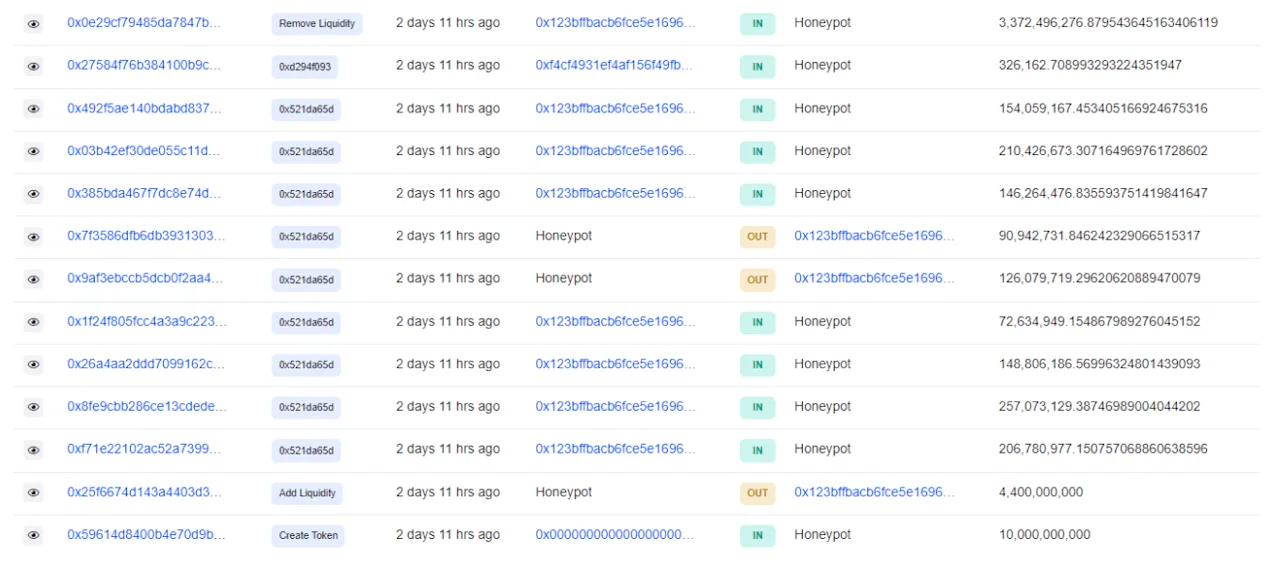
- 26 minutes after adding liquidity, 0xf01e removed 19.57 WETH liquidity. 4.57 WETH more than was added, however, the difference is largely associated to wash trading.

- 0xf01e has repeated this process with 32 tokens so far.
The Huobi Deposit Connection
On August 1, 2023, EOA 0x964d funneled 100 BNB into Tornado Cash, as corroborated by transaction details. This address is linked to multiple tokens that utilize the geryAddressList() honeypot mechanism. Shortly after, 100 BNB was withdrawn to another EOA, aligning with previous patterns of deposits and withdrawals involving Tornado Cash.
The following are some of the examples over the last 18 months showing deposits and withdrawals lining up.




After withdrawing from Tornado Cash, 0x964d routinely sent funds to a Huobi account.
Conclusion
The prevalence of honeypot contracts in the Web3 space is alarming and constitutes a significant risk to investors. These schemes can be spun up rapidly, sometimes within a minute, and can leverage social media hype or automation for mass-scale operations.
While many honeypot contracts are verified to instill a false sense of security, their nefarious functionalities are often either too complex for average users to decipher or are activated at a later stage.
Although third-party tools can identify some honeypot contracts through simulated transactions, they are not foolproof. Scammers continually adapt to evade detection, and contracts can morph into honeypots post-verification. Nevertheless, the utilization of these tools, even with their limitations, can offer a layer of protection for users. A brief scan before purchasing a token could be the decisive factor in preserving one's investment.