
博客
全部博客
CertiK 为开发者和用户提供 Web3 安全、区块链审计与合规相关的博客、客户案例等教育内容。
 政策风向CLARITY Act Stalls as Regulators Move AheadSenate leadership released a massive 616-page draft of the CLARITY Act, representing the most detailed legislative effort to date to regulate the digital asset industry. This comprehensive text includes expansive provisions for both crypto market structure and new law enforcement mandates designed to modernize federal oversight of the ecosystem.
 研究报告Verus Incident AnalysisOn July 23, 2026, an attacker exploited the Verus Protocol’s Ethereum cross-chain bridge, draining approximately $7.44 million in ETH, tBTC, stablecoins, and MKR. The attack relied on a discrepancy in how Verus and Ethereum interpreted notarization data: malicious duplicate state-root entries were included in otherwise legitimate notarizations, signed by Verus notaries, and then relayed to Ethereum, where they overwrote the genuine trusted state root.
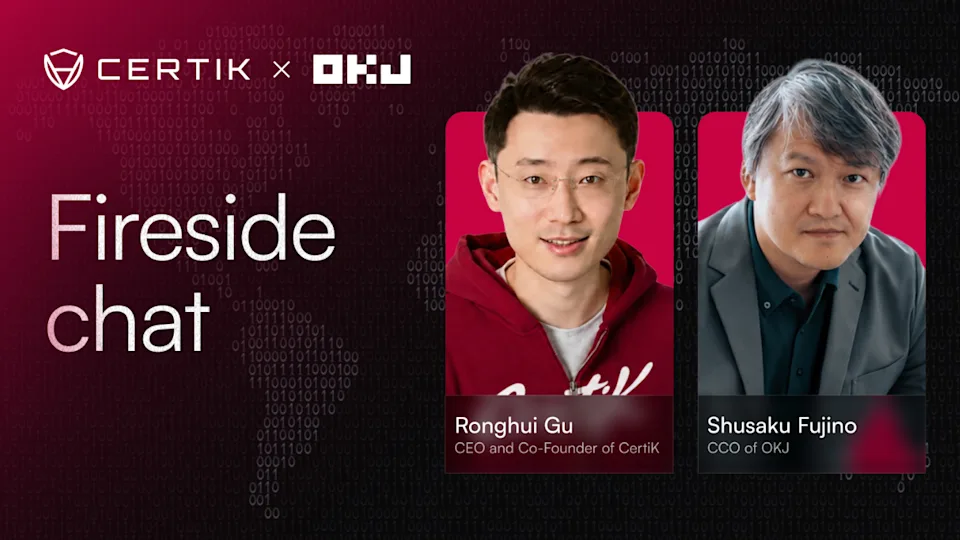 政策风向From Speculation to Infrastructure: CertiK and OKJ on the Future of Crypto in Japan and BeyondCertiK and OKJ discuss the future of crypto regulation, security, and institutional adoption in a fireside chat covering stablecoins, RWAs, AML compliance, and Japan's regulatory model.
 公司动态AI Security Must Go Beyond the Model: CertiK Identifies Google EdgeTPU Vulnerabilities, Highlighting New Risks in AI InfrastructureCertiK researcher uncovered two vulnerabilities in Google's EdgeTPU, CVE-2026-0150 and CVE-2026-0153, acknowledged in Google's June 2026 Security Bulletin. Here's what the findings reveal about the future of AI security.
 技术洞察How to Prepare for a CCSS AuditInstitutional counterparties ask crypto businesses a hard question: how do you safeguard your private keys? A bank wants evidence before it opens an account. A fund wants it before it deposits assets. The CryptoCurrency Security Standard (CCSS) exists to answer that question with an audit instead of a claim. This guide explains what the standard covers, how certification works and how you prepare for it.
 研究报告DefiTuna Incident AnalysisOn 16 July 2026, DeFiTuna was exploited for approximately $569,601 USDC on Solana. The attackers created a highly illiquid TUNA/USDC pool and used it as the destination for borrowed USDC routed through Jupiter. Because the swap returned only a negligible amount of TUNA, DeFiTuna’s value calculation rounded the position’s total assets down to zero. The protocol then incorrectly treated the position as healthy, allowing the attackers to bypass the solvency check and withdraw the USDC through attacker-controlled liquidity positions.
 技术洞察What Is a Zero-Knowledge Virtual Machine (zkVM)?A zkVM is a computational system designed to verify that a program executed correctly, without revealing the program's internal data. By combining zero-knowledge proofs (ZKPs) with virtual machine (VM) technology, zkVMs enable verifiable computation across blockchain and Web3 ecosystems, boosting transparency, privacy, and scalability all at once.
 政策风向SOC 2 and ISO 27001 for Crypto CompaniesRead to learn about the requirements of SOC 2 and ISO 27001, how to choose between them, and how to get from your current state to a passed audit.
 技术洞察The Summer Regulatory Crunch: All Eyes on the CLARITY ActAn overview of notable crypto regulatory developments that happened in June 2026.
 公司动态CertiK Named Official Vendor for Hub71, Bringing Security and Compliance Support to Abu Dhabi's Startup EcosystemCertiK has been named an official vendor for Hub71, offering portfolio companies a 20% service discount, a $200K subsidy pool, and free access to the CertiK Compliance Tool for UAE licensing and compliance.
 公司动态Introducing CertiK Hunt, The Invite-Only Security Platform for Web3 Projects and Top Security ResearchersCertiK Hunt is an invite-only platform connecting elite security researchers with web3 projects through bug bounty programs, audit competitions, and AI challenges.
 技术洞察What Are Decentralized Apps (dApps)?Decentralized apps (dApps) run on blockchain networks like Ethereum, Solana, BSC, SUI, and Avalanche. Learn what dApps are, how they work, examples, and their advantages in Web3.