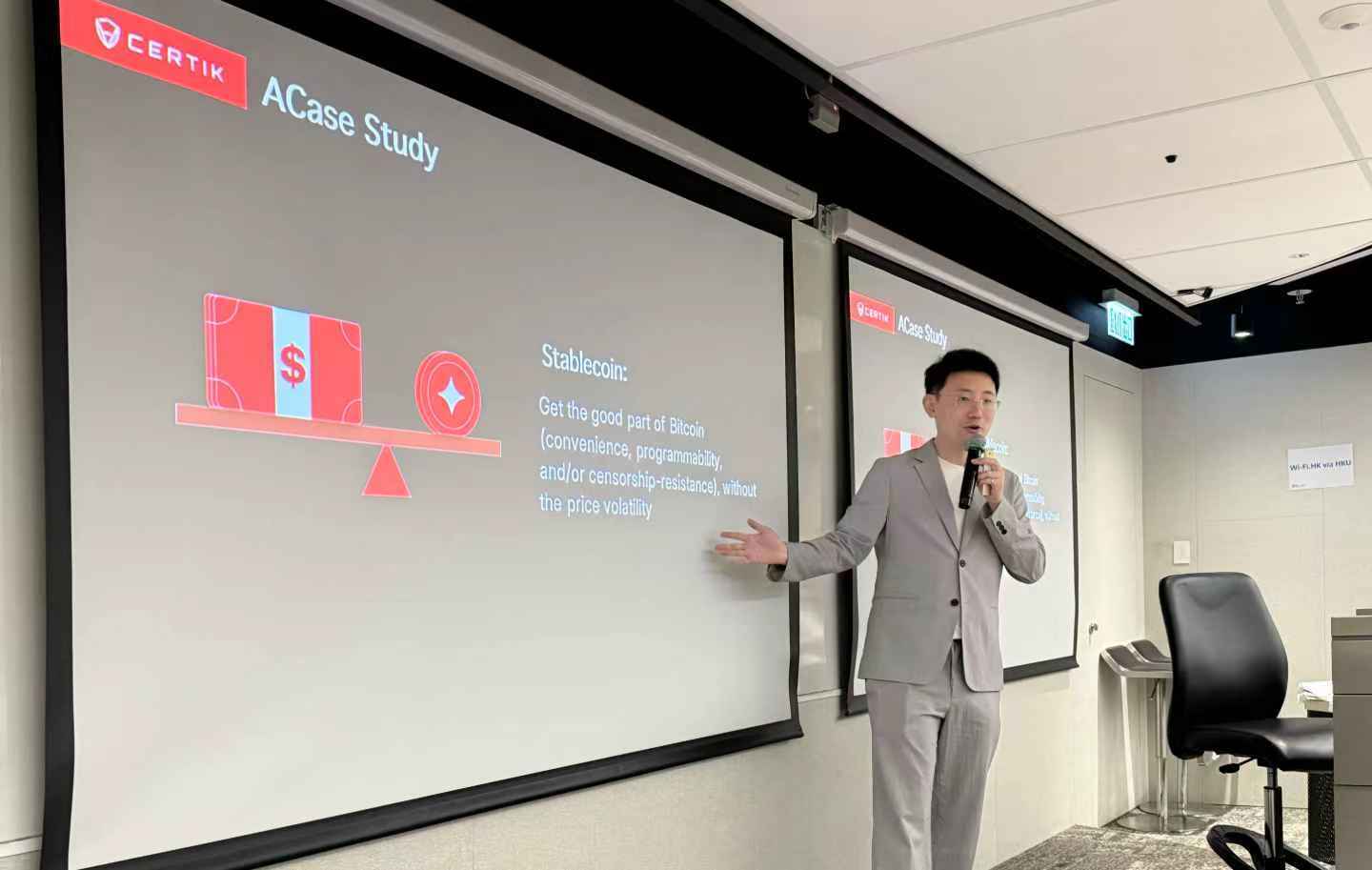
Ronghui Gu, Co-Founder of Web3 security firm CertiK and Professor of Computer Science at Columbia University, delivered a compelling keynote speech at the University of Hong Kong Business School titled, “Scaling Web3: Balancing Innovation and Security for a Global Audience,” which outlined the critical importance of cybersecurity as the Web3 ecosystem matures.
Speaking to a full auditorium of students, faculty, and industry professionals, Professor Gu addressed the accelerating growth of blockchain infrastructure, which has surpassed approximately $2.95 trillion in total value. Yet, as he warned, with this growth comes heightened risk: the Web3 industry saw more than $1.67 billion lost to hacks and exploits in Q1 of 2025 alone. Ethereum has historically been the most targeted blockchain for exploits, and attack vectors like wallet compromises, private key theft, phishing, and code vulnerabilities are increasing.
Professor Gu’s speech focused on several key themes:
- Clarifying blockchain fundamentals: He outlined the distinction between blockchain — a decentralized, tamper-resistant infrastructure — and Bitcoin, which operates as both the fuel and product of the Bitcoin blockchain.
- Immutability and mining explained: He also discussed the role of miners in validating transactions and securing blockchain networks, highlighting how blockchain architecture ensures the permanence and traceability of recorded activity.
- The evolving risks of stablecoins: He broke down the layered vulnerabilities of stablecoins, including asset risks (such as insufficient reserves and liquidation thresholds), operational risks (such as function abuse and anti-money laundering failures), and blockchain risks (stemming from smart contracts, oracles, and chain-level dependencies). He noted 7 high-profile hacks, 3 catastrophic death spirals, and 14 major depegging events as key warning signals for stablecoin participants.
In addition to highlighting industry risks and progress, Professor Gu also spoke about CertiK’s growing suite of compliance-focused products and services. He emphasized CertiK’s ability to help Web3 projects clarify their compliance landscape, navigate applicable regulations, and fortify their defenses through comprehensive cybersecurity audits, targeted risk assessments, and training sessions.
About HKU Business School
The Faculty of Business and Economics at the University of Hong Kong, branded as HKU Business School, is one of Asia’s premier and most globally engaged business schools. Established in 2001, the school is fully accredited by both EQUIS and AACSB. With a mission to nurture exceptional business leaders and foster impactful research, HKU Business School attracts top domestic and international scholars and students. Its full-time MBA ranks among the world’s top, with Asia-centric core courses and global study tracks spanning London, New York, and Hong Kong.
About CertiK
CertiK is the largest Web3 security services provider, utilizing industry-leading formal verification technology to protect and monitor blockchain protocols and smart contracts. Founded in December 2017 by professors from Yale University and Columbia University, CertiK applies cutting-edge innovations from academia to enterprise, enabling mission-critical applications to scale with safety and correctness.
One of the fastest-growing and most trusted companies in blockchain security, CertiK is a true market leader. To date, CertiK has worked with more than 5,000 enterprise clients, secured over $530 billion worth of digital assets, and detected more than 180,000 vulnerabilities in blockchain code. Our clients include industry-leading projects such as Aptos, Ripple, Sandbox, Polygon, BNB Chain, and TON.
Since its inception, CertiK has secured investments from 12 top-tier funds, including Sequoia, Coatue, Goldman Sachs, Shunwei Capital and Insight Partners, with a valuation of more than $2 billion.
Follow Discord, Telegram, and Twitter for the latest news and announcements.