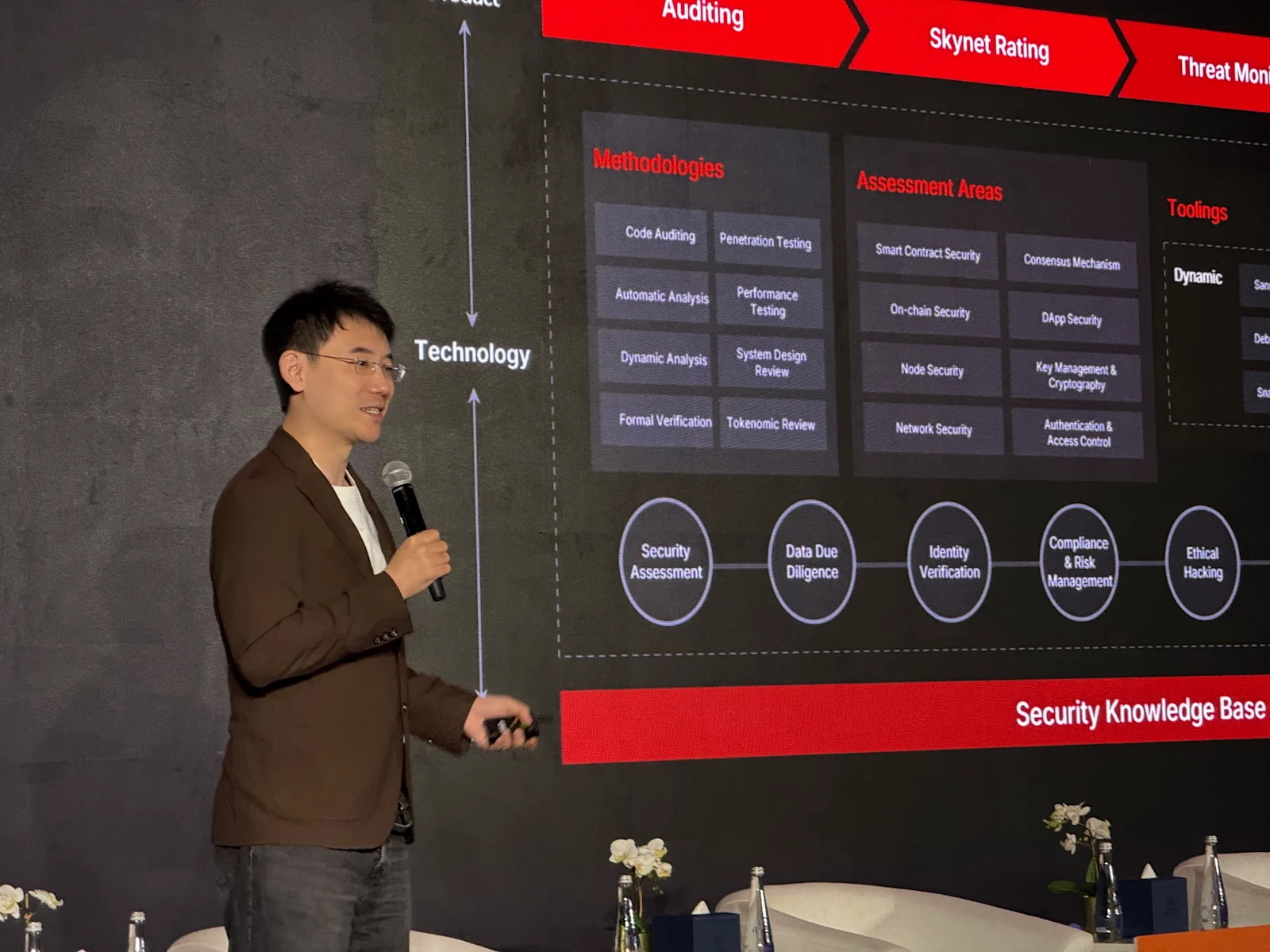
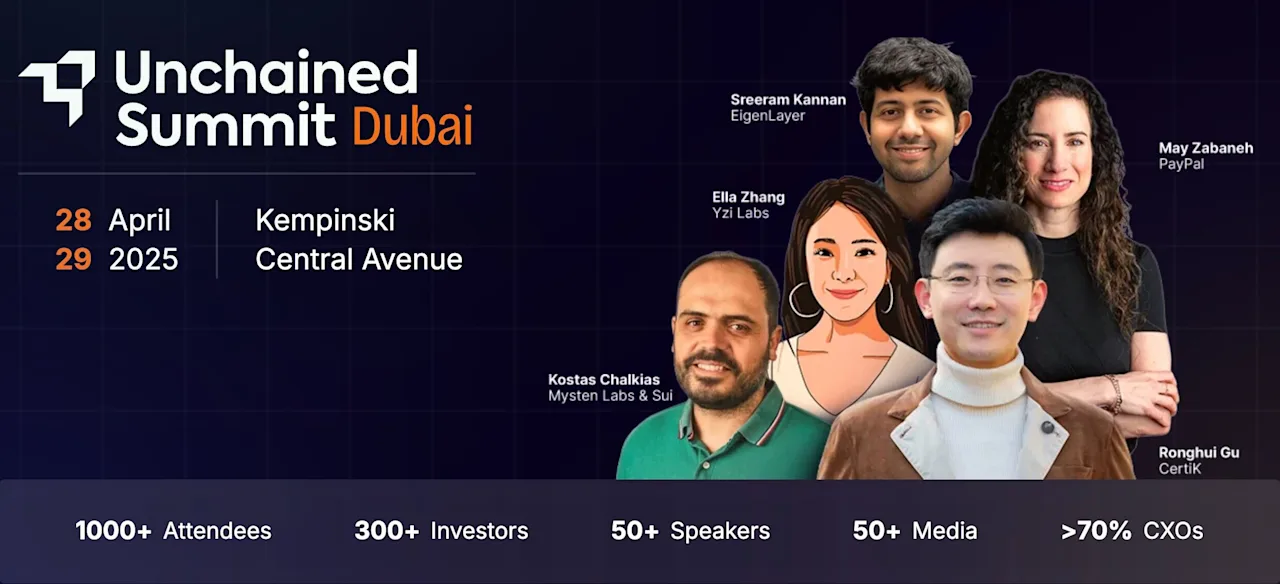
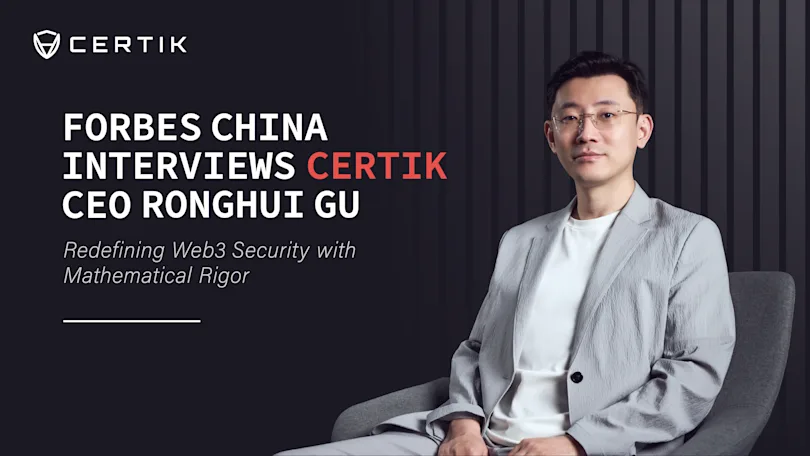
Ronghui Gu, Co-founder of CertiK and Associate Professor of Computer Science at Columbia University, recently delivered a Keynote speech at Unchained Summit Dubai 2025, emphasizing the important balance between Web3 innovation and security. He noted that, although blockchain technology has become critical global financial infrastructure with a current market value of $2.95 trillion, its security challenges remain severe. As CertiK’s most recent Hack3d Report revealed, malicious actors stole $1.67 billion in the first quarter of 2025, a quarter-over-quarter increase of 303%. The Ethereum ecosystem continues to be the main target of attacks.
Using CertiK as an example, Professor Gu offered an in-depth explanation of solutions related to smart contract audits, security ratings, threat monitoring, compliance consulting, and anti-money laundering services.
As a system security expert in formal verification, Professor Gu further elaborated on the importance of compliance, stating that it is a guarantee of order and a core pillar for sustainable development of the Web3 industry. Regulatory policies should be “controllable, visible, and enforceable,” he explained. To this end, CertiK supports global regulators to better understand and supervise blockchain-based interactions through public audit reports and on-chain tools such as Skynet, and assists in policy formulation and implementation.
As a scholar-entrepreneur, Professor Gu plays an increasingly active role in shaping global Web3 governance frameworks. He has assisted in the Web3 policy development of institutions such as the Monetary Authority of Singapore and the Hong Kong Web3 Task Force, and offered insights from a technical perspective to help shape and improve regulatory frameworks. Industry observers noted that this emerging model of deep technical involvement in policy design could serve as an important practical reference for future Web3 regulatory innovation.
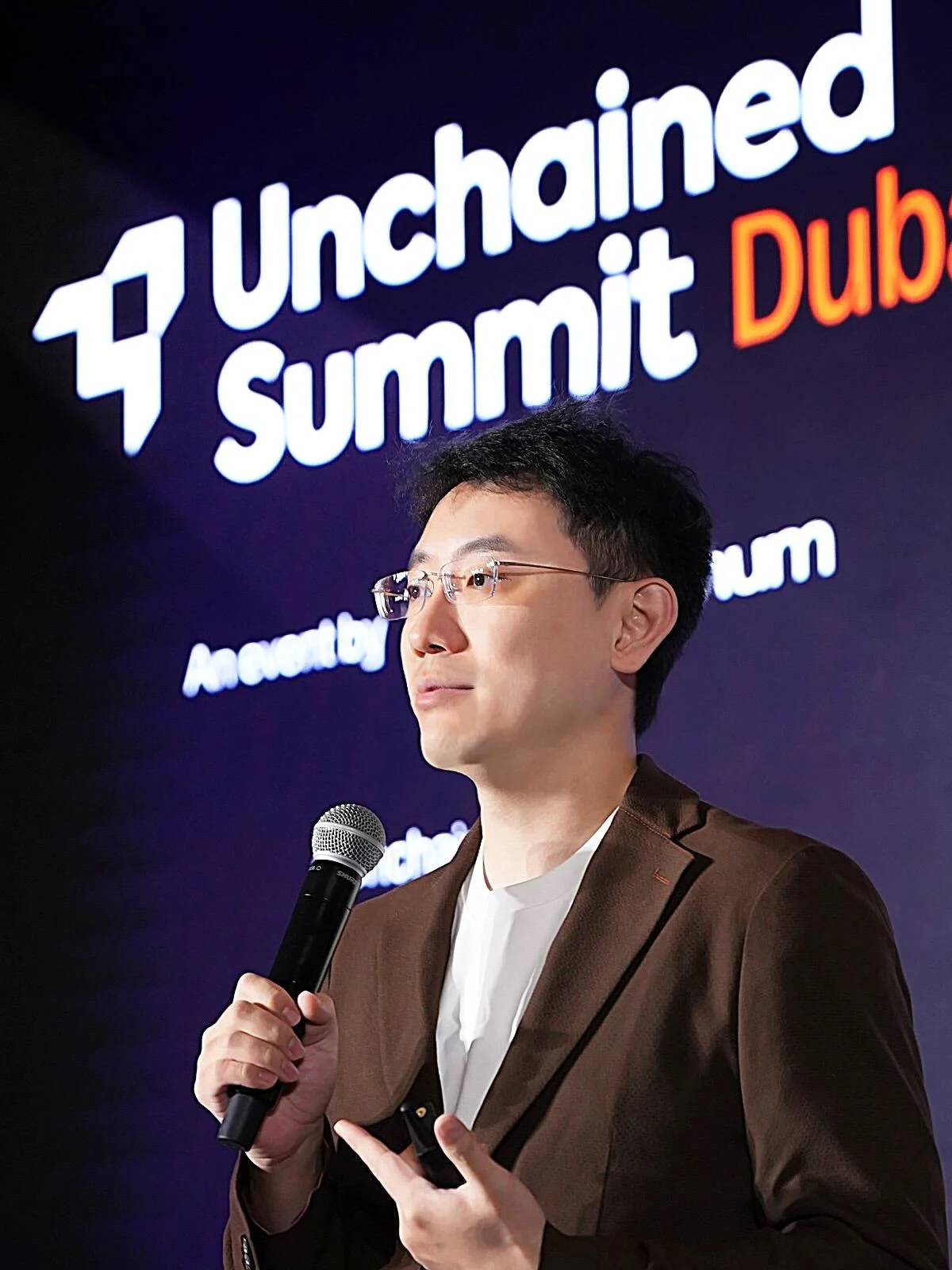
At the end of his speech, Professor Gu stated, “CertiK aims to drive the industry toward orderly and compliant development through collaborations with regulatory agencies worldwide, as well as big institutions such as New York Community Bancorp and Ant Group.” He has repeatedly emphasized that compliance is the only way for Web3 to move toward mainstream adoption. We will only be able to achieve a win-win situation of innovation and security through collaboration among all involved parties. Although CertiK has set a leading example for the industry, achieving a sustainable balance between decentralized values and regulatory demands remains critical to Web3’s ongoing evolution. As global policies gradually become more clear, Web3 is expected to usher in more stable growth in the coming years.
![[Webinar] Toward Building Trustworthy Blockchain Systems with Professor Ronghui Gu](https://images.ctfassets.net/v0qht4wq59vi/3FNbQgFmJvrHvGcerlVmkP/14870402d8d118f308033d36ed17fc0f/wechat-image_20200728161557.png?w=810&h=456&fit=fill&fm=webp&q=75)