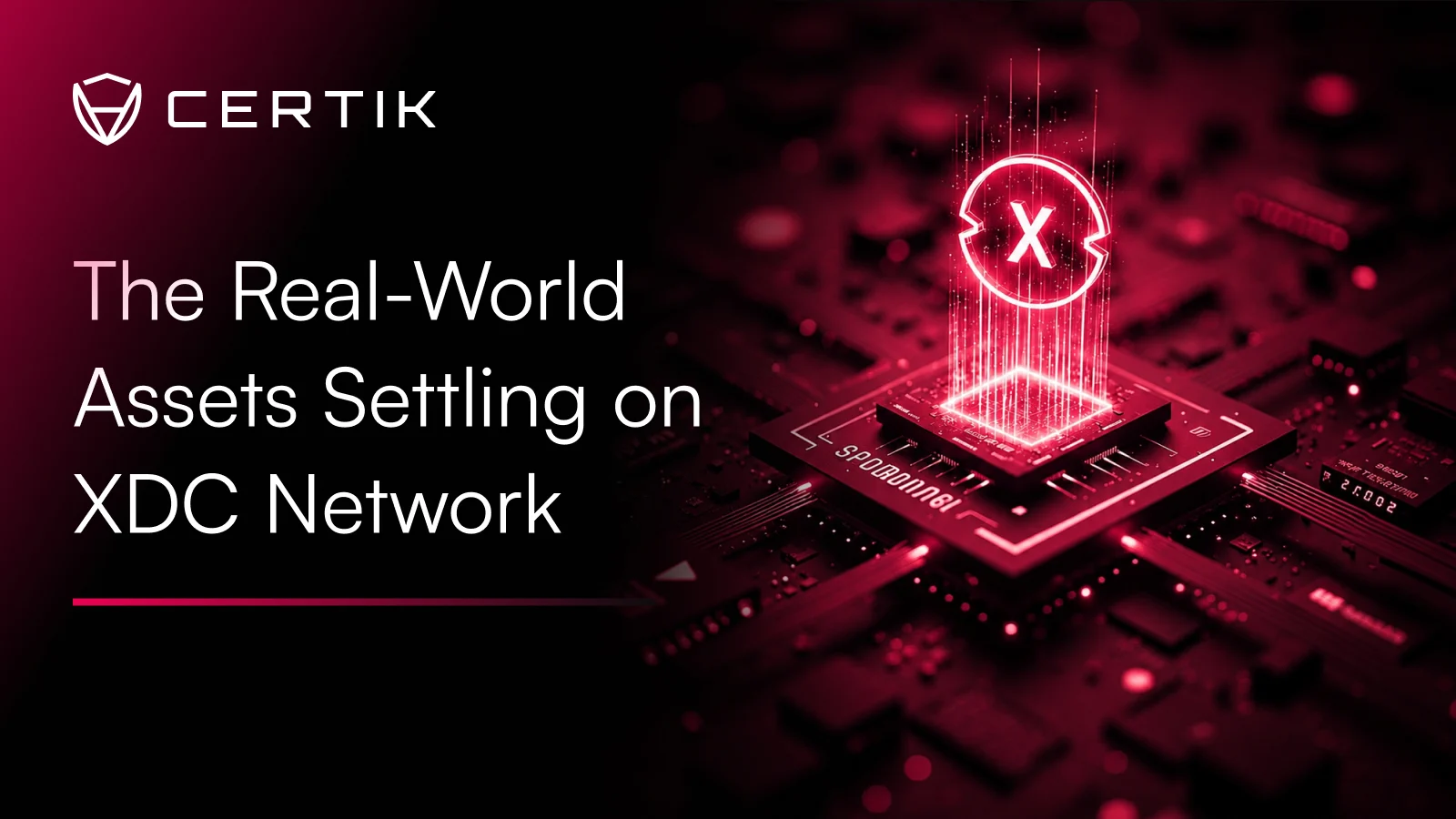
Most tokenized real-world assets today are U.S. Treasuries and money-market funds. XDC Network is an exception. Its largest tokenized asset is a USD 143 million debenture for a highway operator, part of roughly USD 860 million in real-world credit on the network: corporate debentures, agribusiness receivables, and loans to operating businesses.
It is a quieter, more granular kind of real-world asset than the headline Treasury products, and a precise picture of what XDC Network was built to carry. CertiK now helps secure the chain as one of its validators.
Real-World Credit, From Two Issuers
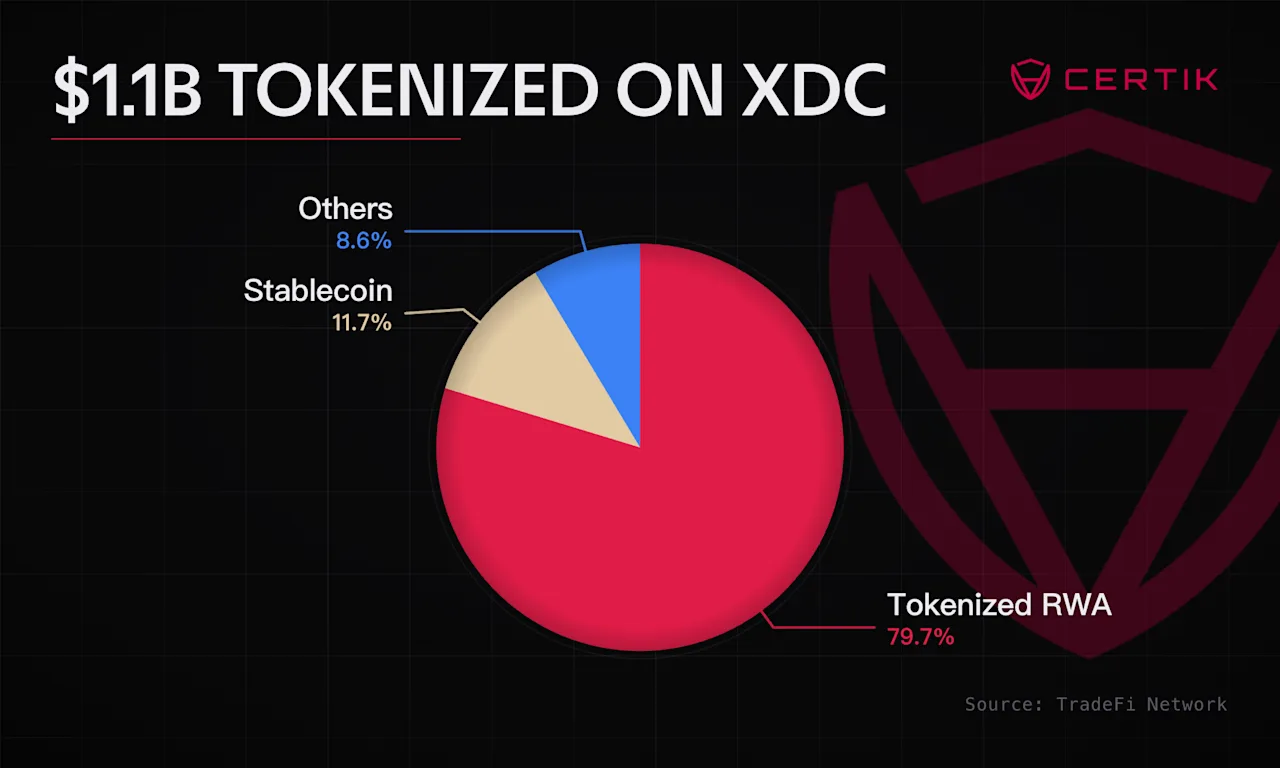
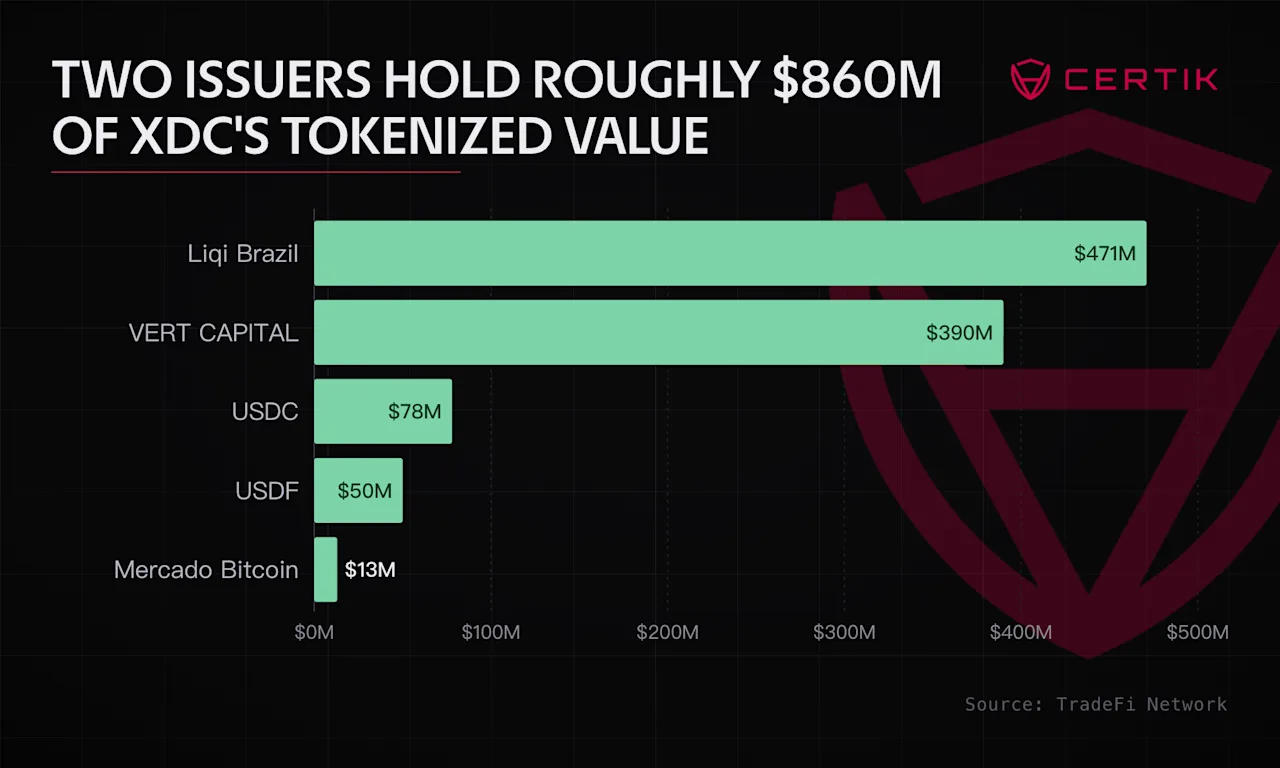
XDC Network's tokenized value stands at about USD 1.1 billion, roughly four-fifths of its real-world assets. Almost all of that comes from two issuers: Liqi, a tokenization platform, and Vert Capital, a securitization firm.
Liqi accounts for around USD 471 million across more than 1,800 instruments, led by a highway-operator debenture, Via Araucária, and credit tied to names like the retailer Casas Bahia. Vert Capital adds another USD 390 million in seven structured issuances, led by agribusiness receivables certificates and a single USD 234 million issuance.
This is not the synthetic yield of early decentralized finance (DeFi), nor the tokenized Treasuries that dominate real-world asset (RWA) headlines. It is ordinary real-world credit: receivables, debentures, and loans to operating businesses, issued at institutional size and settled on XDC Network.
The Real-Economy End of Tokenization
These are among the harder assets to bring on-chain. They previously existed in private paper and local markets, with credit tied to specific operating businesses rather than a government or a fund—the kind of exposure that is normally slow to price and hard to trade.
That is a different starting point from the standardized, already-liquid instruments that make up most tokenized real-world assets. It reaches the part of finance that has been hardest to digitize, and it is the part XDC Network was built for.
The Rails Were in Place Before the Assets
That kind of credit needs somewhere built to hold it. XDC Network has operated its mainnet since 2019, oriented from the start around trade finance and regulated settlement rather than retail speculation. It aligns with ISO 20022, the messaging standard banks already use to move money, so a tokenized receivable settles in a format institutions recognize.
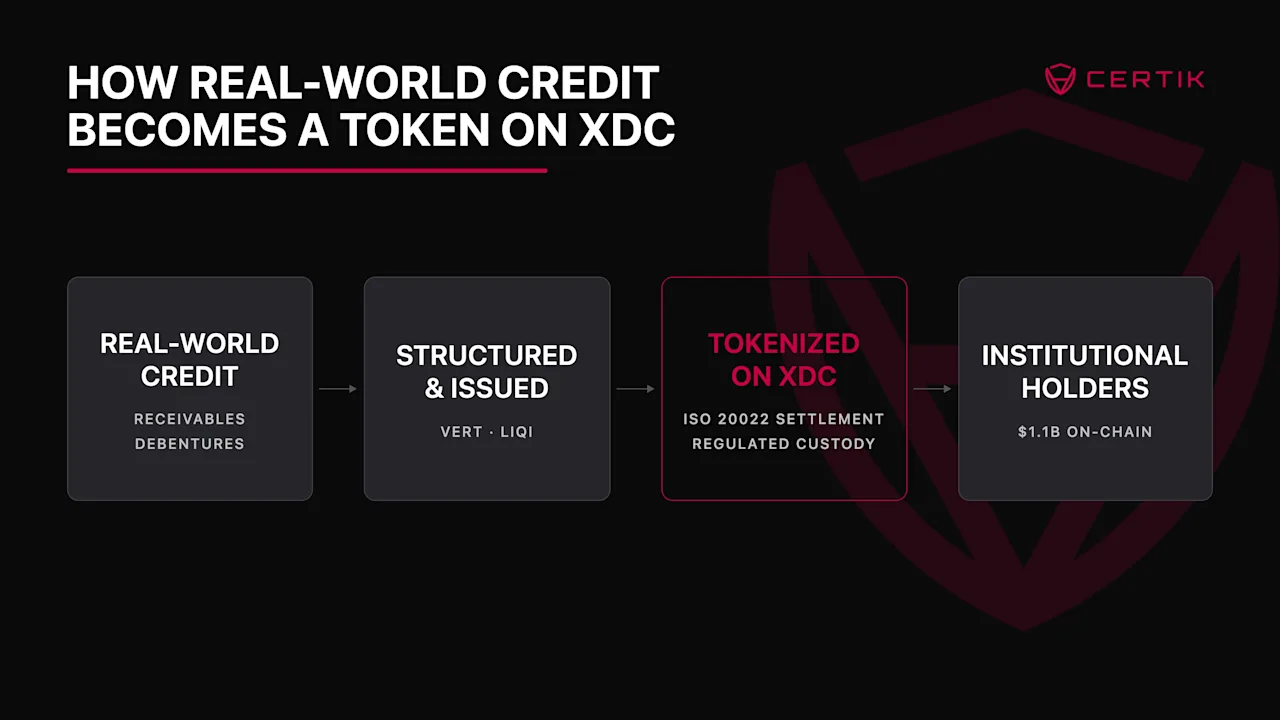
The custody and validation infrastructure around XDC Network is institutional in the same way. The network integrates with BitGo, Anchorage, Fireblocks, and Safe for regulated custody, while its validator set has drawn names such as SBI, Deutsche Telekom, Animoca, and Republic. For an issuer deciding where to tokenize a few hundred million dollars of receivables, that infrastructure already being in place is the reason to choose one chain over another.
The ordering is the point. XDC Network assembled the trust stack first and drew the assets second, reversing the approach of a chain adding institutional features to retail traffic after the fact.
On-Chain, the Open Question Shifts
Credit to operating businesses is one of the more opaque corners of finance. A loan to a mid-size company does not trade on a public exchange, and its value depends on the borrower, the issuer's underwriting, and terms that are usually private.
Putting these assets on-chain changes part of that. Each of Vert Capital's receivables certificates and Liqi's instruments becomes individually visible, with its issuance, size, and lifecycle trackable in real time. For an asset class that historically settled in PDFs and spreadsheets, that is a real gain in transparency.
What on-chain settlement does not resolve on its own is the layer underneath:
- Whether a token is backed by the receivable it claims
- Whether the issuer's process holds
- Whether the contract behaves as the document says
The visible question moves from where an instrument is to whether it can be trusted—a different question from what a tokenized Treasury or reserve-backed stablecoin has to answer.
CertiK Goes From Assessing the Chain to Helping Run It
That is where CertiK comes in, and its role has deepened in stages. In May, CertiK Co-Founder and CEO Ronghui Gu and XDC Foundation held a fireside discussion on real-time verification of tokenized assets and what institutional adoption requires. CertiK had already audited the chain and continues to assess it through Skynet, where XDC Network is currently in the AA tier.
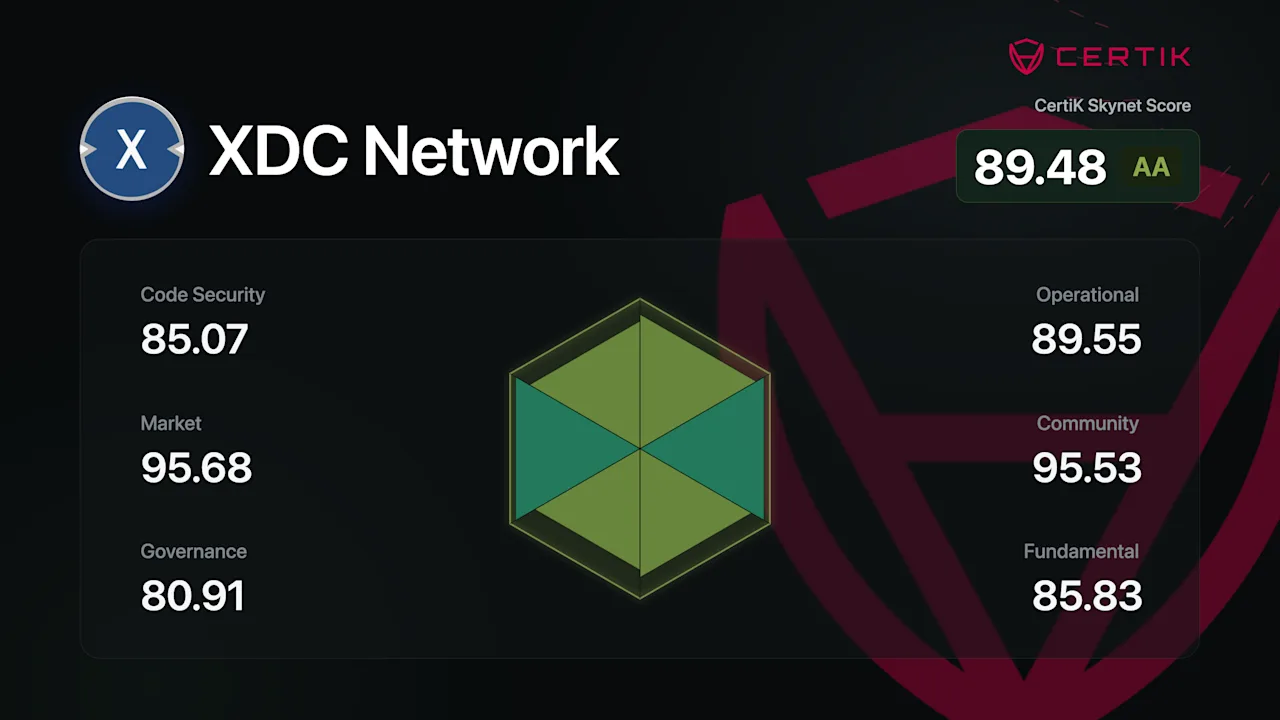
The most recent step goes further. CertiK has become a validator on XDC Network, running a node that helps secure the chain on which those assets settle. For real-world credit rather than reserve-backed tokens, that shift from independent assessment to direct participation is the kind of verification the asset class actually needs.
XDC Network has put real-world credit on-chain and built the rails to settle it. Tokenizing the asset is the first half of the problem. Keeping it verifiable is the second, and CertiK now does that from inside the network as one of its validators.