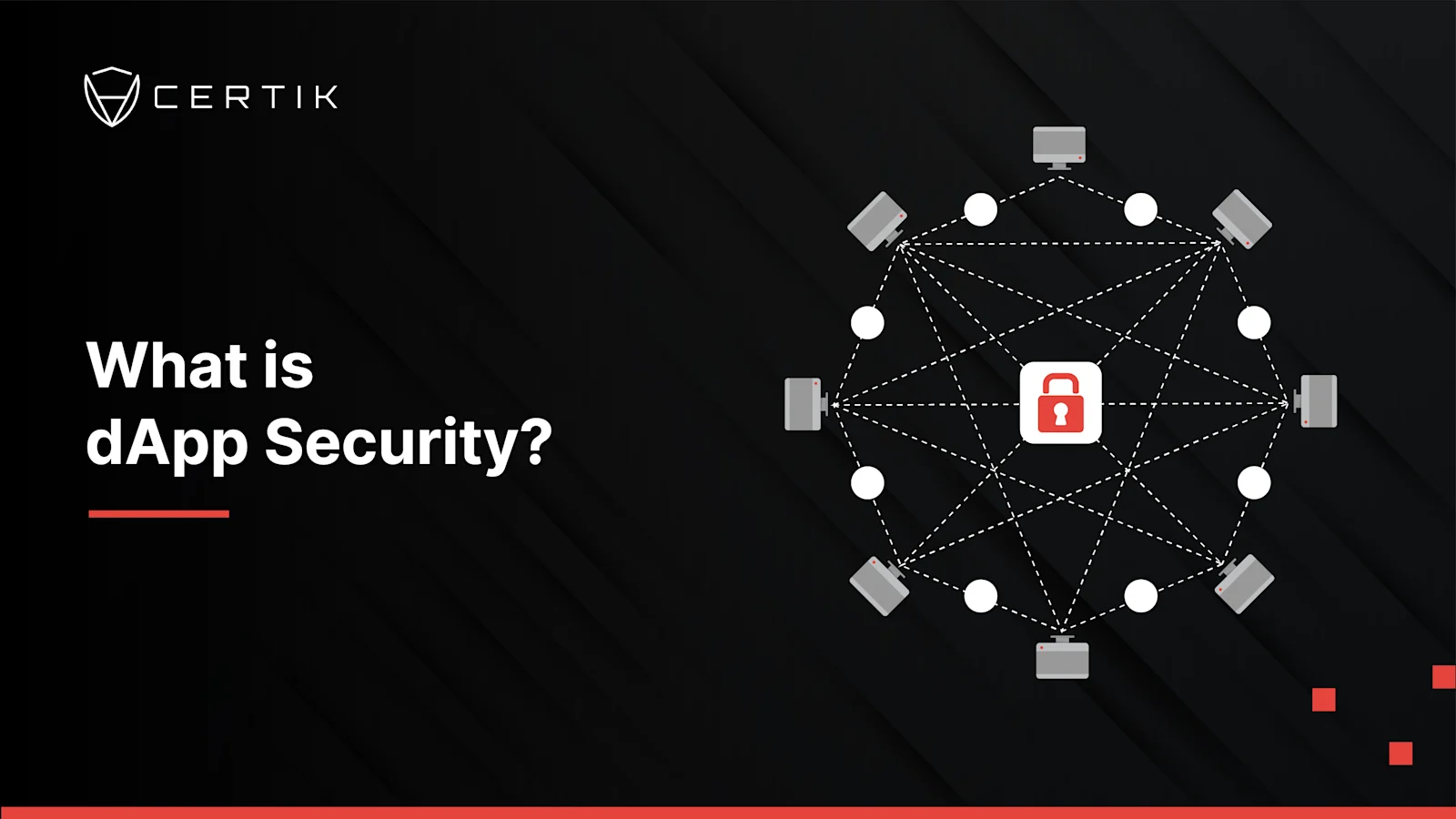
The systematic setup of decentralized apps, unfortunately, leaves them susceptible to hackers in some situations. Since dApps run on open-source smart contracts, hackers can find a key weakness to sneak into the network. Smart contract audits are a great way to eliminate vulnerabilities before it is too late. Before we dive into the security aspects of dApps, first, we must understand what makes up a decentralized application.
What is a dApp?
A decentralized application, or dApp, is an application built on a decentralized network that combines a smart contract and a frontend user interface. A typical software application is stored on a centralized server or network. It receives data from various sources, processes, computes, and manipulates it based on frontend requests. A dApp has its backend code on decentralized technology such as blockchain, where it receives and computes data provided by the blockchain, such as smart contracts. dApps aren’t controlled by a single server or entity, which means they don’t have data silos or a single point of failure. The decentralized nature of dApps means that once a developer releases a dApp's codebase, others can build on it. The app is free from the control of a single authority. A dApp is developed to create a variety of applications, including those for decentralized finance, web browsing, gaming, and social media. dApps are becoming more and more prevalent, with new ones coming out daily. So what is the reason for this rapid growth? What are the benefits of dApps compared to traditional web apps?
Benefits of dApp’s
Dapps offer multiple benefits that traditional apps fail to provide. Some of the most popular benefits of developing a dapp, both for a user and the consumer, are:
Censorship Free: Because of its distributed nature, no single entity controls or dominates a dapp. A dapp is developed by a developer and managed by the community of users.
Minimum Downtime: The public ledger is distributed globally and sources computational power from constantly up-and-running computers. It prevents downtime for a dapp compared to an app hosted in a centralized data center.
Open Source: Dapps are open to all. Their open-source code makes them easily accessible to anyone on the platform. Developers can apply existing smart contracts to their dapps.
Operates Autonomously: Once a dapp is launched, it runs independently, without external tampering or third-party involvement.
Security Challenges for dApps
Open Source Issues: As mentioned above, one of the attractions of dApps is their open-source code; however, this can also be a challenge. Because this is a new technology, there is still a learning curve around best practices. There have been cases where the dApp code contains crypto key information. If the code contains private or other sensitive information, the dApp will be vulnerable to attack. As a rule, developers should minimize the amount of data stored in the smart contracts of the blockchain. A smart contract audit can help eliminate these issues.
Data Issues: Although the framework is changing, dApps are tied to centralized data storage sites. This means data breaches remain a possibility.
Human Error: No matter how advanced the technology, there are still fallible human beings logging into the online community. Even if a cybercriminal can access the dApp, there may still be a data breach. Because dApps support remote connections, a stolen device left at a coffee shop can leave the network vulnerable.
How to Stay Secure
As with any blockchain project, security can be an issue. The first step toward security for any dApp should be a smart contract audit to identify vulnerabilities. A smart contract audit by CertiK is a comprehensive security assessment of your smart contract and blockchain code to identify vulnerabilities and recommend fixes. The most reputable DApps have had their smart contracts audited by third-party security firms, but many DApps have not been audited.
Smart contract audits can identify centralization issues in code. In CertiK’s State of Defi Security 2021 report, we pointed out that centralization issues were the most common attack vector in 2021. User-friendly and developer-friendly solutions built on top of the base layer of a network might end up looking like centralized services anyway. For example, such services may store keys or other sensitive information server-side, serve a frontend using a centralized server, or run important business logic on a centralized server before writing to the blockchain. Centralization eliminates many,if not all, of the advantages of blockchain over the traditional model. A smart contract audit can help identify and eliminate these issues.
Another crucial step to security for dApps is Penetration Testing. CertiK’s penetration testing provides a safe and in-depth attack simulation to expose the most complex vulnerabilities of crypto exchanges, wallets, and dApps. Some benefits of Penetration Testing include discovering potential attack vectors, identifying hidden vulnerabilities, performing node vulnerability assessments, conducting API testing, and more. Penetration testing works best when it is paired with a smart contract audit.
Other essential factors to consider include protecting wallets and private keys. Extreme care needs to be taken when handling this sensitive information. CertiK consistently stresses the importance of proper private key management. Users access dApps using private cryptographic keys. Using cryptography to verify a user’s identity is an excellent security measure, so long as no one else gets the key. IT departments must be specific that key information does not end up embedded in the dApp or in a public file. They also must work to make certain that no one in the organization gives their key information away.
Protecting user information is also a key factor to consider. Users do not want their personal data exposed to the world. Ensure that user data remains private. Before uploading files to a cloud-based storage solution, be certain that you do not include information that could seriously damage your company in a data breach. Users should store their sensitive data locally.
What Users Should Watch For
We recently posted a blog about common crypto scams that also relate to dApps. One common dApp scam is phishing. A phishing attack is a type of social engineering attack often used to steal user data, including login credentials and wallet info. The user is tricked into giving up their sensitive data, typically through a phishing website, in an attempt to trick a victim into disclosing sensitive information or connecting their wallet to a fake browser extension, for example.
Protect your recovery phrase. Never share your 12-word recovery phrase. Your recovery phrase is what gives you—and only you—access to your Wallet.
Research Dapp websites. Check that the Dapp website you want to use is legitimate. Also double-check that you’re using the correct dapp website URL.
Slow down. Watch out for grammatical mistakes, typos, and misspelled words. Scammers often make grammatical or spelling mistakes.
As more businesses migrate to dApps and other cloud-based solutions, it is essential to keep safety and security top of mind. Even as technology evolves, cybercriminals will continue to look for ways to infiltrate it.