Private Identity Verification
Our KYC service offers private and comprehensive identity verification tailored to meet the unique needs of Web3 projects. We understand the role that anonymity and pseudo-anonymity play in the industry, going all the way back to Satoshi Nakamoto. But there’s also a growing demand that the founders of a platform – especially those aiming to capture more institutional capital – put their reputation behind the product they deliver.
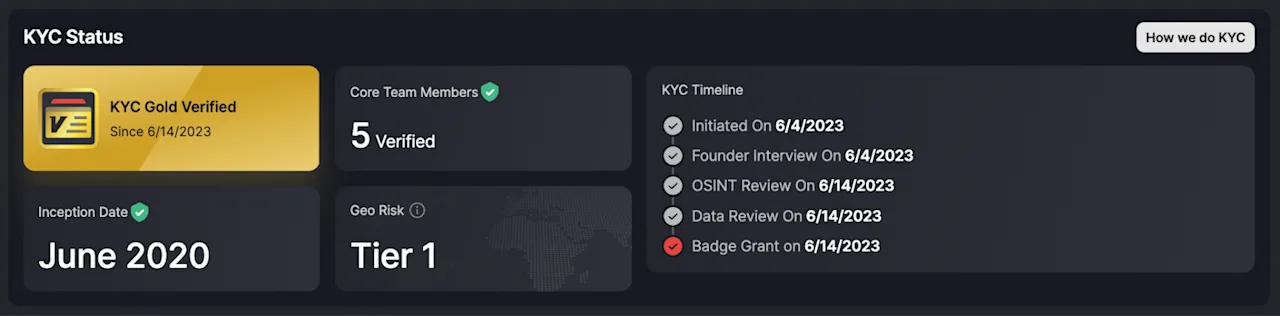
Our KYC verification is done by ex-law enforcement and intelligence professionals. It’s a rigorous and comprehensive process that goes deep into the background of each core team member.
We provide this service in order to raise the standard of transparency and security in the onchain world. Part of this is keeping private details private. Once we verify a team’s details, we keep them secure with our SOC II compliant methods. We’re the first Web3 auditing firm to earn this certification.
Builds Credibility and Trust
A KYC badge signals to investors, partners, and users that your team is credible and verified. This is invaluable in an ecosystem where trust and reputation can significantly influence user adoption and investment.
Facilitates Compliance
Early identification and resolution of potential compliance issues can save your project from future legal complications, fostering a smoother operation and enhancing investor confidence.
Protects Your Platform From Insider Threats
The Web3 world has seen countless incidents of team members rugging their own project. This can come as a nasty surprise to the other team members, who had nothing but good intentions.
KYC verification for core team members actively discourages bad actors from interfering with a platform, as they know that they can be traced in the event of any wrongdoing.
Enhances Visibility and Marketing
KYC Leaderboard: Your project gains exposure on a platform with a vast audience, boosting visibility.
Growth & Community Exposure: CertiK provides a suite of marketing materials that can help you effectively communicate your project's secured and verified status.
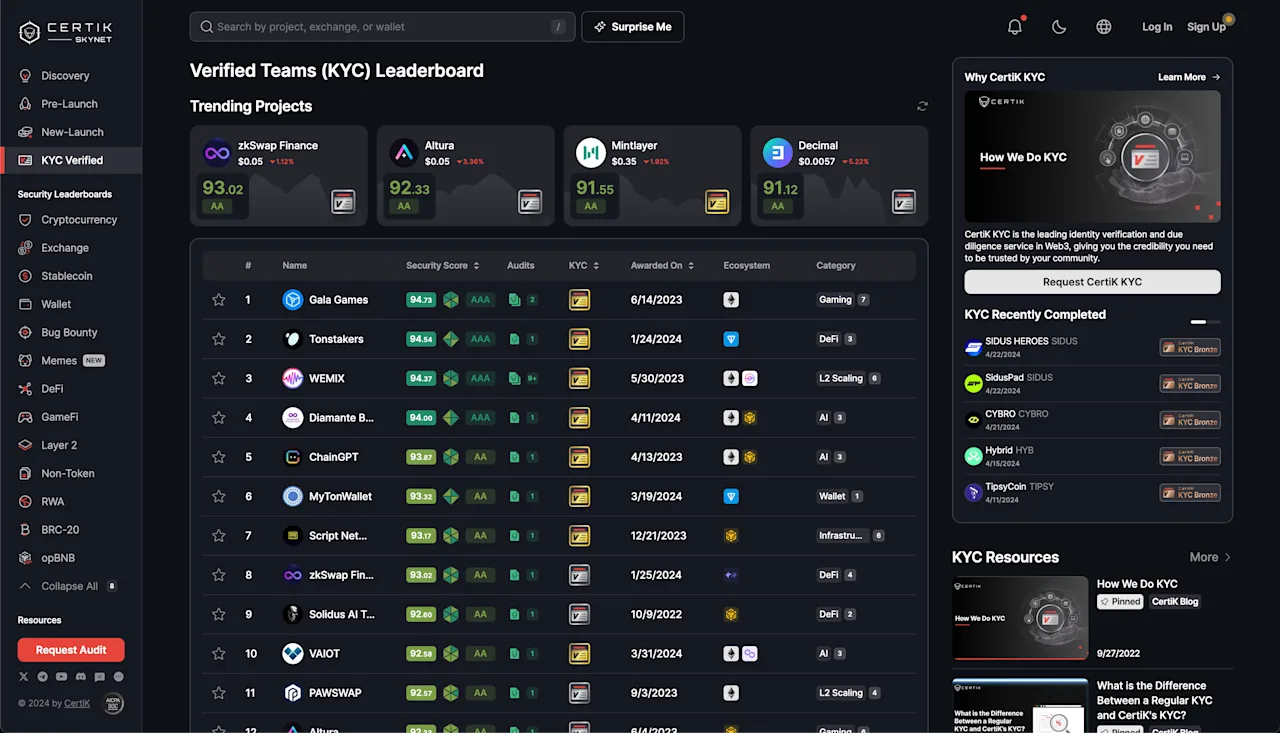
Verifiable and Continuously Updated
The KYC Badge is not just a one-time label; it's continuously updated based on regular assessments every 90 days. This ongoing process ensures that the badge represents current and active compliance and security status, providing ongoing reassurance to stakeholders.
How to Obtain a KYC Badge
Obtaining a KYC Badge is a straightforward process:
1. Background Investigation: We conduct an extensive background check on core team members.
2. Video Call Interview: Key team members engage in a direct dialogue with us to discuss project specifics and individual backgrounds.
3. Due Diligence and Risk Assessment: This phase assesses compliance and identifies any potential risks.
4. Official Recognition: Projects that pass receive a Gold, Silver, or Bronze KYC badge are listed on the KYC Leaderboard. You’ll also receive a detailed report and marketing tools.
Securing a KYC badge is about making a strategic investment in the future of your project. By enhancing trust, promoting compliance, and improving visibility, a KYC badge helps your project stand out in a highly competitive market.